Why St. Philip's Church matters.
St. Philip's Church in Charleston is among the city's most enduring landmarks, a sacred monument where faith, history, and artistry intertwine beneath the Carolina sky.
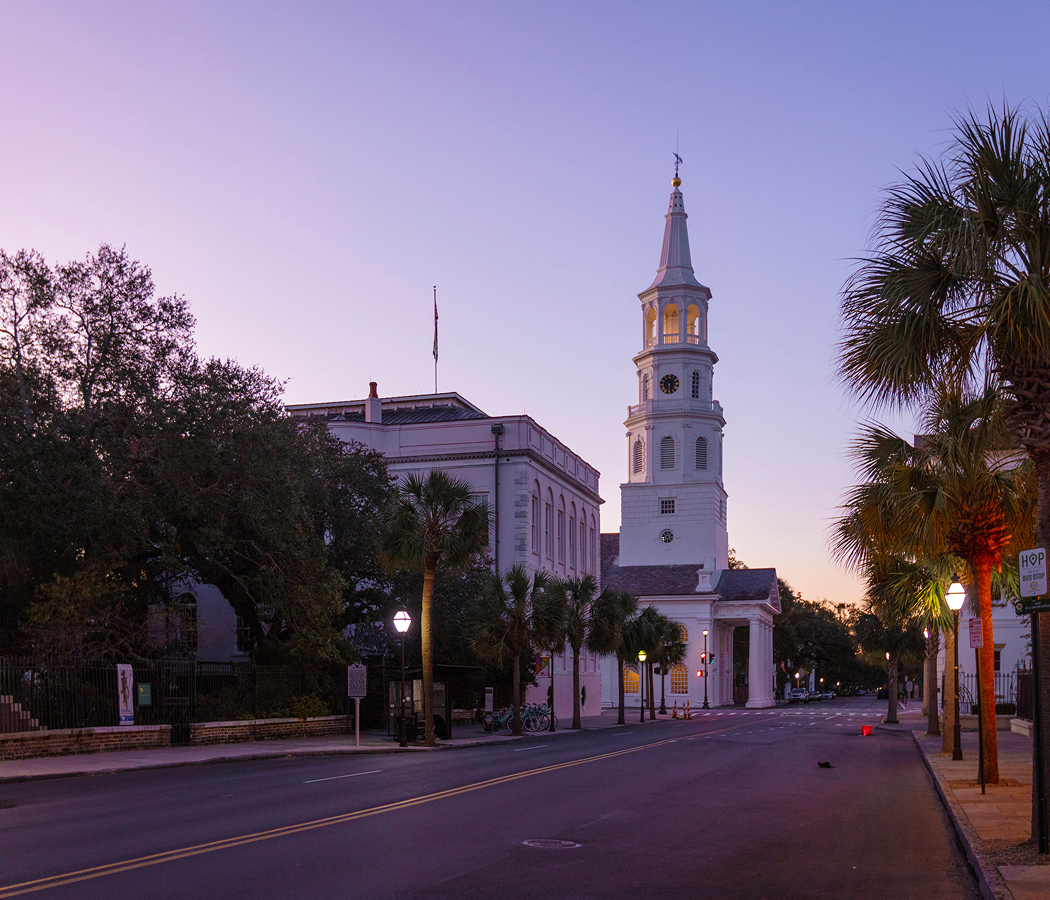
Rising gracefully above the cobblestone streets of the French Quarter, its towering steeple has guided sailors home for nearly three centuries, earning it the title “the Lighthouse of the Lord.” Built in 1838 after two previous iterations were lost to fire and hurricane, St. Philip's stands today as the oldest congregation in South Carolina and one of the most photographed churches in America. Its classical Georgian façade, framed by live oaks and gas lamps, commands reverence without ostentation, a reflection of Charleston's refined restraint. Step inside and you're enveloped in an atmosphere both solemn and luminous: sunlight filters through arched windows, illuminating mahogany pews and a hand-carved pulpit that has borne the weight of countless sermons since the colonial era. The sound of the organ reverberating through the nave evokes the same grace that once stirred 18th-century parishioners. Yet beyond its beauty, St. Philip's Church endures as a living chronicle of Charleston itself, a city defined by resilience, faith, and quiet grandeur.
What defines St. Philip's Church.
Behind its tranquil façade, St. Philip's Church holds centuries of stories that shaped Charleston's spiritual and civic identity.
The church's origins date to 1680, when English settlers established the colony's first Anglican parish near the original walled city. Its first building was a simple wooden structure, later replaced in 1723 by a brick church that was destroyed by fire in 1835. The structure, designed by Joseph Hyde, rose from those ashes three years later, its steeple added in 1848 as both a beacon for ships entering Charleston Harbor and a tribute to endurance. The churchyard is among the most historically significant burial grounds in the South, where moss-draped gravestones mark the resting places of signers of the U.S. Constitution, Confederate generals, and Charleston's early governors. The most famous among them is John C. Calhoun, former Vice President and one of the most controversial figures in American history, whose tomb still draws scholars and tourists alike. During the Civil War, Union troops used St. Philip's steeple as a navigational point, and despite heavy bombardment, it survived nearly unscathed, a miracle in a city reduced to rubble. Its bells were recast after the war, their peals now echoing through downtown as a reminder of both suffering and redemption. Few realize that the church's architectural harmony, its tall Corinthian columns, semicircular portico, and symmetrical bell tower, was modeled after St. Martin-in-the-Fields in London, blending British formality with Lowcountry grace. Every inch of the structure feels intentional, from the wrought-iron gates to the marble baptismal font shipped from England in the 1700s. St. Philip's is not merely a house of worship; it's a vessel of memory, holding within its walls the story of Charleston's evolution through prosperity, fire, war, and rebirth.
How St. Philip's Church fits.
A visit to St. Philip's Church is a passage through time, one that reveals Charleston's heart through reverence and reflection.
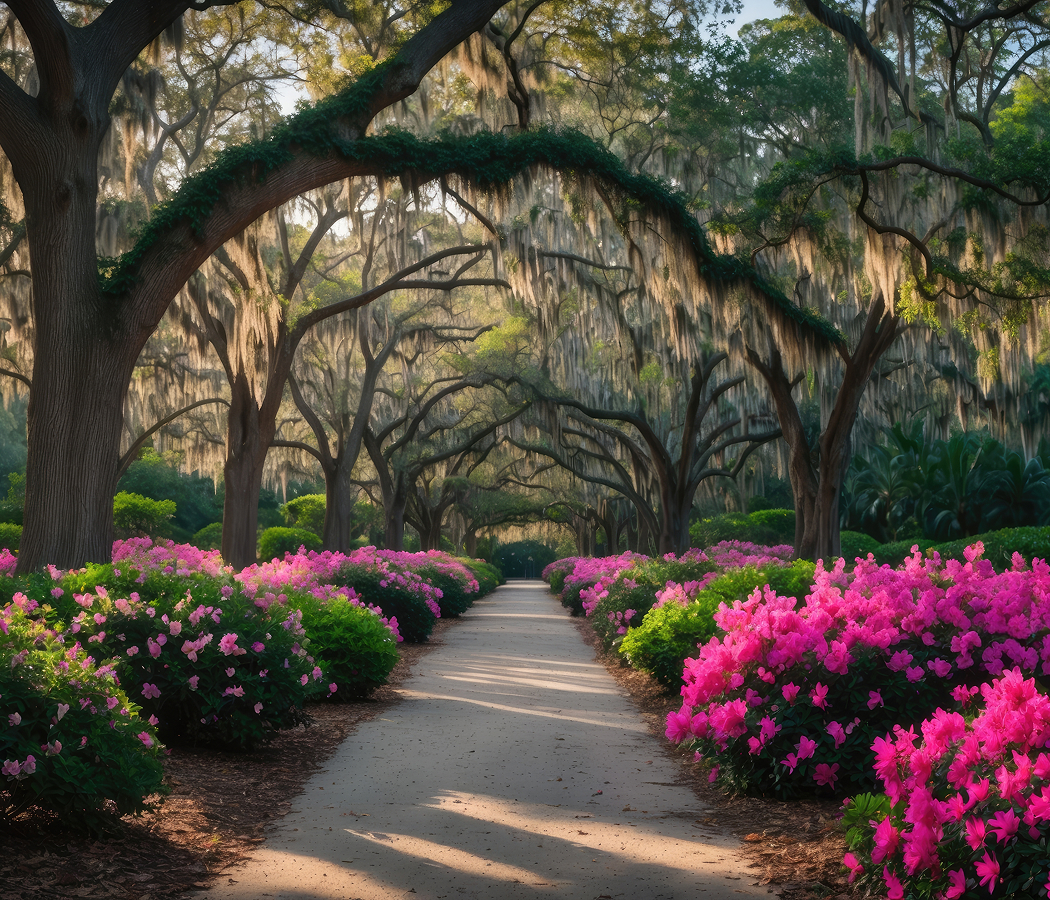
Begin your exploration in the French Quarter, where the church's spire dominates the skyline above the pastel façades of East Church Street. Arrive early to hear the bells ring, their sound carrying across the harbor like a hymn to the city. Visitors are welcome to enter the sanctuary during open hours, where quiet contemplation feels almost mandatory, take a seat in one of the pews and let the stillness settle. The interior is simple yet majestic, with original gas chandeliers and memorial plaques that tell centuries of stories in brass and stone. Don't miss the adjacent churchyard, among Charleston's most evocative places. Wander the shaded pathways where magnolias bloom beside weathered gravestones, and read inscriptions that date back to the 18th century. History here feels intimate, not distant. For those with an architectural eye, note how the church's steeple, at 200 feet tall, aligns perfectly with the city's historical building codes, preserving the symmetry that defines Charleston's charm. Afterward, stroll down Church Street toward Waterfront Park or the Battery, where the harbor breeze carries the same scent of salt that once guided sailors by St. Philip's light. If you're visiting on a Sunday, attending a service offers a deeper glimpse into the continuity of tradition that has endured for over 340 years. The choir's hymns fill the sanctuary with warmth and resonance, uniting past and present in song. St. Philip's Church isn't just a landmark, it's Charleston's heartbeat made visible, a living tribute to faith's power to endure, adapt, and illuminate even the darkest chapters of time.
Where your story begins.
Foresyte Travel reveals places that feel extraordinary long before you arrive.
Enjoy editorial crafted for luxury travelers.
Foresyte may earn a commission when you book.