Why you should experience Sullivan's Island Lighthouse in Sullivan's Island, South Carolina.
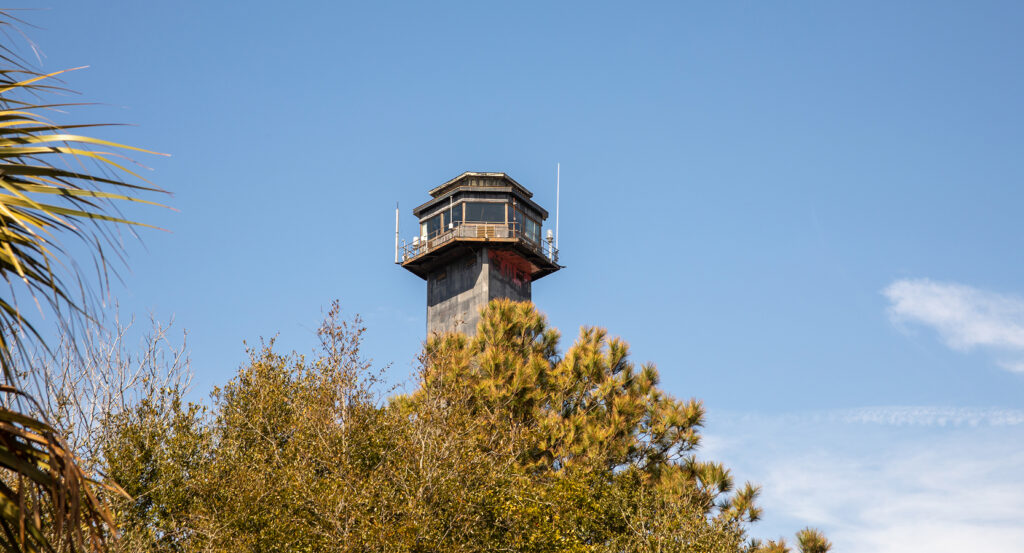
Sullivan's Island Lighthouse is a striking symbol of modern design rising from a shoreline steeped in history.
Standing proudly on the edge of Charleston Harbor, this triangular beacon, known locally as “Charleston Light”, contrasts the city's colonial charm with mid-century innovation. Completed in 1962, its sleek, geometric shape and stark black-and-white façade make it one of the most distinctive lighthouses in America. Unlike the cylindrical, weathered towers that dot much of the East Coast, Sullivan's Island Lighthouse soars like a minimalist sculpture, functional, futuristic, and unforgettable. Its design was an intentional departure from the past, built to resist hurricanes and house the most powerful light on the Eastern Seaboard at the time, visible more than 25 miles offshore. Climbing its 163 feet to the lantern once revealed panoramic views of the Atlantic, Fort Sumter, and the sprawl of Charleston's historic peninsula, a view still unmatched even if the lighthouse itself is now closed to the public. By day, its bold silhouette cuts cleanly against the blue Carolina sky; by night, its steady beam remains a quiet promise to mariners, a light that continues to guide, even when the shoreline around it has changed.
What you should know about Sullivan's Island Lighthouse.
Sullivan's Island Lighthouse was the last manned lighthouse ever built in the United States, a final chapter in a centuries-long story of coastal navigation.
Commissioned by the U.S. Coast Guard to replace the aging Morris Island Light, the structure represented a new era of technology and practicality. Designed by architect Jack Graham, the tower's triangular aluminum-and-steel frame was built to withstand Category 2 hurricanes and extreme coastal conditions. It was also one of the first lighthouses to feature an internal elevator, air conditioning, and modern living quarters for keepers, a far cry from the isolated, rugged existence of their predecessors. When it first lit up in June 1962, its 28-million-candlepower beam was so intense that local residents complained it illuminated entire neighborhoods. The light was later dimmed to a more modest 1.2 million candlepower, but it remains among the brightest on the coast. Its unusual shape wasn't just aesthetic, the flat sides reduce wind resistance, while its triangular footprint anchors it firmly into the sand. The black-and-white exterior was added in 1968, giving it the bold, two-tone look that makes it instantly recognizable today. Though the tower is no longer open for climbing, the surrounding area, once a military outpost and now part of a peaceful residential community, carries echoes of its layered past. Fort Moultrie stands nearby, where the first major victory of the Revolutionary War took place, linking this futuristic lighthouse to Charleston's centuries of coastal defense.
How to fold Sullivan's Island Lighthouse into your trip.
Visiting Sullivan's Island Lighthouse is less about entering a structure and more about immersing yourself in its surroundings, the rhythm of the sea, the history in the breeze, and the quiet majesty of a light that endures.
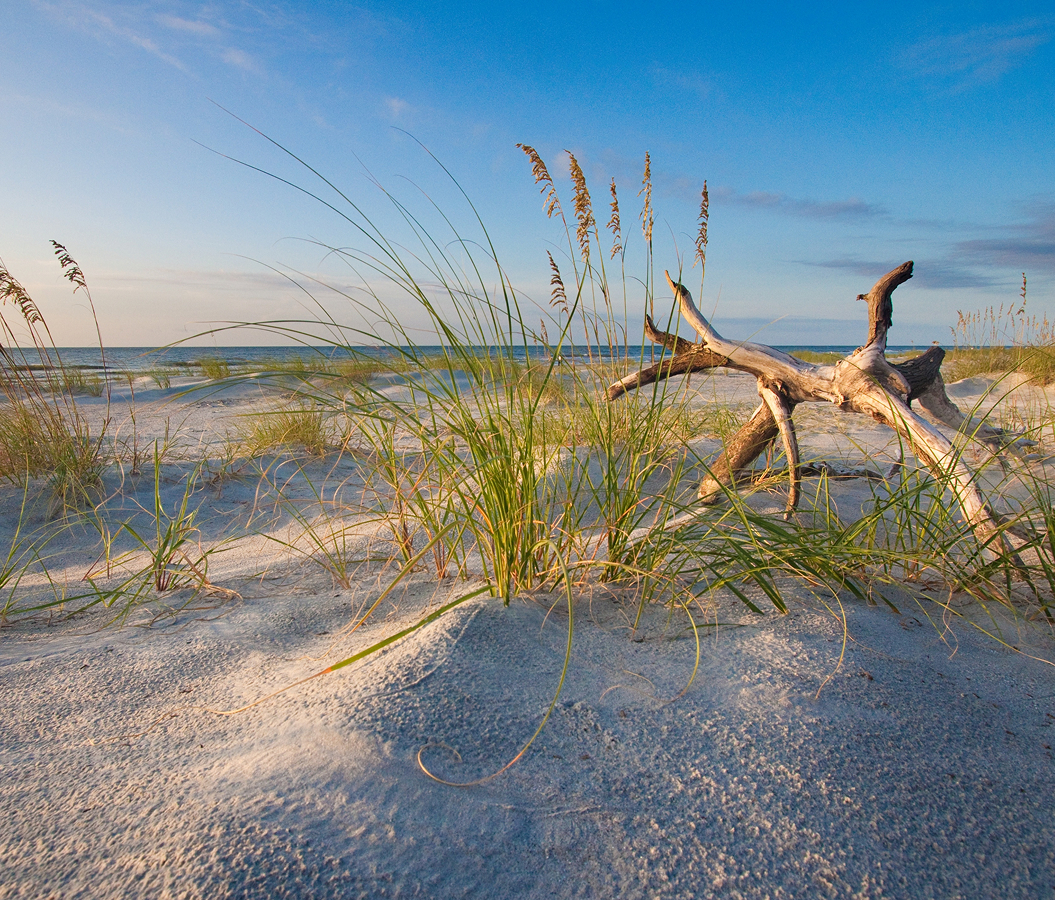
Start the visit at Station 18½ Street, where a short sandy path leads from a quiet neighborhood directly to the base of the lighthouse. From here, the scene opens suddenly: the Atlantic stretching endlessly, waves breaking softly against the shore, and the tower rising behind you, angular and commanding, yet serene. Spend time walking the beach in either direction; the light's triangular frame creates a striking contrast against the natural horizon, especially in the late afternoon when the sun dips low and the sky turns gold. Photographers love the view from Station 19 Beach Access, where the lighthouse, dunes, and sea align in perfect composition. For a deeper connection, explore nearby Fort Moultrie and its museum, where you can trace Charleston's maritime story from the 1700s to today. Afterward, wander into Sullivan's Island's charming town center, lined with breezy cafés, old oaks, and pastel homes, and grab a meal at one of its beloved coastal restaurants like Poe's Tavern or Home Team BBQ. Stay until twilight if you can; when dusk falls, the lighthouse's beam cuts through the darkness, rotating with quiet purpose. Standing there beneath it, you understand why it endures, not just as a navigational aid, but as a symbol of Charleston's ability to evolve. Sullivan's Island Lighthouse isn't just a tower, it's a bridge between eras, where modern engineering meets timeless beauty, and where every flash of light across the horizon feels like Charleston remembering to look toward the sea.
Where your story begins.
Foresyte Travel reveals places that feel extraordinary long before you arrive.
Experience premium editorial crafted for luxury travelers.