Why The Inn on Ferry Street matters.
The Inn on Ferry Street is heritage intimacy, residential calm, and cultural proximity distilled into a deeply human stay, a place where Detroit is not encountered through scale or performance, but through lived texture, architectural memory, and quiet continuity.
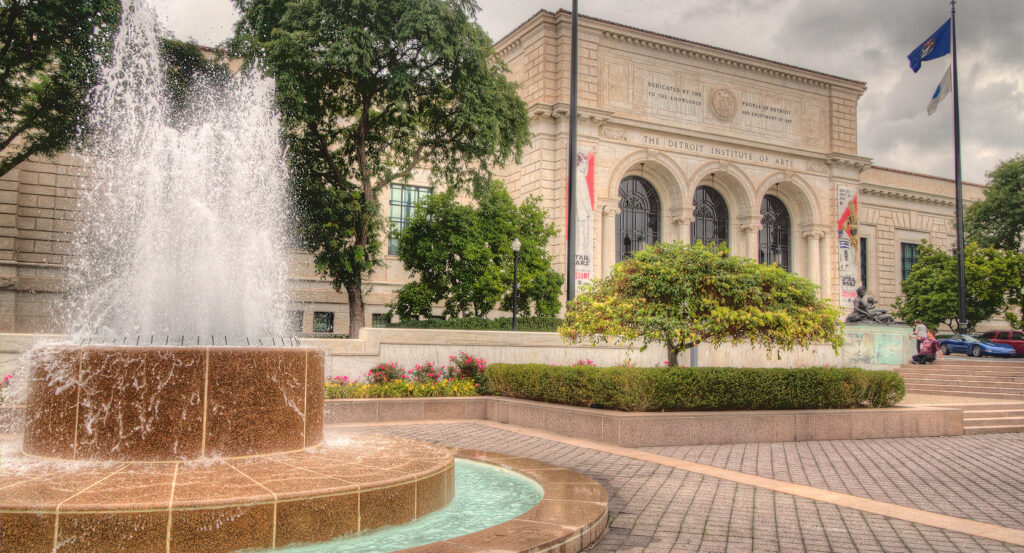
Set along a tree-lined residential stretch in Midtown Detroit, directly adjacent to the Detroit Institute of Arts and steps from Wayne State University, this inn does not announce itself with height or bravado. Instead, it invites you inward, into a collection of restored Victorian-era homes where history is not preserved behind glass but inhabited. Arrival feels like stepping into a different pace of the city. The street is calm, walkable, and grounded in neighborhood rhythm. Brick façades, porches, mature trees, and historic detailing create an immediate sense of place that feels personal. Entering the inn is less like checking into a hotel and more like being welcomed into a well-kept historic residence. Interiors retain their original architectural character, woodwork, staircases, fireplaces, tall windows, while quietly integrating modern comfort. There is no attempt to smooth these buildings into uniformity. Each structure carries its own proportions, quirks, and personality, and that individuality is treated as an asset. Public spaces feel domestic and composed: parlors rather than lobbies, sitting rooms rather than lounges. Furniture is arranged for conversation and pause, lighting is warm and residential, and the atmosphere encourages presence. Guest rooms extend this sense of intimacy with comfort that feels sincere and restorative. Rooms vary in layout and character, but all share a sense of quiet coherence. Beds are comfortable and inviting, framed by original architectural details and thoughtful furnishings that respect the age of the buildings. Lighting is soft and layered, supporting reading, rest, and reflection. Windows open onto tree canopies, historic streets, or garden views, reinforcing a sense of calm and neighborhood immersion. Bathrooms are modernized with care, clean-lined, functional, and comfortable, offering contemporary ease. Sound here is notably gentle. Instead of city hum, you hear leaves, footsteps, distant conversation, reminders that Detroit, in this pocket, breathes differently. Service at The Inn on Ferry Street is personal, attentive, and quietly generous. Staff interactions feel warm and unforced, more host-like than procedural. Guidance comes in the form of thoughtful conversation rather than bullet-point recommendations, suggestions tailored to your interests, timing, and curiosity. Staying here feels like choosing depth over display, neighborhood over skyline, and a place that allows Detroit to unfold slowly rather than announce itself loudly, making The Inn on Ferry Street ideal for travelers seeking authenticity, cultural immersion, and resonant stillness.
What defines The Inn on Ferry Street.
The Inn on Ferry Street is not a single building but a collection of restored late-19th-century homes, and that architectural decision defines the experience in ways that modern hotels rarely can replicate.
Rather than consolidating guest experience into a single vertical structure, the inn preserves the rhythm of a residential block, moving between houses, staircases, hallways, and rooms that were once lived in by Detroit families during the city's early cultural and academic expansion. This distributed layout slows you down in subtle ways. You walk short outdoor paths between buildings, move through staircases rather than corridors, and experience transitions that feel human-scaled rather than industrial. The architecture encourages awareness, of light, weather, sound, and neighborhood texture. Interiors were restored with restraint. Original wood floors, trim, fireplaces, and proportions remain legible, while modern systems are quietly integrated to preserve comfort. This balance matters. The buildings feel authentic rather than themed, historical rather than nostalgic. Breakfast, often included, reinforces this residential character. Served in intimate dining spaces, it feels like a morning ritual rather than a hotel function, a gentle start to the day that aligns with the inn's pace. The location further amplifies this identity. Midtown Detroit is the city's cultural and academic heart, home to the Detroit Institute of Arts, Detroit Historical Museum, College for Creative Studies, and Wayne State University. Staying here places you inside a district defined by thought, creativity, and long-form engagement. Staff culture mirrors this intellectual and residential context. Service feels conversational and informed. Recommendations are thoughtful, exhibitions worth lingering in, walking routes that reveal architectural layers, cafés that reward slow mornings. There is no sense of upselling or itinerary compression. In a hospitality landscape dominated by scale, branding, and uniformity, The Inn on Ferry Street stands apart by committing to architectural integrity and human pace as its core luxury, proving that comfort can be quiet, and that memory often forms where attention is allowed to linger.
How The Inn on Ferry Street fits.
The Inn on Ferry Street works as a cultural anchor and reflective base, especially for travelers who want Detroit to feel contemplative, textured, and personally resonant.
Days here begin slowly, and that is the point. Step outside and you are already within one of Detroit's richest cultural corridors. Mornings can unfold with a walk through the Detroit Institute of Arts before crowds arrive, coffee at a nearby café frequented by students and artists, or a quiet stroll past historic homes that reveal the city's academic lineage. Midday returns to the inn feel natural. The calm of the space allows museum visits, lectures, or long walks to settle into reflection. Afternoons invite deeper engagement, extended gallery visits, university events, neighborhood exploration in Midtown and New Center, or reading in one of the inn's parlors as light shifts across wood floors. Because the inn is not centered on entertainment density, your schedule remains flexible. Evenings resolve gently. Dining nearby feels intentional rather than rushed, neighborhood restaurants, quiet bistros, or cultural events that conclude without physical overload. Returning to the inn at night feels like coming home to a place that holds silence respectfully. Over multiple nights, familiarity deepens. You begin to recognize patterns, when the street is quietest, how light filters through trees at certain hours, which rooms invite lingering. Extended stays reveal the inn's most meaningful contribution: resonant continuity. Detroit becomes not a series of attractions, but a place of thought, history, and lived rhythm.
Where your story begins.
Foresyte Travel reveals places that feel extraordinary long before you arrive.
Experience premium editorial crafted for luxury travelers.