
Why The St. Regis Venice matters.
The St. Regis Venice is a historic lagoon hotel where San Marco's ceremonial waterfront meets Venetian palazzo architecture, the city's artistic traditions and the maritime culture that made Venice one of Europe's most influential trading capitals.
Set along the Grand Canal in the San Marco district, The St. Regis Venice occupies a prominent position between the Piazza San Marco, the Accademia bridge and the lagoon, with palazzi, churches and narrow pedestrian streets extending through the historic city. Its collection of historic buildings forms a richly layered waterfront complex, combining ornate façades, terraces, courtyards and interiors shaped by centuries of Venetian architecture. Guest rooms and suites face the Grand Canal, gardens, courtyards or the surrounding city, with windows and terraces framing gondolas, vaporetti, bridges and the shifting light of the water. The hotel's public spaces move between salons, restaurants, galleries and outdoor terraces, creating a direct relationship with the city's canals and ceremonial avenues. The Grand Canal remains the principal experiential landscape, carrying boats past the hotel and connecting the property with palaces, churches, markets and the lagoon beyond. Nearby streets lead toward the Rialto district, Dorsoduro and the museums of San Marco, while pedestrian bridges reveal Venice through a sequence of narrow passages and sudden water views. The result is a substantial historic hotel whose architecture, gardens and waterfront setting connect contemporary luxury with the artistic and maritime character of Venice.
What defines The St. Regis Venice.
The St. Regis Venice is best known for its extraordinary association with the international artistic culture of Venice, originating in the Grand Hotel Britannia and extending through more than a century of encounters between celebrated painters, historic Venetian palaces and contemporary art. The property occupies five interconnected palazzi overlooking the Grand Canal, including the seventeenth-century Palazzo Badoer Tiepolo, whose architectural heritage connects the hotel to the residential traditions of the Venetian Republic. During the nineteenth century, the Tiepolo, Barozzi and Regina palaces became part of an expanding hospitality establishment that culminated in the opening of the Grand Hotel Britannia in 1895, the inaugural year of the Venice Biennale. The hotel entered an international cultural environment shaped by artists, collectors and wealthy European travelers who increasingly regarded Venice as a center of artistic inspiration. J. M. W. Turner and John Singer Sargent became associated with the property's historical hospitality tradition, contributing to its longstanding reputation among prominent painters. Claude Monet established its most consequential artistic connection during his visit to Venice in the autumn of 1908, when he stayed at the hotel with his wife, Alice, and studied the changing light across the Grand Canal. The painter's Venetian compositions developed through sustained observation of the city's architecture and atmospheric conditions, connecting the hotel's waterfront setting with one of Impressionism's most celebrated late-career artistic projects. The property's subsequent evolution brought together the historic Hotel Europa and Hotel Regina identities, eventually establishing the Westin Europa & Regina as a prominent international hotel within the San Marco district. A major institutional transformation began with an extensive restoration undertaken between 2017 and 2019, involving the redevelopment of the interconnected historic buildings into a unified luxury establishment. London-based Sagrada directed the interior design, introducing a contemporary artistic language that preserved the architectural character of the Venetian palaces. Italian contractor Setten Genesio carried out €40 million in restoration and construction work across more than 20,000 square meters, coordinating 259 companies and 1,747 workers through the demanding logistical conditions of Venice's historic center. The project incorporated structural consolidation, historic restoration and comprehensive interior redevelopment, establishing one of the most substantial hospitality transformations along the Bacino di San Marco waterfront. The St. Regis Venice opened in October 2019, introducing the brand's contemporary luxury character into an establishment whose artistic associations extended to the origins of Venice's international exhibition culture. Its reopening renewed the relationship between historic Venetian hospitality and the city's continuing artistic development, establishing the hotel as an important setting for contemporary creative commissions and international cultural exchange.
Sagrada's interior conception develops the hotel's artistic inheritance through a sustained discussion between Venetian craftsmanship, modernist architecture and the changing qualities of light that fascinated Claude Monet. The London studio drew particular inspiration from Carlo Scarpa, the influential Venetian architect whose work united modern spatial composition with the traditional techniques of Italian artisans. Geometric interior detailing, precisely composed surfaces and sculptural furnishings introduce a contemporary interpretation of Scarpa's architectural vocabulary, establishing a deliberate relationship between historic palazzo construction and twentieth-century Venetian design. The decorative program incorporates references to the curved profiles of gondolas, the geometric patterns of the Doge's Palace and the movement of water through the city's canals, translating recognizable elements of Venice into furnishings and interior ornament. A palette inspired by Monet's observations of Venetian light extends through the accommodations, with changing tonal relationships recalling the atmospheric transitions between morning and evening. The hotel's artistic program advances this design philosophy through original commissions and collaborations with contemporary artists whose work engages with Venice's international exhibition culture. French painter Olivier Masmonteil became its inaugural artist in residence, creating original works for the Gran Salone and Monet Suites that established a direct connection between the hotel's historical artistic associations and its contemporary interiors. British curator Robin Greene contributed to the development of the collection, bringing together contemporary paintings, sculptures and installations within the restored palazzi. A partnership with Glasstress, the contemporary glass initiative associated with Berengo Studio, introduced another consequential dimension through artworks that extend Murano's historic glassmaking traditions into experimental contemporary sculpture. The collection's association with internationally recognized artists, including Ai Weiwei and Julian Opie, places the hotel within the broader artistic conversations surrounding the Venice Biennale. The Arts Bar continues this relationship through an interior informed by Venetian modernism and a cocktail program conceived around artistic expression, connecting the property's social spaces with its curatorial identity. The garden overlooking the Grand Canal provides a complementary setting for exhibitions and cultural gatherings, extending the discussion between contemporary art and historic architecture into the waterfront landscape. The St. Regis Venice preserves an exceptional continuity between the painters who helped establish Venice's international artistic reputation and the contemporary artists, designers and craftspeople shaping its cultural life.
How The St. Regis Venice fits.
The St. Regis Venice works as the starting point for an exploration connecting Venetian state power, modern art and the operatic traditions that shaped the city's cultural identity.
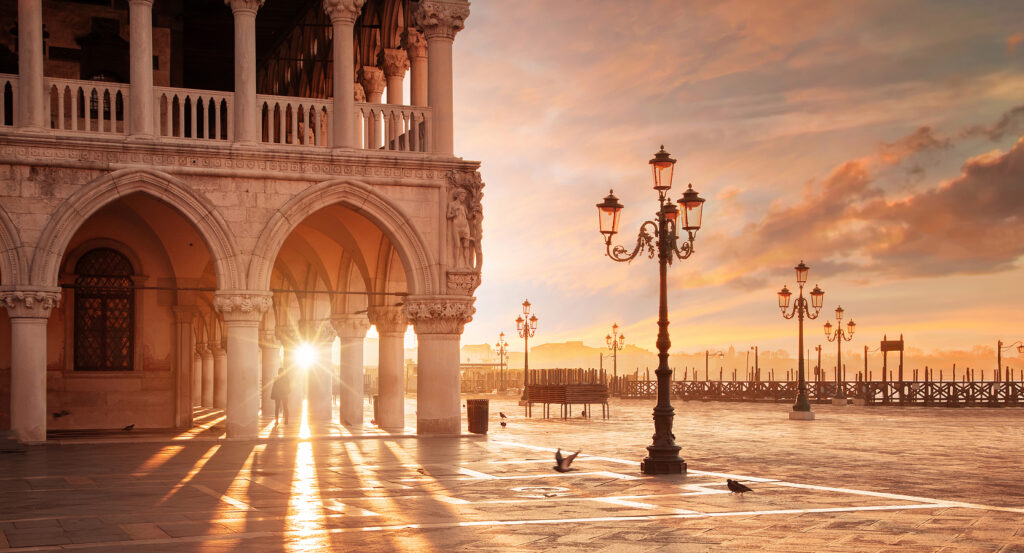
Begin at Doge's Palace, the expansive Gothic residence beside the lagoon where government, justice, ceremony and the power of the Venetian Republic were concentrated for centuries. Its arcades, courtyards, grand halls and decorative cycles reveal the relationship between political authority and maritime wealth in the historic city. The palace connects Venice's architectural character with the institutions that governed trade, diplomacy and the islands of the lagoon. Its position beside the water establishes a direct relationship between the city's civic power and its maritime geography. Continue to Peggy Guggenheim Collection, the modern art museum in the former Palazzo Venier dei Leoni where works by Picasso, Pollock, Dalí, Magritte and other major artists occupy intimate galleries and garden spaces beside the Grand Canal. The collection connects Venice to the international development of modern art while preserving the personal atmosphere of a private palazzo. Its low scale and sculptural garden contrast with the expansive historic buildings surrounding San Marco. The museum demonstrates how Venice's cultural influence extends beyond Renaissance and Baroque traditions into the modern artistic world. Conclude at Teatro La Fenice, the historic opera house whose ornate auditorium, gilded interiors and long performance history place music at the center of Venetian cultural life. The theater has been rebuilt after fires while preserving its ceremonial relationship with the city and its traditions of opera, ballet and concert performance. Its interior combines intimate scale, elaborate decoration and theatrical light, creating a setting shaped by both aristocratic history and public entertainment. La Fenice demonstrates how Venice's cultural character remains inseparable from performance, performance and architectural atmosphere. The progression moves from Doge's Palace's political and maritime history through Peggy Guggenheim Collection's modern art and concludes at Teatro La Fenice, where Venetian architecture and musical tradition meet within the historic city.
Where your story begins.
Foresyte Travel reveals places that feel extraordinary long before you arrive.
Enjoy editorial crafted for luxury travelers.
Foresyte may earn a commission when you book.




















































































































