Why The Westin Grande Sukhumvit matters.
The Westin Grande Sukhumvit is an established luxury hotel where Asok's commercial and transportation infrastructure meets the transformation of the former Grand Pacific Hotel into a Westin property through one of Bangkok's consequential international hospitality management agreements.
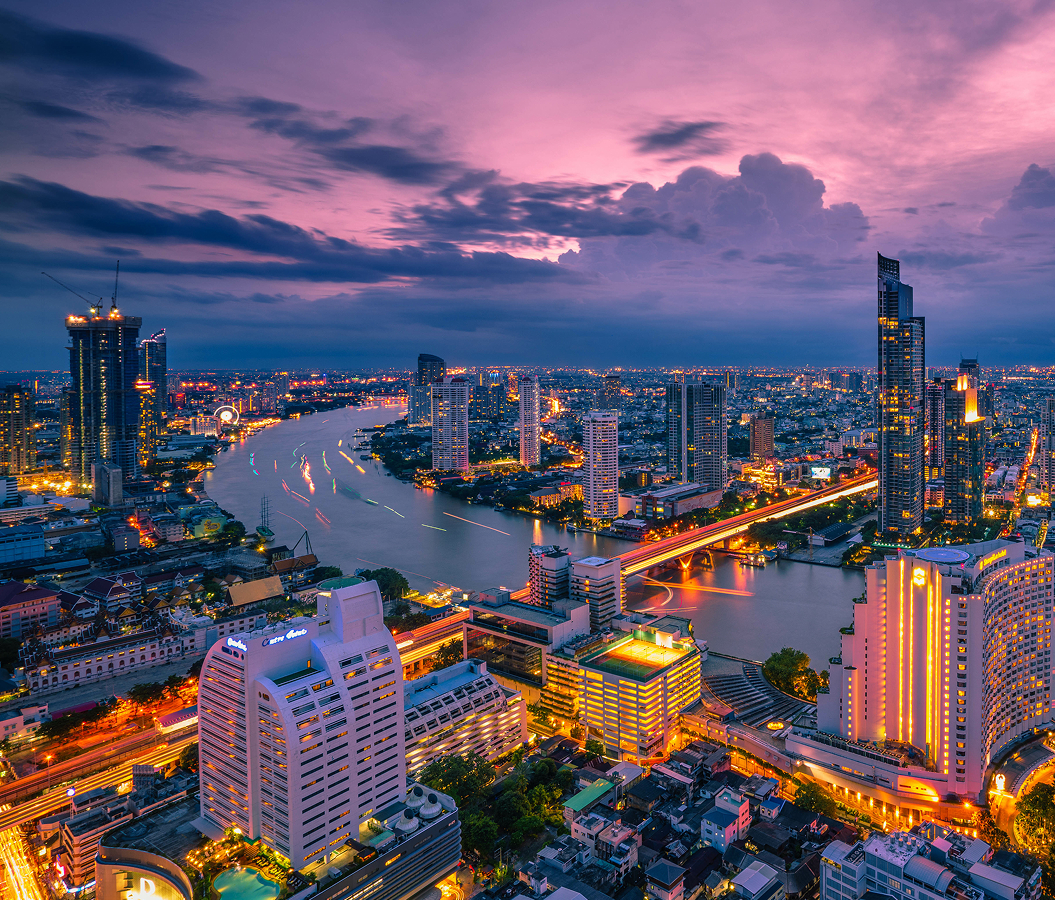
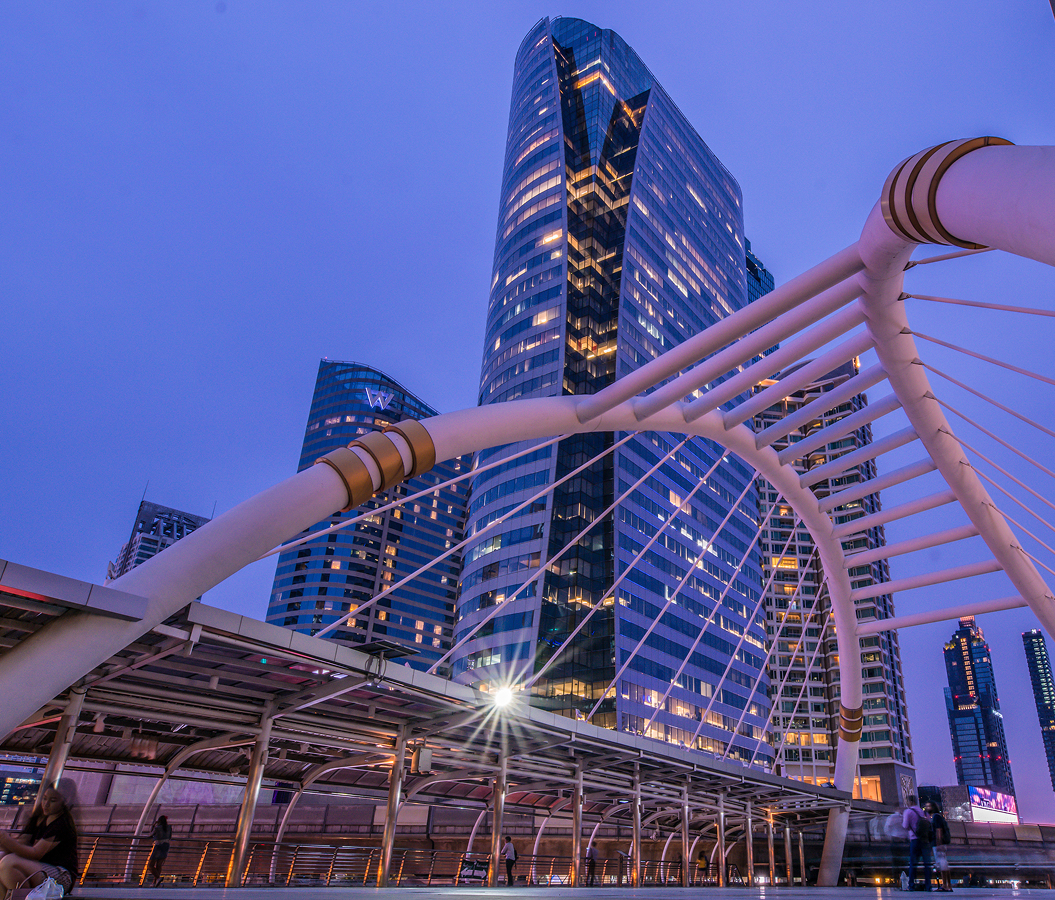
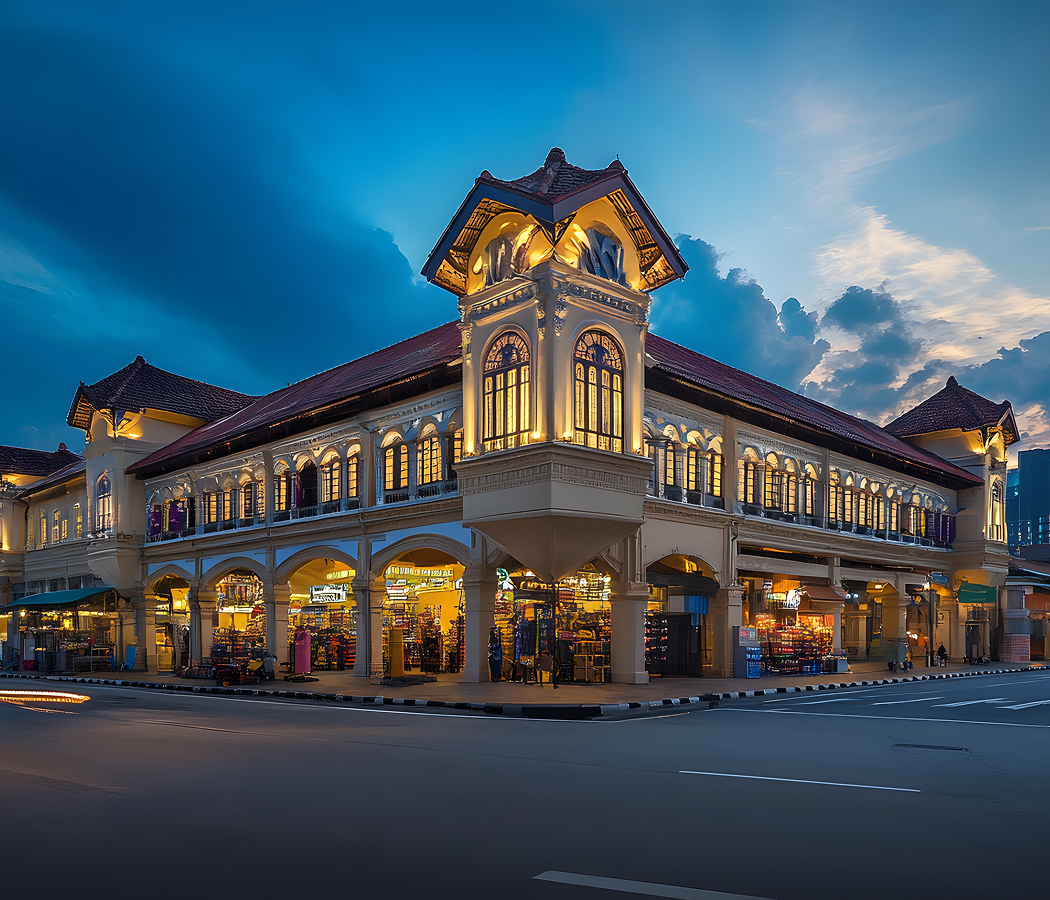
Standing on Sukhumvit Road beside Soi 19, immediately west of the Asok intersection and opposite the Terminal 21 commercial complex, the hotel occupies a prominent position between the elevated BTS Skytrain, the underground MRT network, and the adjoining retail towers. Its high-rise structure rises above a multilevel commercial podium, with a broad entrance canopy separating the arrival area from the surrounding pedestrian traffic. The principal lobby occupies an elevated floor, establishing a vertical transition from the congested street frontage into the hotel's reception and gathering spaces. Large windows overlook the surrounding towers, railway infrastructure, and commercial corridors extending along Sukhumvit Road. A rooftop swimming terrace introduces an outdoor recreational area above the surrounding streets. The result is a metropolitan hotel whose elevated public interiors and integrated transportation access distinguish its position within Bangkok's central commercial district.
What defines The Westin Grande Sukhumvit.
The Westin Grande Sukhumvit is best known for its transformation from the Grand Pacific Hotel into a Westin property through a management and ownership restructuring that became the subject of a substantial international commercial dispute. The original hotel building opened in 1993, establishing a hospitality operation during Bangkok's expansion as a regional center for international business and tourism. Its ownership subsequently involved Grand Pacific Hotel Company, Grande Sukhumvit Company, and Hong Kong property interests associated with Lai Sun Development. During the early 2000s, the shareholders pursued a change in international management as the property prepared for a major renovation and repositioning within Bangkok's luxury hotel sector. Australian investor David Murray, operating through Asia Hotel Investments, entered negotiations to acquire the Lai Sun shareholding and subsequently approached Starwood Hotels & Resorts Worldwide regarding a possible management arrangement. Starwood already maintained a substantial relationship with the Narula family, whose ownership of the neighboring Sheraton Grande Sukhumvit connected the international hotel company with an established Bangkok hospitality investor. Murray's negotiations with Starwood included proposals for renovation financing and additional payments associated with the proposed management agreement. The discussions deteriorated after Murray sought a US$5 million loan toward the refurbishment and a further US$1 million to US$2 million in contractual payments. The Narula family subsequently acquired the Lai Sun shares, securing control of the ownership interests contested during the negotiations. Starwood entered a twenty-year management agreement with Grande Sukhumvit Company and Grand Pacific Hotel Company, announcing the conversion of the Grand Pacific into The Westin Grande Sukhumvit. The arrangement included a projected US$5 million renovation intended to reposition the existing property within Westin's international luxury portfolio. Miguel Ko, Starwood's president for Asia Pacific, directed the company's regional involvement and announced the planned relaunch for early 2003. The agreement restored Westin's presence in Bangkok following the brand's brief absence from the capital during 2002. Murray subsequently pursued legal action against Starwood, alleging misconduct during the competing negotiations and seeking damages approaching US$55 million. The dispute exposed the commercial significance of hotel management contracts, ownership transfers, and renovation financing within Bangkok's internationally branded hospitality industry. Starwood's acquisition by Marriott International in September 2016 introduced another institutional transition, bringing the hotel into Marriott's international portfolio. The property's history connects its original development with a contested ownership transfer, substantial refurbishment investment, and successive changes in the corporate organization of international hotel management.
How The Westin Grande Sukhumvit fits.
The Westin Grande Sukhumvit works as the starting point for a southward exploration connecting the preservation of northern Thai domestic architecture with Bangkok's transformation of industrial land into ecological infrastructure and the development of its international convention economy.
Begin at Kamthieng House Museum, reached by following Asok Montri Road north from the Sukhumvit intersection to the grounds of The Siam Society. The teak residence originated in nineteenth-century Chiang Mai, where Mae Saed, a descendant of the ruling family of Mueang Chae, constructed it beside the Ping River. Its architecture incorporates two connected rectangular structures raised on thirty-six octagonal teak pillars, with outward-sloping walls and decorative galae roof finials characteristic of northern Thai domestic construction. Kimhaw Nimmanhaeminda donated the house to The Siam Society in 1963, initiating its dismantling, transportation, and reconstruction in Bangkok. King Bhumibol Adulyadej inaugurated the museum on November 21, 1966, establishing an institution dedicated to the domestic architecture, agricultural practices, and spiritual traditions of Lanna communities. Continue south along Asok Montri Road toward Benjakitti Forest Park, developed on former Thailand Tobacco Monopoly industrial land as part of a substantial program of metropolitan ecological restoration. Landscape architect Kongjian Yu's Turenscape collaborated with Arsomsilp Landscape Studio on the transformation, introducing the sponge-city principles developed through his international landscape practice. Completed in 2022, the principal forest park incorporates hundreds of planted islands surrounded by interconnected wetlands and lakes designed to accommodate substantial stormwater volumes. Its landscape system supports flood management, water filtration, and wildlife habitat within a densely developed section of Bangkok. Elevated pedestrian routes traverse the restored wetlands, preserving public access across a former industrial property transformed into environmental infrastructure. Conclude at Queen Sirikit National Convention Center, immediately south of the park, whose development originated in Thailand's successful bid to host the 1991 annual meetings of the International Monetary Fund and World Bank. Construction began in November 1989, with the original complex completed through an accelerated design-and-build program. King Bhumibol Adulyadej and Queen Sirikit inaugurated the institution on August 29, 1991, establishing a permanent venue for international conferences and exhibitions. A ฿12 billion redevelopment began in 2019, replacing the original facilities with a substantially expanded complex that reopened on September 12, 2022. The reconstruction incorporated new exhibition halls, convention facilities, and contemporary public circulation infrastructure, extending the institution's role within Thailand's international meetings industry. The progression moves from the preservation of Lanna domestic architecture through the ecological transformation of Bangkok's former industrial land and culminates in the expansion of a national convention institution established through Thailand's participation in international economic diplomacy.
Where your story begins.
Foresyte Travel reveals places that feel extraordinary long before you arrive.
Enjoy editorial crafted for luxury travelers.