Why The Westin Manila matters.
The Westin Manila is a defining metropolitan hotel where Ortigas Center's corporate culture meets Manila's layered urban geography, Filipino hospitality traditions and the expanding business economy of the Philippine capital.
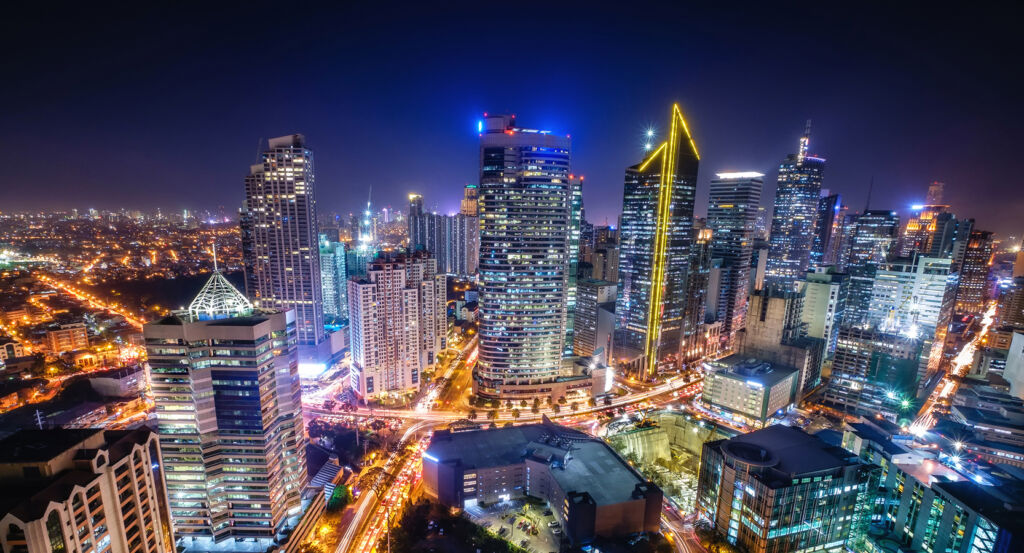
Set within Ortigas Center near the intersection of San Miguel Avenue and Lourdes Drive, The Westin Manila occupies a position among office towers, shopping complexes, residential developments and the major roads connecting Mandaluyong, Pasig, Makati and Central Manila. Its distinctive physical setting combines a contemporary luxury tower, dense commercial development, elevated highways and the tropical urban landscape of the eastern metropolitan district. The city is encountered primarily through movement between the hotel, nearby offices, malls, restaurants and the routes leading toward EDSA, the Pasig River, Makati and the historic core of Manila. A second atmosphere develops inside the property through restaurants, lounges, guest floors, wellness facilities, pools and event rooms that provide a polished refuge from traffic, humidity and the continuous activity of the capital. The result is an exceptional urban hotel whose architecture and setting connect Manila's corporate economy, regional culture, tropical climate and rapidly changing metropolitan form.
What defines The Westin Manila.
The Westin Manila is best known for marking Westin Hotels & Resorts' return to the Philippines and establishing a major international hospitality destination within Ortigas Center, among Metro Manila's principal financial and commercial districts. The project originated through Robinsons Land Corporation, the property development enterprise of the Gokongwei family's JG Summit Holdings, whose investments have played a substantial role in the expansion of Philippine commercial real estate and hospitality. Robinsons Land developed the property through its Robinsons Hotels and Resorts division, extending a portfolio that includes the Crowne Plaza and Holiday Inn hotels at Robinsons Galleria. The Westin project introduced a more explicitly wellness-oriented international hospitality concept to the company's expanding collection of Philippine hotels. New York-based Handel Architects designed Westin Sonata Place as an integrated hotel and residential development, bringing the firm's international experience in high-rise architecture to Mandaluyong's established business district. The development incorporates a hotel tower, a fifty-story residential tower, and a connecting podium, establishing a substantial architectural presence near the corporate headquarters of San Miguel Corporation. Its mixed-use conception linked international hospitality with the expanding market for branded residences, bringing two distinct property functions into a coordinated metropolitan development. The towers' shared architectural style reflects the growing importance of large-scale residential and commercial complexes within Metro Manila's increasingly vertical urban landscape. Marriott International partnered with Robinsons Land to introduce the Westin brand, extending a commercial relationship between international hotel management and one of the Philippines' most influential property developers. The Westin Manila officially opened on March 12, 2023, becoming a significant milestone in Westin's renewed expansion across Southeast Asia. Global brand leader Jennifer Connell participated in the opening announcement, emphasizing the company's established approach to wellness as a central component of its international hospitality identity. General manager Alexander Dietzsch directed the hotel's opening operations, bringing the brand's hospitality philosophy into a district associated with corporate headquarters, financial institutions, and major commercial developments. The project subsequently gained another dimension through the completion of its integrated residential component, strengthening the relationship between the hotel and the surrounding Ortigas property market. Robinsons Land's investment also reflected the recovery of international hospitality demand following the severe disruptions experienced by the Philippine tourism industry during the early 2020s. The Westin Manila represents an important chapter in the development of Ortigas Center, connecting the Gokongwei family's commercial property investments with contemporary high-rise architecture and the expansion of internationally branded hospitality in the Philippine capital.
Handel Architects' design establishes the property's distinctive physical character through a coordinated composition of rectangular tower forms, glazed façades, and expansive architectural frames that give the development a recognizable presence within Mandaluyong's skyline. The two towers employ related glass-and-metal window systems, punctuated by solid balconies and projecting architectural elements that introduce rhythm across their elevations. A shared podium connects the buildings physically and visually, establishing continuity between the hotel and the adjoining residential development. The architectural composition responds to Ortigas Center's dense metropolitan setting through a vertical arrangement that integrates distinct commercial and residential functions into a single urban complex. Within this environment, Westin's established wellness philosophy organizes the hotel's hospitality character around six interconnected principles: Sleep Well, Eat Well, Move Well, Feel Well, Work Well, and Play Well. The program extends the brand's longstanding emphasis on restorative sleep and physical well-being into an urban hotel conceived for the demands of international business travel. Its culinary character acquired greater distinction through the opening of Cantabria by Chele Gonzalez in March 2024, introducing the acclaimed Spanish chef's interpretation of his native region's gastronomy to the uppermost floor. Born in Torrelavega, Cantabria, Gonzalez developed his international reputation in the Philippines through Gallery by Chele, establishing a culinary approach informed by Spanish technique, contemporary experimentation, and the agricultural and maritime resources of Southeast Asia. Cantabria represents a more direct engagement with his Spanish heritage, emphasizing the seafood traditions, communal dining culture, and regional preparations associated with northern Spain. Its culinary conception draws upon the Cantabrian coast's longstanding fishing traditions, where the Atlantic Ocean has shaped a cuisine distinguished by seafood, carefully prepared meats, and an emphasis on the natural character of regional ingredients. The restaurant's interior references the heraldic symbolism of Cantabria, extending its regional character into a contemporary dining environment overlooking Metro Manila. Cantabria earned selection in the MICHELIN Guide's 2026 Philippine restaurant listings, bringing an important international culinary distinction to the property. The adjoining Aire32 rooftop venue develops a complementary relationship with the surrounding metropolis through an open-air setting that connects contemporary social hospitality with the expansive skyline of Ortigas. Together, Handel Architects' integrated tower design, Westin's wellness philosophy, and Gonzalez's interpretation of Cantabrian culinary heritage establish a distinctive relationship between international hospitality, contemporary metropolitan architecture, and the evolving gastronomic culture of Manila.
How The Westin Manila fits.
The Westin Manila works as the starting point for an exploration connecting Metro Manila's corporate development, its religious and cultural institutions and the historical layers that shaped the Philippine capital.
Begin at EDSA Shrine, the modern religious landmark where a domed church, public grounds and memorial spaces preserve the political and civic history associated with the People Power movement. The shrine stands near the Ortigas business district and connects contemporary urban development with the national struggles that shaped the Philippines during the late twentieth century. Its position beside major roads and office towers reveals how sacred space, political memory and metropolitan infrastructure occupy the same landscape. Continue to Lopez Museum and Library, the cultural institution where Philippine art, rare books, archives and historical collections present the intellectual and artistic development of the country. The museum's collections connect modern and contemporary Filipino artists with the literature, political history and social movements that shaped Manila's cultural life. Its location within the Ortigas district places scholarship and visual culture directly among the offices, malls and commercial buildings of the modern city. Continue to National Museum of Anthropology, the institution where archaeological objects, ethnographic collections, textiles, ornaments and Indigenous cultural materials present the diversity of the Philippine archipelago. The museum occupies a historic government building in Central Manila, connecting the country's regional cultures with the colonial and civic architecture of the old capital. Its collections provide a broader perspective on the traditions and communities that preceded the metropolitan development of Ortigas and the surrounding cities. Conclude at Rizal Park, the expansive civic landscape where gardens, monuments, museums and public avenues commemorate José Rizal and the national history of the Philippines. The park occupies a central position between Intramuros, Manila Bay and the historic government district, linking national memory with the open coastal geography of the capital. Its paths and monuments reveal how Manila's public character developed through independence, civic ceremony, education and national remembrance. The progression moves from EDSA Shrine's political and religious landscape through Lopez Museum and Library's artistic and intellectual collections, continues across National Museum of Anthropology's archipelagic heritage and concludes at Rizal Park, where Manila's corporate present, national history, art and civic character meet.
Where your story begins.
Foresyte Travel reveals places that feel extraordinary long before you arrive.
Enjoy editorial crafted for luxury travelers.
Foresyte may earn a commission when you book.