Why The Westin Singapore matters.
The Westin Singapore is a vertical Marina Bay hotel where Singapore's financial district meets Westin's wellness system, elevated city views, integrated office architecture and a 2013 opening that placed an international hotel inside Asia Square Tower 2.
Set along Marina View near Central Boulevard and just steps from Asia Square Mall, the hotel occupies Marina Bay's financial core between the reclaimed waterfront, the Shenton Way office corridor and the high-rise blocks extending toward Raffles Place. The physical setting is distinctive because business towers, underground retail, convention facilities and the open water of Singapore's southern coast converge within one intensely vertical district. The hotel is encountered through a sequence of elevated lobby, dining, wellness, pool and guestroom levels that separate it from the street while keeping the city and sea in constant view. Floor-to-ceiling glass, skyline-facing restaurants and an infinity pool create a continuous relationship between the upper floors and the surrounding urban horizon. The result is a hotel whose integration with Asia Square Tower 2, elevated position and wellness-focused design express Singapore's transformation into a global business capital.
What defines The Westin Singapore.
The Westin Singapore is best known for becoming Singapore's first integrated hotel within an office development when it opened in November 2013 inside Asia Square Tower 2. The hotel occupies levels 32 through 46 of the 46-story commercial tower, placing guestrooms, restaurants, wellness facilities and event rooms above a major business complex. Asia Square combines two million square feet of office space with a 305-room five-star hotel and 60,000 square feet of food and beverage and retail space. The Westin Singapore developed as part of a mixed-use financial district rather than as an isolated hotel building. Its 305 guestrooms and suites extend Westin's international accommodation system into a high-rise Marina Bay setting. Natural hues, Asian-inspired millwork, wood and stone bring a Pacific-oriented material language into the upper levels of the tower. The hotel's elevated position gives rooms and public spaces views toward the Singapore Strait, Marina Bay and the southern coastline. Two ballrooms and 1,350 square metres of event space connect the hotel to Singapore's conference, corporate and social calendar. The infinity pool adds a horizontal water element to a property otherwise organized around vertical circulation and high-rise outlooks. Heavenly Spa by Westin and WestinWORKOUT® Fitness Studio make wellbeing a central component of the hotel's identity. The hotel's architecture links office life, travel, dining, events and physical restoration within one tower. The Westin Singapore became a defining hospitality component of Asia Square by translating Westin's sleep and wellness language into Singapore's most concentrated business environment.
How The Westin Singapore fits.
The Westin Singapore works as a sophisticated base for a culturally coherent day that begins with Singapore's postcolonial civic art, continues through the preserved market architecture of Telok Ayer and concludes with the city's large-scale horticultural transformation along Marina Bay.
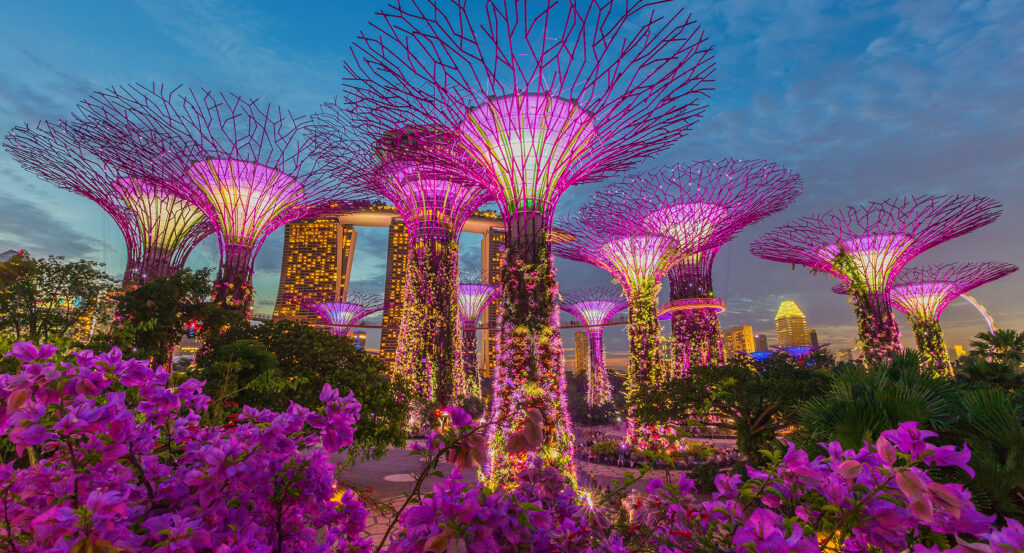
Begin at National Gallery Singapore, housed in the former City Hall and Supreme Court buildings at the center of Singapore's civic district. City Hall served as the site of the Japanese surrender in 1945, while the former Supreme Court represented the colonial legal system through its courtroom, library and administrative spaces. The two buildings were converted into the National Gallery after Singapore's independence, joining separate civic structures into one institution devoted to Singaporean and Southeast Asian modern art. The gallery oversees the world's largest public collection of Singapore and Southeast Asian modern art. Its architectural transformation preserved columns, domes, corridors and institutional interiors while introducing galleries, bridges and contemporary circulation. The National Gallery opens the itinerary through the political and artistic structures that shaped Singapore's transition from colonial administration to cultural nationhood. Continue to Lau Pa Sat, formerly known as Telok Ayer Market, whose market history reaches back to the nineteenth-century shoreline of Singapore. The octagonal market structure became associated with the name Lau Pa Sat, meaning “Old Market,” after Ellenborough Market introduced a newer market to the city. James MacRitchie designed the later cast-iron market structure around an octagonal plan, combining industrial materials with a public food market. The market served wet-market commerce for nearly a century before changing into a food and dining destination as Singapore's central business district expanded around it. Telok Ayer Market became a National Monument in July 1973, placing market architecture within the city's protected built heritage. Lau Pa Sat advances the route from civic institutions into the food, trade and migration networks that sustained Singapore's commercial life. Conclude at Gardens by the Bay, created as a national garden and horticultural destination on the reclaimed land of Marina Bay. The project presents tropical forests, cool-climate plants, Heritage Gardens and large conservatories within a landscape designed for both education and public leisure. The Flower Dome became the world's largest glass greenhouse in 2015, while the garden's plant collections extend from tropical species to vegetation associated with different climates and cultural traditions. Heritage Gardens connect Chinese, Indian, Malay and colonial histories with plant life, showing how botanical landscapes carry social memory as well as ecological meaning. Supertree structures, conservatories and waterfront planting turn Marina Bay into a large-scale garden system. The progression moves from National Gallery Singapore's civic conversion and Southeast Asian art collections through Lau Pa Sat's market architecture and commercial history, then culminates at Gardens by the Bay's horticultural reimagining of reclaimed waterfront, revealing how Singapore transformed administration, trade and land into a modern cultural landscape.
Where your story begins.
Foresyte Travel reveals places that feel extraordinary long before you arrive.
Enjoy editorial crafted for luxury travelers.