Why Thean Hou Temple matters.
Thean Hou Temple is a six-tiered Chinese religious complex where Robson Heights' hillside setting meets Malaysia's Hainanese immigrant heritage, the worship of the sea goddess Mazu and the architectural traditions maintained by Kuala Lumpur's Chinese community.
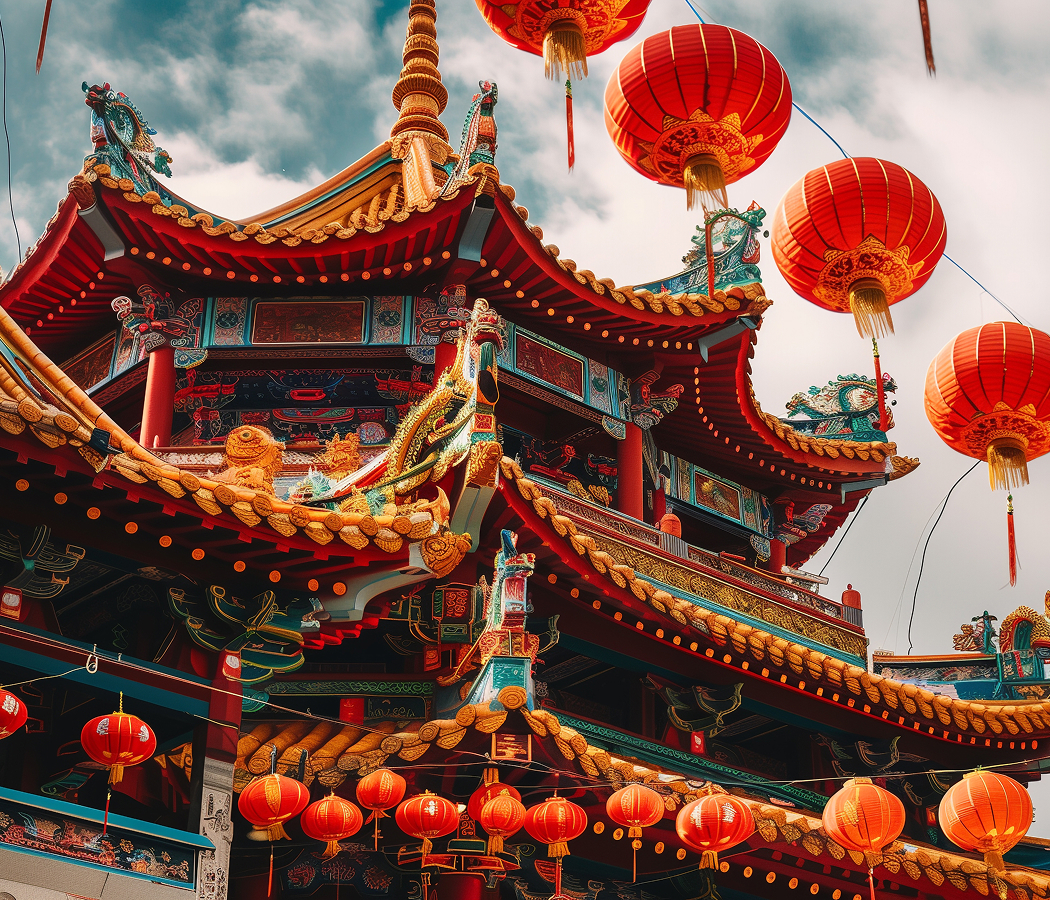
Set along Persiaran Endah near Jalan Syed Putra and a short drive from Mid Valley Megamall, the temple occupies a wooded hilltop in Robson Heights, overlooking the residential districts of Seputeh and Brickfields with elevated views toward Central Kuala Lumpur. Its tiered roofs rise above a broad ceremonial courtyard supported by substantial terraces. Red columns, ornamental roof ridges and carved architectural details distinguish the principal worship halls. Exterior stairways connect the entrance forecourt with the upper religious spaces. The result is a hilltop sanctuary whose architecture and religious functions connect Kuala Lumpur's Chinese immigrant history with the continuing ceremonial traditions of Malaysia's Hainanese community.
What defines Thean Hou Temple.
Thean Hou Temple is best known for its dedication to the Chinese sea goddess Mazu, its six-tiered architectural composition and its role as a major religious and cultural institution for Kuala Lumpur's Hainanese community. The temple developed through the Selangor and Federal Territory Hainan Association, an organization established to support the social, cultural and religious interests of Hainanese immigrants and their descendants. Hainanese migration to British Malaya increased during the nineteenth and early twentieth centuries, contributing to the development of Chinese communities in Kuala Lumpur and other commercial centers. Migrants from Hainan maintained religious traditions associated with Mazu, a protective deity whose worship originated in the coastal communities of southeastern China. Mazu's religious importance developed through her association with maritime safety, reflecting the experiences of merchants, sailors and migrants traveling across the South China Sea. The association initiated plans for a substantial temple complex during the late twentieth century, establishing a permanent religious center for the community. Construction began in 1981 on a hillside site selected for its elevation and accessibility within Kuala Lumpur. The project incorporated architectural elements associated with traditional Chinese temple construction, including tiered roofs, decorative ridges and substantial ceremonial courtyards. Building work continued through the 1980s, supported by contributions from the Hainanese community and other donors. The temple was completed in 1987 and formally opened in 1989, establishing a major religious institution within Malaysia's capital. Its principal worship spaces were dedicated to Mazu, with additional altars honoring other Chinese deities associated with compassion and protection. The temple developed a substantial program of religious ceremonies, cultural festivals and community activities. Lunar New Year celebrations became particularly important, attracting worshippers participating in traditional offerings and seasonal observances. The complex also became associated with marriage registration and wedding ceremonies, extending its functions beyond devotional worship. Its continuing role connects Hainanese community organization with the preservation of Chinese religious practices in multicultural Malaysia.
Mazu occupies the principal position within the temple's religious arrangement, with devotional spaces organized around altars, offerings and ceremonial circulation. The main prayer hall contains representations of the sea goddess alongside Guanyin, the bodhisattva associated with compassion, and Shui Wei Sheng Niang, a protective deity revered in Hainanese traditions. Worshippers approach the altars through a sequence of courtyards and covered spaces, carrying incense and other offerings associated with Chinese religious practice. The temple's architectural composition combines elements of Buddhist, Taoist and traditional Chinese religious design. Its six-tiered structure incorporates sweeping rooflines supported by red columns and decorated with dragons, phoenixes and other ornamental figures. Ceramic roof tiles and painted timber details contribute to the building's traditional architectural appearance. The principal courtyard contains substantial columns and open gathering areas used during festivals and religious ceremonies. Decorative lanterns extend across exterior spaces, particularly during Lunar New Year observances. The temple's upper terraces provide views across Kuala Lumpur's southern residential districts and the surrounding urban landscape. A ceremonial staircase connects the lower entrance area with the principal worship levels. The complex incorporates landscaped grounds and ornamental features associated with Chinese garden design. Religious festivals include offerings, prayers and community gatherings organized around the traditional lunar calendar. The temple's marriage registration facilities support civil ceremonies and wedding photography within the architectural setting. Its cultural programs preserve Hainanese traditions through public celebrations and community participation. The building's elevated position and substantial ceremonial spaces accommodate both individual worship and large gatherings associated with Kuala Lumpur's Chinese community.
How Thean Hou Temple fits.
Thean Hou Temple works as the religious and cultural centerpiece for a Kuala Lumpur itinerary connecting Chinese community institutions, the capital's transportation heritage and the development of its multicultural urban districts.
Begin at Buddhist Maha Vihara, the Buddhist temple situated in Brickfields. Established in 1894, the institution developed through the efforts of Kuala Lumpur's Sinhalese Buddhist community during the British colonial period. Its principal shrine incorporates architectural elements associated with Sri Lankan Buddhist traditions, including a substantial Buddha image and ceremonial spaces used for devotional observances. The temple became an important center for Buddhist education, religious festivals and community activities. Its annual Wesak celebrations commemorate events associated with the life of the Buddha. The institution preserves the historical contribution of Sri Lankan migrants to the religious development of Kuala Lumpur. Continue to Kuala Lumpur Railway Station, the historic railway complex situated near the city's original administrative district. Completed in 1910, the station was designed by architect Arthur Benison Hubback, whose work incorporated Indo-Saracenic architectural elements into several major buildings in British Malaya. Its façade contains pointed arches, domed towers and decorative details associated with colonial-era railway architecture. The station became an important transportation hub connecting Kuala Lumpur with other commercial centers across the Malay Peninsula. Its development supported the movement of passengers and commodities during the expansion of the colonial railway network. Conclude at Sri Kandaswamy Temple, the Hindu temple situated in Brickfields and associated with Kuala Lumpur's Sri Lankan Tamil community. The temple was established during the early twentieth century and developed into a major center for the worship of Murugan, a Hindu deity associated with Tamil religious traditions. Its architecture incorporates a decorated entrance tower and ceremonial spaces used for Hindu worship. Religious observances include offerings, processions and festivals organized according to the Tamil religious calendar. The institution preserves the cultural and devotional traditions of Sri Lankan Tamil migrants whose communities contributed to Kuala Lumpur's urban development. The progression moves from Sinhalese Buddhist heritage through colonial railway architecture and culminates in Tamil Hindu religious practice, connecting Thean Hou Temple with the immigrant communities and institutions that shaped Kuala Lumpur.
Where your story begins.
Foresyte Travel reveals places that feel extraordinary long before you arrive.
Enjoy editorial crafted for luxury travelers.
Foresyte may earn a commission when you book.