Why Wat Phra Singh matters.
Wat Phra Singh is a revered Buddhist temple where Chiang Mai Old City's royal Lanna heritage meets the artistic achievements of northern Thai Buddhism, the veneration of the Phra Buddha Sihing image and the preservation of one of Thailand's most distinguished religious architectural complexes.
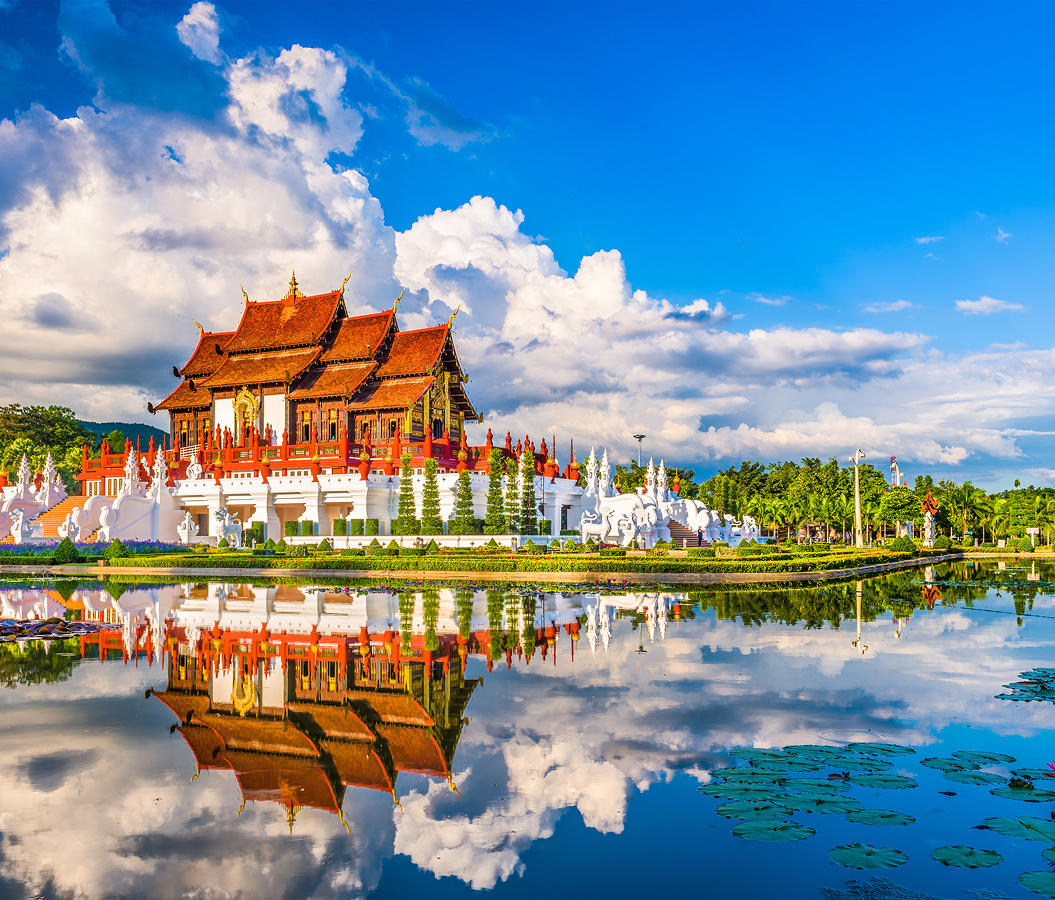
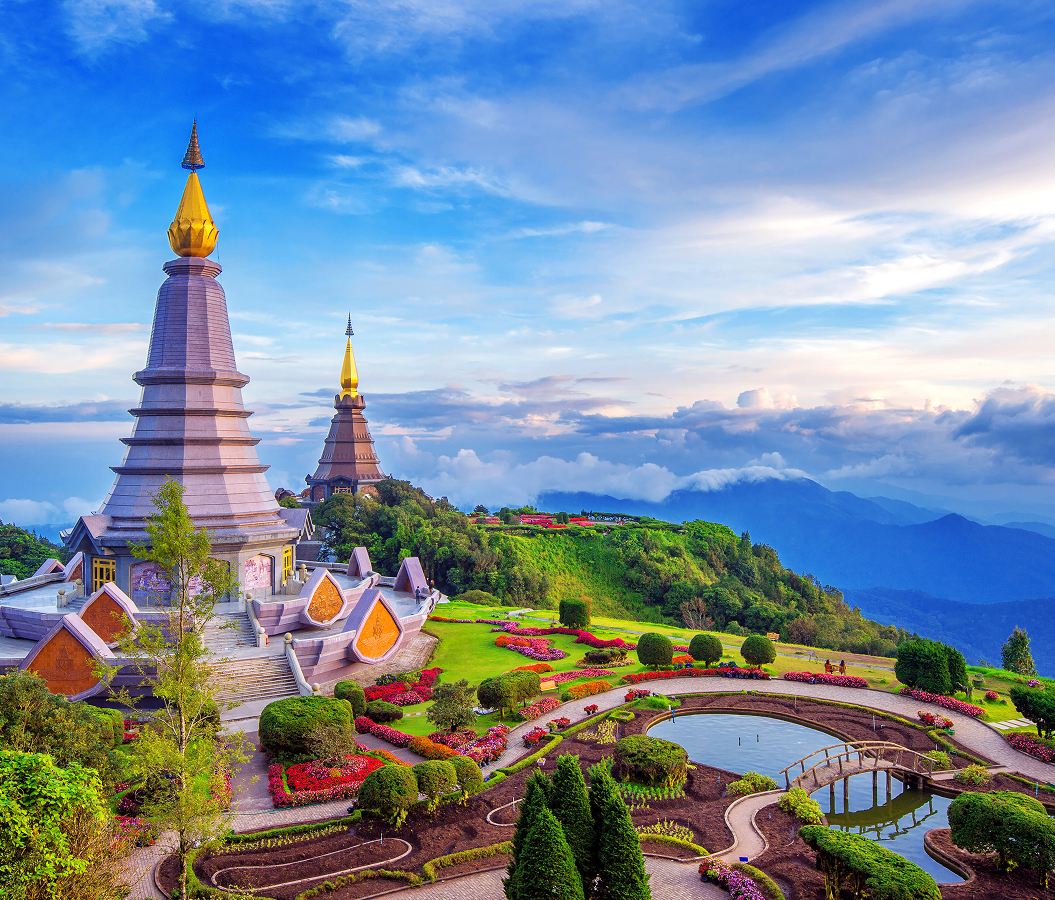
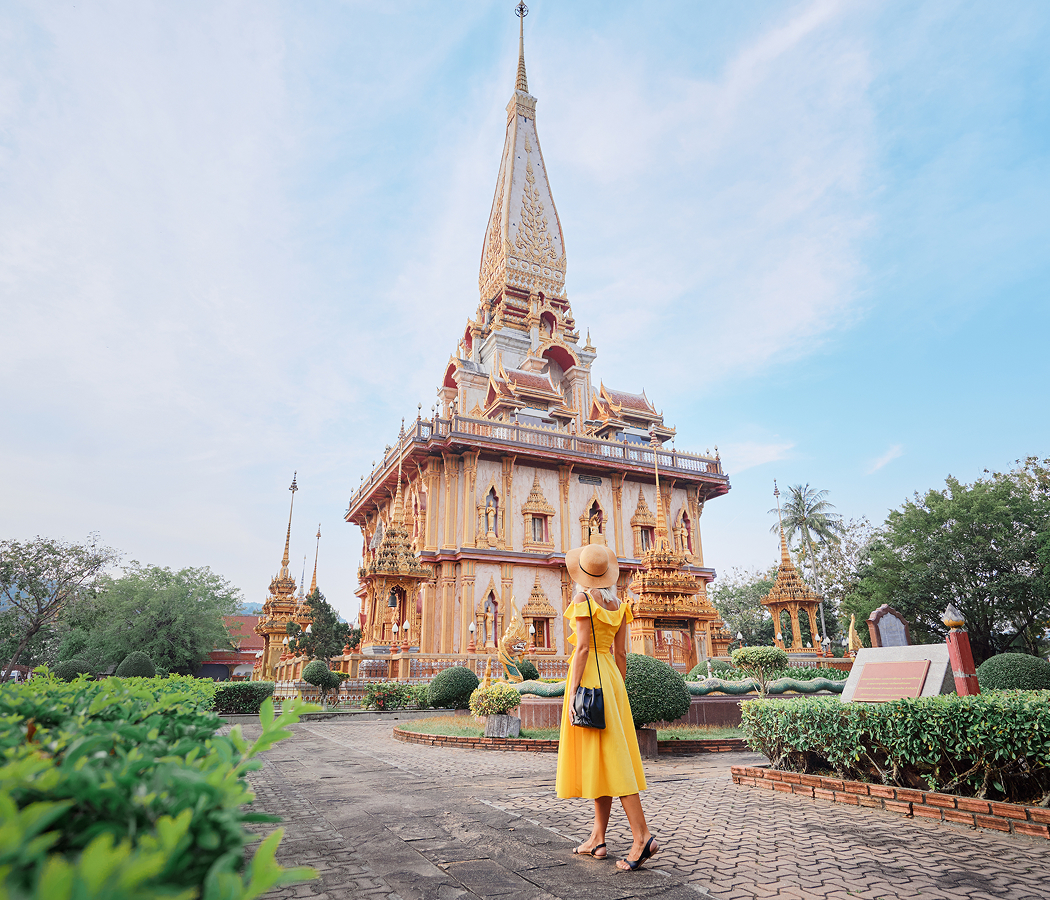
Occupying the western end of Chiang Mai's historic ceremonial corridor, the temple stands inside the ancient city walls, east of Suan Dok Gate and south of the northern moat, with Ratchadamnoen Road extending toward Tha Phae Gate and the forested mountains of Doi Suthep rising beyond the western suburbs. Its extensive grounds incorporate gilded stupas, elaborately decorated assembly halls and shaded courtyards organized around a network of paved walkways. Tiered wooden roofs, carved gables and ornamental naga staircases establish the architectural character of the principal religious buildings. Mature trees and carefully maintained gardens create open spaces between the ceremonial structures, allowing the complex's contrasting rooflines and golden surfaces to emerge against the surrounding urban landscape. The result is a substantial monastic environment whose historic architecture, sacred imagery and carefully organized courtyards preserve the religious character of Chiang Mai's former royal capital.
What defines Wat Phra Singh.
Wat Phra Singh is best known for its foundation under the Mangrai dynasty and its association with the Phra Buddha Sihing, among northern Thailand's most revered Buddhist images. King Phayu, the fifth ruler of the Lanna kingdom, established the temple in 1345 during a period when Chiang Mai was consolidating its position as a major political and religious center. The original foundation centered on a chedi constructed to enshrine the ashes of Phayu's father, King Kham Fu, connecting the institution to royal funerary traditions and the Buddhist accumulation of merit. Additional religious buildings followed, and the complex acquired the name Wat Li Chiang Phra, associated with the marketplace occupying the surrounding district. The temple's development coincided with the increasing influence of Theravada Buddhist institutions across northern Thailand, supported by royal patronage and connections with religious communities throughout mainland Southeast Asia. The arrival of the Phra Buddha Sihing image during the late fourteenth or early fifteenth century transformed the institution's religious importance. Lanna traditions associate the image with an extended journey through Sri Lanka and several Thai kingdoms before its arrival in Chiang Mai. Its transfer established a significant relationship between royal authority, Buddhist legitimacy and the possession of sacred images. The temple subsequently acquired the name Wat Phra Singh, commemorating the image whose veneration became central to its religious function. Chiang Mai experienced substantial political disruption following the extension of Burmese authority over Lanna in 1558, beginning a prolonged period of changing regional administration. Warfare, population displacement and the weakening of royal patronage contributed to the deterioration of numerous religious institutions. The restoration of Lanna political authority under King Kawila during the late eighteenth century introduced renewed investment in Chiang Mai's temples and ceremonial buildings. Kawila's reconstruction campaigns contributed to the revival of Wat Phra Singh, reconnecting the institution to the political and religious organization of the recovering city. Further architectural development occurred during the nineteenth century, when Lanna rulers supported the reconstruction of assembly halls and the preservation of important Buddhist images. The temple's association with the Phra Buddha Sihing also established a central role in the annual Songkran festival, when the sacred image became the focus of public processions and ritual bathing. The revered monk Khruba Siwichai directed major restoration activities during the early twentieth century, contributing to a wider revival of Buddhist architecture across northern Thailand. His work at Wat Phra Singh formed part of an extensive program of temple reconstruction and religious patronage throughout the Lanna region. In 1924, the principal Viharn Luang was reconstructed, establishing a substantial ceremonial building suited to the temple's religious importance. Restoration work during 1925 uncovered funerary urns within a smaller chedi, introducing another historical connection to the complex's royal origins. King Ananda Mahidol, Rama VIII, granted Wat Phra Singh first-class royal temple status in 1935, formally recognizing its importance within Thailand's Buddhist establishment. The institution's full designation, Wat Phra Singh Woramahawihan, preserves this distinguished royal classification. Its continuing religious significance also incorporates Lanna zodiac traditions, which associate the temple with people born in the Year of the Dragon. Wat Phra Singh's historical importance derives from its royal foundation, the enduring veneration of its principal Buddha image and its central role in preserving the religious and architectural heritage of the Lanna kingdom.
Viharn Lai Kham establishes the temple's most significant artistic environment through an exceptional combination of Lanna architectural craftsmanship, Buddhist imagery and historical mural painting. The assembly hall incorporates a steeply layered roof, elaborate carved wooden elements and gilded decorative surfaces associated with northern Thai religious architecture. Its entrance incorporates richly ornamented gables and sculptural details that connect the building to the artistic traditions of the former Lanna kingdom. Inside, the Phra Buddha Sihing occupies a prominent ceremonial position, establishing the principal devotional focus of the hall. The bronze image presents the Buddha in the earth-touching posture, a representation associated with enlightenment and the defeat of Mara. Its sculptural treatment incorporates characteristics associated with the Chiang Saen tradition, including compact bodily proportions, carefully modeled features and a distinctive arrangement of the monastic robe. The surrounding interior develops through gilded columns, decorative woodwork and carefully organized religious imagery. Wall paintings introduce another important artistic dimension through scenes associated with Buddhist literature and historical northern Thai society. The murals incorporate episodes from the Sang Thong and Suwanna Hong narratives, presenting royal courts, domestic interiors, social gatherings and architectural settings through elaborate painted compositions. Their historical importance extends beyond religious storytelling through the preservation of clothing, hairstyles, household objects and social customs associated with nineteenth-century Lanna culture. The paintings establish a detailed visual connection between Buddhist literary traditions and the cultural environments in which the artists worked. The principal Viharn Luang contributes a contrasting architectural scale through its expansive interior, substantial supporting columns and richly decorated altar. Its Central Buddha image, Phra Chao Thong Tip, establishes another devotional focus within the complex. The building's reconstructed structure incorporates reinforced concrete elements alongside traditional decorative forms, demonstrating the adaptation of historic Lanna architecture through twentieth-century construction techniques. The principal golden chedi establishes the temple's most prominent exterior feature, rising above the surrounding roofs through a sequence of stepped architectural forms. Its gilded surfaces and ornamental details connect the structure to the royal funerary traditions associated with the original foundation. Smaller stupas contribute additional ceremonial elements, establishing a varied architectural composition across the monastic grounds. The Ho Trai scripture library preserves another distinctive example of northern Thai religious craftsmanship through an elevated wooden structure supported by a decorated masonry base. Its sculptural ornamentation incorporates celestial figures and protective motifs associated with Buddhist cosmology. The elevated construction historically protected palm-leaf manuscripts from moisture and insects, connecting the building's architectural form to the preservation of religious texts. The ordination hall, or ubosot, supports the formal ceremonies associated with monastic life, including the ordination of Buddhist monks. Its decorative program incorporates traditional Lanna elements and sacred imagery suited to the ceremonial requirements of the Buddhist community. The temple's religious calendar contributes another substantial dimension through merit-making ceremonies, chanting and seasonal observances associated with the northern Thai Buddhist tradition. During Songkran, the Phra Buddha Sihing becomes the focus of public devotion as worshippers participate in ritual bathing with scented water. The ceremony connects the temple to Chiang Mai's wider cultural calendar and the continued importance of Buddhist observances within regional society. Wat Phra Singh's distinctive achievement emerges from the preservation of sacred sculpture, historical painting, royal religious architecture and living Buddhist traditions within one of northern Thailand's most important monastic complexes.
How Wat Phra Singh fits.
Wat Phra Singh works as the starting point for an exploration connecting Chiang Mai's royal foundation, the development of Lanna political authority and the expansive religious architecture of the kingdom's historic capital.
Begin at Three Kings Monument, the ceremonial sculpture commemorating the rulers associated with Chiang Mai's foundation in 1296. The bronze composition depicts King Mangrai of Lanna alongside King Ramkhamhaeng of Sukhothai and King Ngam Muang of Phayao, preserving the traditional association between the three monarchs and the establishment of the northern capital. The monument was installed in 1983, introducing a major civic memorial within the historic city center. Its surrounding square occupies an important ceremonial position near the former provincial administration buildings. The adjacent civic precinct connects the memory of Chiang Mai's founding rulers to the preservation of the city's historical institutions. Continue to Wat Chiang Man, the oldest Buddhist temple associated with Chiang Mai's original royal settlement. King Mangrai established the monastery in 1297 on land associated with his residence during the construction of the new capital. Its Chedi Chang Lom incorporates sculpted elephants supporting a substantial stupa, establishing one of the most distinctive examples of early Lanna religious architecture. The temple preserves the Phra Sila marble Buddha and the crystal Phra Setangkhamani, two revered images associated with the religious traditions of the northern kingdom. Its surviving assembly halls and ceremonial structures establish an important architectural connection to the earliest period of Chiang Mai's development. Conclude at Wat Chedi Luang, the major Buddhist complex associated with the architectural ambitions of the later Lanna monarchy. Construction began during the reign of King Saen Mueang Ma in the late fourteenth century and continued under subsequent rulers. The enormous brick chedi achieved its mature form during the fifteenth century, becoming one of the most imposing religious structures in northern Thailand. A major earthquake in 1545 damaged its upper section, leaving the surviving monument with its distinctive truncated profile. The temple also contains the Inthakhin city pillar, an important ceremonial object associated with the protection and prosperity of Chiang Mai. The progression moves from Three Kings Monument's commemoration of royal foundation through Wat Chiang Man's earliest monastic architecture and culminates in Wat Chedi Luang's expansive religious heritage, connecting the political and spiritual development of the Lanna capital.
Where your story begins.
Foresyte Travel reveals places that feel extraordinary long before you arrive.
Enjoy editorial crafted for luxury travelers.
Foresyte may earn a commission when you book.