Why Wat Phra That Doi Suthep matters.
Wat Phra That Doi Suthep is a sacred mountaintop Buddhist temple where Doi Suthep's forested highlands meet the royal religious heritage of the Lanna kingdom, the veneration of a relic of the Buddha and one of northern Thailand's most important pilgrimage traditions.
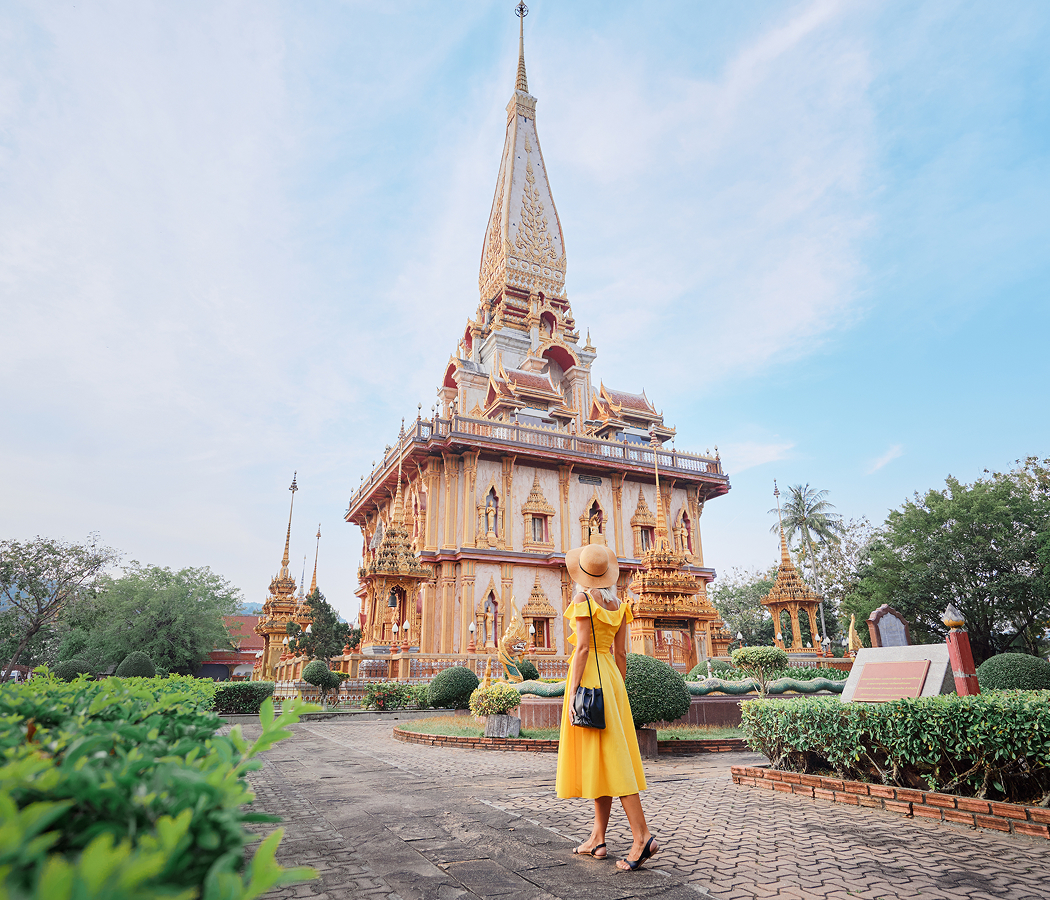
Rising above Chiang Mai's western suburbs within the protected mountain landscape of Doi Suthep-Pui National Park, the temple occupies a forested summit overlooking the Chiang Mai Basin, with the slopes of Doi Pui extending westward and the historic city spreading across the plains below. Its elevated position creates a dramatic approach through dense woodland, culminating in an expansive staircase flanked by elaborately sculpted serpent balustrades. Golden stupas, tiered temple roofs and richly ornamented ceremonial buildings occupy a series of courtyards overlooking the surrounding mountains. Broad terraces open toward the eastern horizon, establishing expansive views across Chiang Mai and the distant agricultural landscape. The result is an exceptional religious complex whose mountain geography, elaborate Lanna architecture and sacred ceremonial spaces connect the former northern kingdom's Buddhist traditions to its surrounding natural environment.
What defines Wat Phra That Doi Suthep.
Wat Phra That Doi Suthep is best known for its foundation under King Kue Na during the fourteenth century and its association with a revered relic of the Buddha, establishing a sacred relationship between the Lanna monarchy and the mountain overlooking Chiang Mai. The temple's foundation dates to 1383, during a period when the Lanna kingdom was consolidating its political authority and expanding its network of Buddhist religious institutions. King Kue Na, also known as King Kuena, ruled Chiang Mai during an important phase in the development of Theravada Buddhist traditions across northern Thailand. His patronage contributed to the establishment of religious institutions connected to monastic communities in Sukhothai and other centers of Buddhist learning. The temple's foundation tradition centers on the monk Sumanathera, who traveled north from Sukhothai carrying a sacred relic associated with the Buddha. The relic entered Lanna religious tradition through its association with the royal court, establishing an important connection between the kingdom's political authority and the veneration of Buddhist sacred objects. According to the temple's founding legend, the relic divided into two portions, with one enshrined at Wat Suan Dok and the other placed upon the back of a white elephant. The elephant ascended Doi Suthep, stopped near the summit, trumpeted three times and died, establishing the location chosen for the construction of the mountain shrine. The narrative became central to the temple's religious significance, connecting the sanctity of the mountain to the presence of the Buddha's relic. The original chedi developed into the principal ceremonial structure, establishing a devotional focus that attracted pilgrims from Chiang Mai and surrounding Lanna communities. Successive rulers expanded the temple complex, introducing additional assembly halls, religious images and architectural ornamentation associated with northern Thai Buddhist traditions. The mountain's geographical separation from the city contributed to its importance as a destination for pilgrimage, meditation and religious merit-making. Pilgrims historically ascended through forest paths connecting the western approaches of Chiang Mai to the summit, establishing a demanding journey associated with Buddhist devotion. The temple's development continued through the political changes that followed Burmese control of Lanna in 1558, preserving its religious importance during a prolonged period of changing regional authority. The restoration of Chiang Mai's political institutions during the late eighteenth century renewed royal patronage of major Buddhist sites, contributing to the preservation of the mountain shrine. Subsequent reconstruction introduced additional decorative elements and ceremonial buildings, strengthening the temple's association with Lanna religious architecture. A decisive development occurred during the early twentieth century through the activities of Khruba Siwichai, the revered northern Thai monk associated with the restoration of Buddhist temples across the Lanna region. His extensive religious construction campaigns established a substantial following among communities throughout northern Thailand, connecting monastic leadership to collective acts of religious merit-making. In 1934, Siwichai organized the construction of a motor road connecting the base of Doi Suthep to the temple, transforming access to the mountain shrine. The project began on November 9, 1934, with a ceremonial inauguration attended by Chiang Mai's ruling prince, Kaew Nawarat. Thousands of volunteers contributed labor and resources, constructing the route through mountainous terrain using hand tools and community-supported organization. The road opened on April 30, 1935, following five months and twenty-two days of construction, establishing a substantial infrastructural achievement associated with northern Thai Buddhist devotion. Its completion transformed the relationship between Chiang Mai and the mountain temple, facilitating religious pilgrimage and strengthening the shrine's position within the region's ceremonial calendar. The temple subsequently developed into a major destination for Buddhist worshippers throughout Thailand, preserving its association with the sacred relic and the Lanna kingdom's religious heritage. The annual Visakha Bucha pilgrimage became a particularly important expression of this relationship, with devotees ascending the mountain to commemorate the Buddha's birth, enlightenment and passing into parinirvana. Wat Phra That Doi Suthep's historical significance derives from its royal foundation, the enduring religious importance of its sacred relic and the remarkable community achievement associated with the construction of its mountain road.
Wat Phra That Doi Suthep's architectural program develops through the integration of Lanna Buddhist symbolism, elaborate ceremonial craftsmanship and a carefully organized sequence of sacred spaces. The principal approach incorporates a staircase of 306 steps, bordered by expansive naga sculptures whose elongated bodies extend along the ascending balustrades. These seven-headed serpents represent protective beings within Buddhist cosmology, establishing a symbolic passage between the surrounding mountain landscape and the elevated religious sanctuary. Their decorative surfaces incorporate intricate scales, ornamental crests and richly colored details associated with northern Thai temple craftsmanship. The staircase culminates in an entrance complex opening toward the principal courtyards, where ceremonial buildings surround the sacred inner precinct. The central chedi rises twenty-two meters, establishing the dominant architectural feature of the temple. Its gilded exterior incorporates a substantial octagonal base supporting a bell-shaped upper structure associated with the Chiang Saen tradition of Buddhist architecture. Gold-colored metal plates cover the principal surfaces, creating a luminous ceremonial monument whose proportions and ornamentation preserve distinctive elements of Lanna stupa design. The sacred relic occupies an enclosed chamber within the structure, establishing the religious focus of the surrounding ceremonial courtyard. Devotees undertake clockwise circumambulation around the chedi, carrying lotus flowers, incense and candles as part of traditional Buddhist merit-making practices. The ritual connects the physical movement of worshippers to the veneration of the Buddha and the accumulation of spiritual merit. Ornamental parasols occupy positions around the sacred monument, contributing to the ceremonial composition through gilded surfaces and elaborate metalwork. Their architectural significance derives from the use of royal and religious parasols as symbols of honor, protection and sacred authority within Southeast Asian Buddhist traditions. The surrounding viharns incorporate steeply pitched roofs, layered eaves and richly carved gables associated with traditional Lanna religious architecture. Their interior spaces contain Buddha images arranged upon elevated altars, with decorative columns and painted surfaces contributing to the ceremonial environment. The principal images incorporate iconographic forms associated with Theravada Buddhist devotion, including representations of the Buddha in meditation and the earth-touching posture. Murals and decorative panels introduce episodes from Buddhist literature, establishing connections between religious instruction and the visual traditions of northern Thailand. Smaller shrines occupy positions throughout the surrounding courtyards, creating additional spaces for offerings and individual prayer. A white elephant statue commemorates the founding tradition, preserving the animal's symbolic importance within the temple's religious history. The ceremonial grounds also incorporate rows of bells, whose ringing forms part of devotional practices associated with the mountain shrine. A substantial viewing terrace extends toward the eastern side of the complex, establishing a broad perspective across the Chiang Mai Basin. Its elevation exceeds one thousand meters above sea level, placing the temple within the cooler mountain environment associated with Doi Suthep's upper slopes. The surrounding vegetation incorporates montane forest communities whose ecological character differs substantially from the agricultural and urban landscapes occupying the valley below. The temple's religious calendar contributes another important dimension through Buddhist holy days, monastic ceremonies and seasonal festivals associated with the northern Thai tradition. During Visakha Bucha, pilgrims undertake the mountain ascent as an act of devotion, connecting the temple's ceremonial significance to the physical landscape surrounding Chiang Mai. The shrine also occupies an important position within Lanna zodiac traditions, particularly for people born in the Year of the Goat, whose associated pilgrimage destination is Wat Phra That Doi Suthep. The complex's distinctive religious character emerges from the coordination of sacred relic veneration, expansive Lanna architecture, traditional Buddhist ritual and a mountain setting that has shaped its ceremonial importance for centuries.
How Wat Phra That Doi Suthep fits.
Wat Phra That Doi Suthep works as the spiritual centerpiece of an exploration connecting the religious achievements of northern Thai monastic communities, the preservation of mountain forest temples and the cultural heritage of the highland settlements surrounding Chiang Mai.
Begin at Kruba Srivichai Monument, the commemorative shrine honoring the revered Buddhist monk whose religious construction campaigns transformed access to Doi Suthep. The monument occupies a prominent position near the mountain's principal eastern approach, establishing a ceremonial connection between Chiang Mai and the road ascending toward the sacred summit. Khruba Siwichai was born in 1878 in Lamphun Province and became one of the most influential religious figures in northern Thailand during the early twentieth century. His extensive restoration campaigns incorporated numerous Buddhist temples across the Lanna region, supported by substantial networks of monastic followers and lay volunteers. The monument preserves his association with communal religious construction and the preservation of northern Thai Buddhist heritage. Continue to Wat Pha Lat, the forest monastery occupying a sheltered mountainside setting along the traditional pilgrimage route ascending Doi Suthep. The temple developed as a resting place for pilgrims traveling between Chiang Mai and the sacred mountain summit, establishing a substantial connection to the region's historic religious paths. Its name refers to a sloping rock formation, preserving the relationship between the monastery and the surrounding natural landscape. Stone staircases, traditional religious buildings and sculptural elements occupy a wooded ravine crossed by a mountain stream. The surviving architecture incorporates Burmese and Lanna influences, establishing a distinctive artistic environment within the protected forest. Conclude at Doi Pui Hmong Village, the highland settlement associated with the cultural traditions of Hmong communities living in the mountains west of Chiang Mai. The village occupies an elevated landscape within the Doi Suthep-Pui mountain range, where agricultural cultivation and traditional household activities developed through adaptation to the region's cooler climatic conditions. Hmong communities established settlements across northern Thailand through historical migrations from southern China and neighboring mainland Southeast Asian regions. Their cultural traditions incorporate distinctive textile production, embroidery and ornamental clothing associated with community character and ceremonial occasions. The village's handicraft displays and cultural exhibits preserve important elements of highland domestic life, connecting the surrounding mountain landscape to the history of northern Thailand's ethnic communities. The progression moves from Kruba Srivichai Monument's commemoration of religious leadership through Wat Pha Lat's forest monastic heritage and culminates in Doi Pui Hmong Village's highland cultural traditions, connecting three consequential dimensions of Chiang Mai's sacred mountain landscape.
Where your story begins.
Foresyte Travel reveals places that feel extraordinary long before you arrive.
Enjoy editorial crafted for luxury travelers.
Foresyte may earn a commission when you book.