Why Wormsloe State Historic Site matters.
Wormsloe State Historic Site is a remarkable colonial estate where Isle of Hope's maritime landscape meets Georgia's earliest British settlement, the agricultural ambitions of Noble Jones and one of the American South's most celebrated avenues of live oaks.
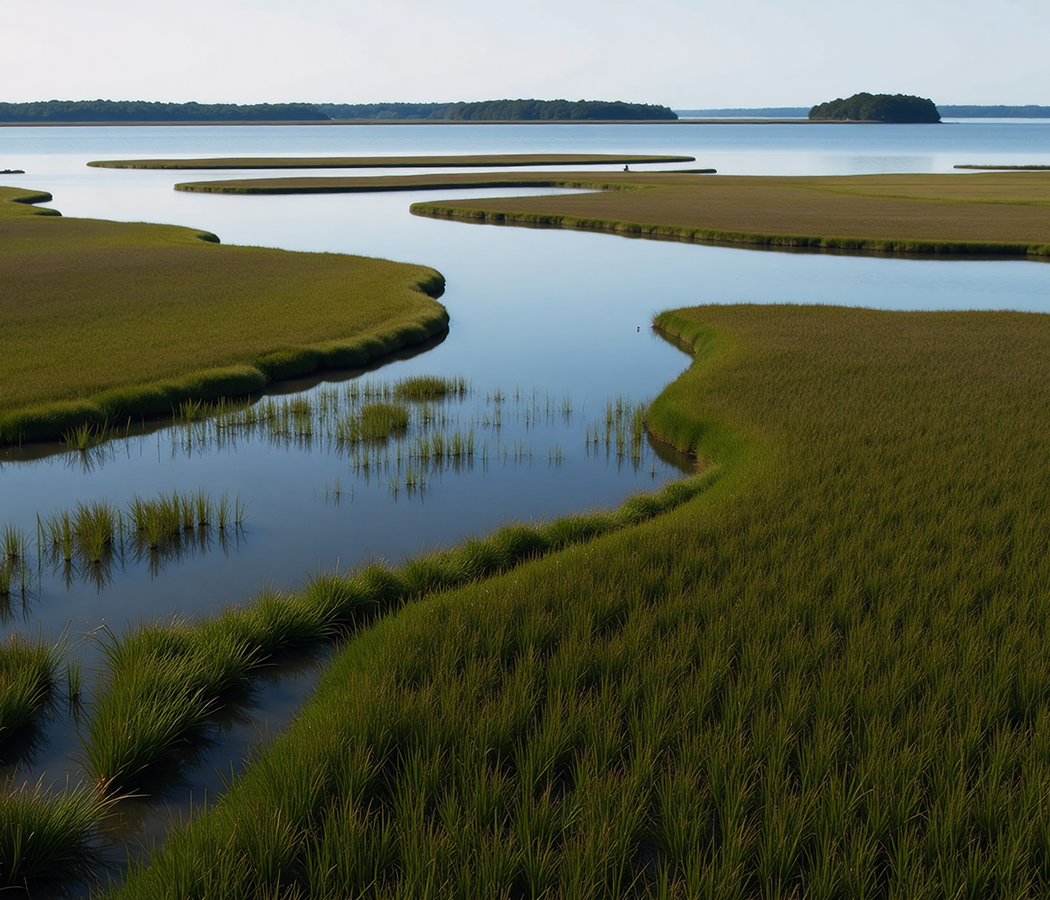
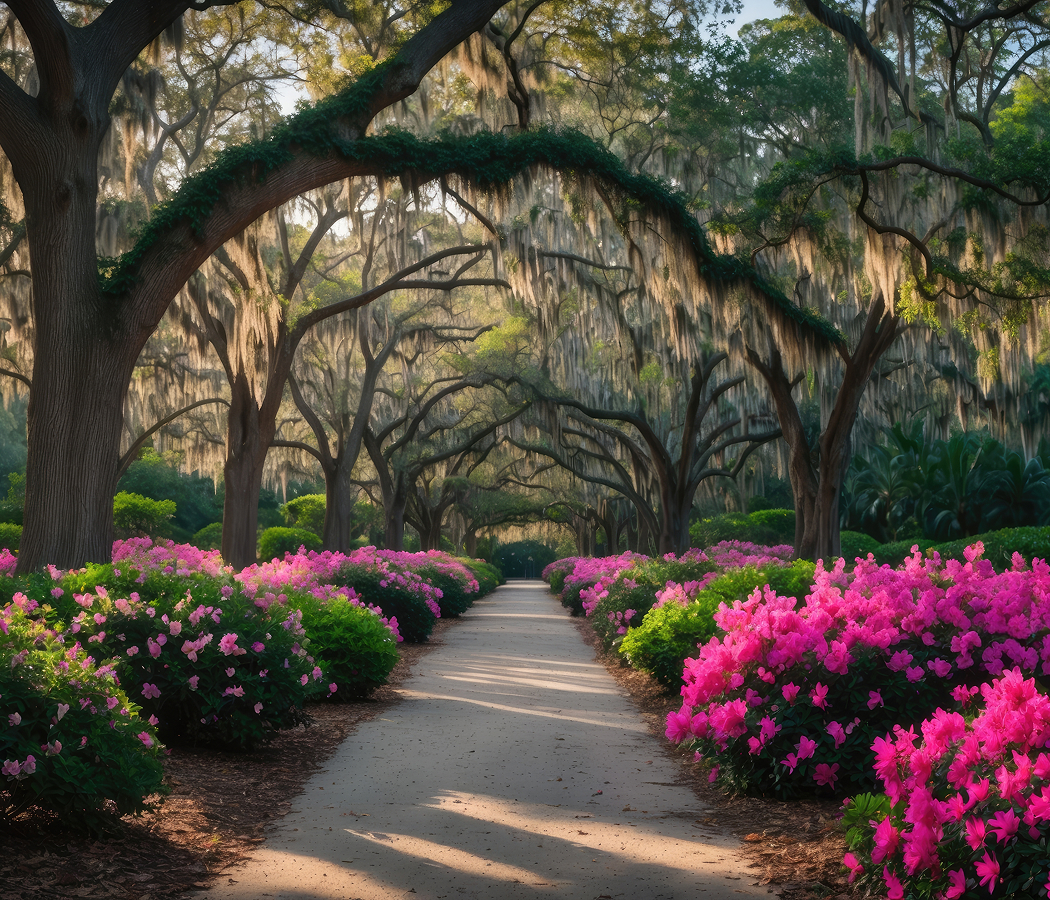
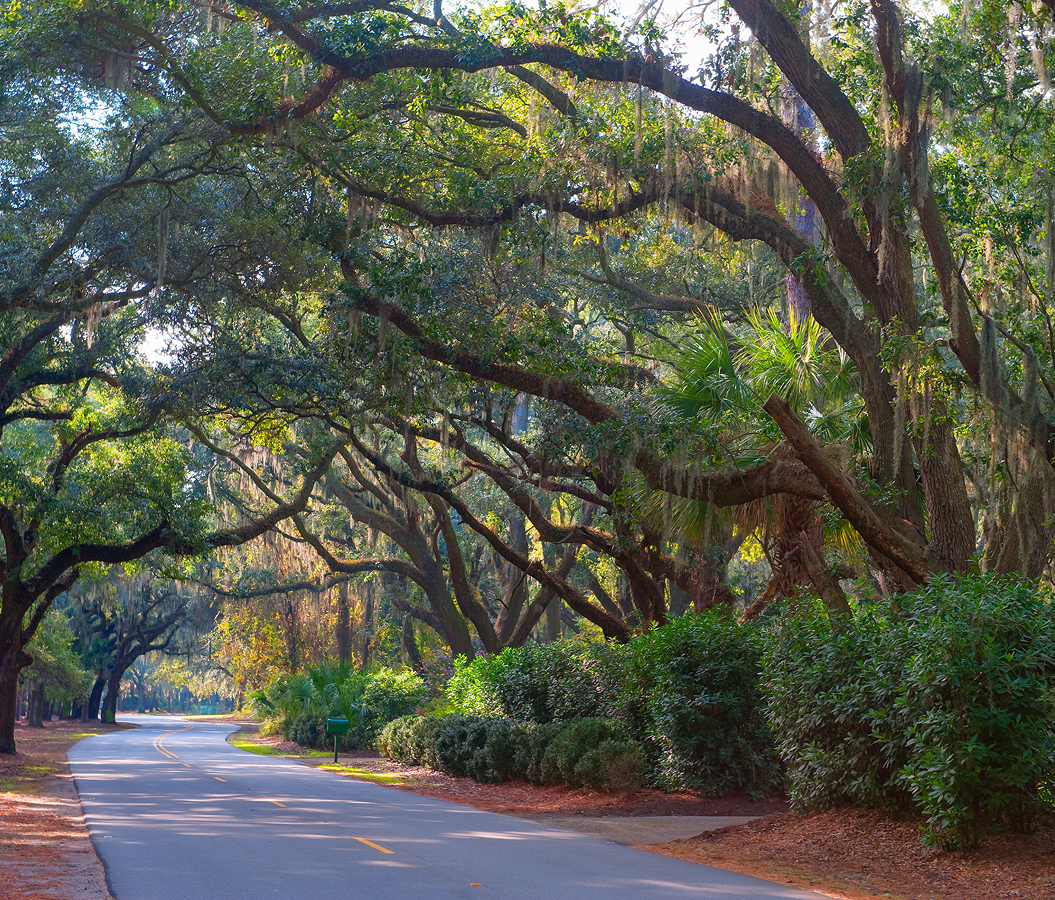
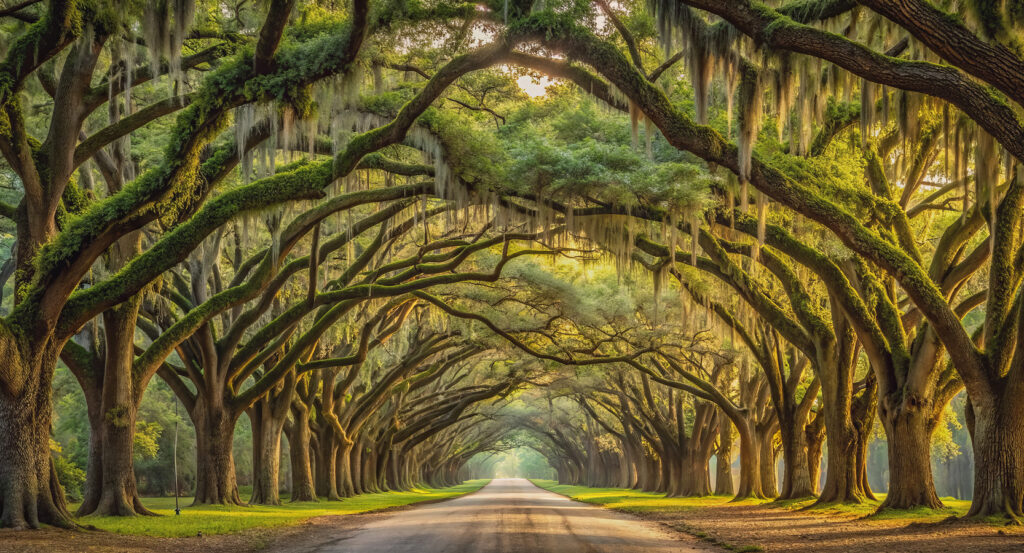
Set along Skidaway Road near Wormsloe Road and the tidal waterways of the Isle of Hope peninsula, the historic property occupies an extensive tract of coastal forest southeast of Central Savannah, where an expansive entrance avenue extends through a canopy of mature live oaks toward the former colonial plantation grounds. More than 400 trees line the celebrated approach, their interlocking branches forming a continuous arch draped in Spanish moss. Beyond the avenue, sandy paths lead through maritime woodland toward the remains of an eighteenth-century fortified residence overlooking the marshes of the Skidaway River. Tabby masonry, coastal vegetation and surviving agricultural landscapes preserve the estate's early relationship with Georgia's tidal environment. The result is an extraordinary historic landscape whose expansive entrance, colonial ruins and protected coastal forests establish one of the most consequential surviving properties associated with Georgia's founding generation.
What defines Wormsloe State Historic Site.
Wormsloe State Historic Site is best known for preserving the fortified colonial residence of Noble Jones, an original Georgia settler whose plantation became an important example of eighteenth-century settlement along the colony's Atlantic frontier. Jones arrived in Georgia in 1733 aboard the Anne, joining the first group of colonists organized under James Edward Oglethorpe and the Trustees for Establishing the Colony of Georgia in America. Trained as a carpenter, Jones became a surveyor, public official and military leader during the colony's formative decades. He received a grant of land on the Isle of Hope peninsula in 1736, establishing a property strategically positioned between navigable tidal waterways and the approaches to Savannah. Jones named the estate Wormsloe, creating an agricultural holding that combined residential occupation with frontier defense. He constructed a fortified tabby residence during the 1740s, using a building material composed principally of lime, sand, water and oyster shells. Its substantial walls and defensive position addressed the military uncertainties surrounding Britain's contested colonial possessions in southeastern North America. The property also supported agricultural experimentation as settlers attempted to develop commercially productive crops suited to Georgia's coastal environment. Jones cultivated various plants and participated in the colony's broader efforts to establish a viable agricultural economy. His public responsibilities included service in the colonial militia and participation in the political institutions that developed as Georgia moved toward royal government. The estate remained associated with the Jones family through successive generations, preserving a direct connection with the colony's founding period. During the nineteenth century, descendants expanded the property's residential and agricultural functions, introducing additional buildings and landscape improvements. The plantation's history also incorporated enslaved African labor following the legalization of slavery in colonial Georgia, connecting its later development with the coercive agricultural economy of the coastal South. Wormsloe entered a new phase of public historical interpretation during the twentieth century, ultimately becoming a protected state historic site preserving the colonial ruins and surrounding landscape.
The Jones family's nineteenth-century landscape improvements created the extraordinary live oak avenue that now defines the property's entrance. The long approach contains hundreds of trees whose mature branches form a nearly continuous canopy above the roadway. Spanish moss hangs from the limbs, establishing a distinctive coastal landscape shaped by the humid conditions of Georgia's maritime environment. The avenue extends one and a half miles toward the historic estate, introducing an unusually dramatic progression through protected woodland. Wormsloe's surviving tabby ruins represent one of the oldest standing architectural structures associated with Georgia's colonial settlement. Their construction demonstrates the practical use of locally available oyster shells in a region where conventional building stone was scarce. The ruins occupy a strategic bluff overlooking tidal marshes, preserving the relationship between the fortified residence and the waterways that shaped colonial transportation and defense. Archaeological investigations have examined the estate's domestic activities, material culture and successive periods of occupation. The historic grounds also contain interpretive installations devoted to the daily activities of Georgia's early European settlers. A reconstructed colonial living-history area introduces eighteenth-century building techniques, cooking practices and other aspects of frontier domestic life. Demonstrations and educational programs examine the practical skills required to establish and maintain households within the colony's coastal environment. The surrounding maritime forest preserves native vegetation and wildlife habitats associated with southeastern Georgia's barrier-island ecology. Walking trails extend through portions of the property, connecting historical interpretation with the natural landscape of the Isle of Hope peninsula. The Wormsloe Foundation supports historical scholarship and preservation associated with the estate, maintaining a connection between the property's family history and the broader study of colonial Georgia. Wormsloe's enduring importance rests in the survival of its early architecture, the continuity of its historic landscape and its exceptional connection with the first generation of British settlement in Georgia.
How Wormsloe State Historic Site fits.
Wormsloe State Historic Site works as the colonial anchor for a Savannah-area outing connecting the military defenses of Georgia's Atlantic frontier, the funerary landscapes of the nineteenth century and the preserved cultural institutions of the historic city.
Begin at Old Fort Jackson, the historic coastal fortification overlooking the Savannah River east of the city's original urban center. Construction began in 1808 as part of the federal government's efforts to strengthen American coastal defenses during a period of growing international tensions. The brick fort incorporates a compact defensive arrangement designed to protect the river approach to Savannah's commercial harbor. Confederate forces subsequently occupied the installation during the Civil War, incorporating it into the defensive system surrounding the strategically important port. Preserved artillery positions, masonry structures and interpretive exhibits introduce the development of coastal military engineering during the nineteenth century. Continue to Bonaventure Cemetery, the celebrated garden cemetery occupying a wooded bluff above the Wilmington River. The property originated within an eighteenth-century plantation before becoming Evergreen Cemetery in 1847. Its winding avenues, elaborate Victorian monuments and mature live oaks establish one of the American South's most distinguished burial landscapes. The cemetery contains the graves of poet Conrad Aiken and songwriter Johnny Mercer, connecting its commemorative architecture with Savannah's literary and musical history. Sculptural memorials, family burial plots and extensive Spanish moss create a landscape of exceptional historical and artistic character. Conclude at Savannah History Museum, the cultural institution occupying the restored passenger station of the Central of Georgia Railway. The substantial brick building formed part of the railroad infrastructure that connected Savannah with agricultural and commercial regions across the state. Its collections examine the city's development through colonial settlement, military conflict, transportation and changing patterns of economic activity. Exhibitions incorporate historic artifacts, decorative objects and material associated with Savannah's maritime and railroad history. The museum's location establishes a direct connection with the transportation networks that shaped the city's nineteenth-century expansion. The progression moves from Old Fort Jackson's coastal military defenses through Bonaventure Cemetery's historic funerary landscape and culminates at Savannah History Museum's transportation and historical collections, connecting three consequential dimensions of Georgia's Atlantic development.
Where your story begins.
Foresyte Travel reveals places that feel extraordinary long before you arrive.
Enjoy editorial crafted for luxury travelers.
Foresyte may earn a commission when you book.