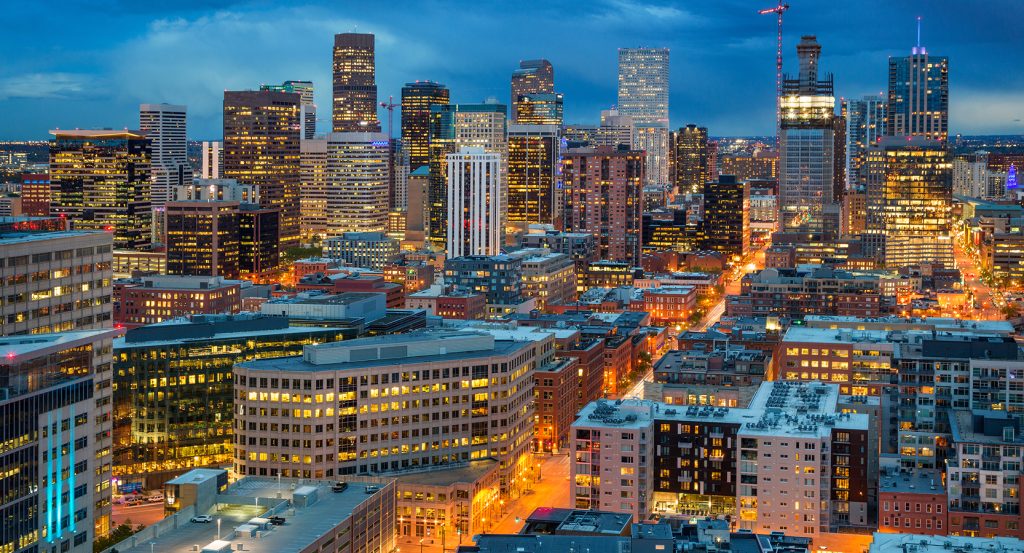
Why you should experience 11th Avenue in Denver, Colorado.
11th Avenue is a cultivated corridor where Golden Triangle's artistic ambition, civic heritage, architectural innovation, and enduring urba character intersect across one of Central Denver's defining streets.
Running through the Golden Triangle between Lincoln Park and Capitol Hill, the avenue evolved from a nineteenth-century residential district into one of Denver's foremost centers for cultural institutions, architecture, and creative enterprise through successive periods of reinvestment. Historic masonry buildings, contemporary museums, early apartment houses, landscaped streets, and thoughtfully integrated public spaces demonstrate a corridor shaped by more than a century of continual transformation. The corridor ultimately expresses how preservation, cultural investment, and architectural evolution established one of Denver's most distinctive urban environments. The result is an experience defined by cultural depth, architectural diversity, and enduring civic character.
What you should know about 11th Avenue.
11th Avenue is best known for extending through portions of Arlington Park Addition, Witter-Cofield Historic District, and adjoining nineteenth-century subdivision plats that supported Denver's southward residential expansion during the 1880s and 1890s. Building activity accelerated between the late nineteenth century and the 1930s, introducing Queen Anne, Classical Revival, Colonial Revival, Denver Square, and early Commercial Style architecture alongside increasingly substantial apartment buildings and institutional structures. Historic resource surveys prepared by the City and County of Denver document an exceptional concentration of individually significant residences, masonry apartment houses, churches, and civic buildings that collectively demonstrate the district's architectural evolution across multiple decades. Construction methods progressed from load-bearing brick masonry, rusticated sandstone foundations, and timber framing toward reinforced concrete structures, ornamental terra-cotta detailing, structural steel framing, decorative limestone trim, and increasingly sophisticated fire-resistant construction techniques during the early twentieth century.
Ownership records identify sustained investment by architects, physicians, attorneys, educators, business executives, and civic organizations whose commissions encouraged increasingly ambitious residential and institutional architecture throughout the corridor. Architectural inventories preserve original leaded-glass windows, decorative brick corbelling, carved stone lintels, pressed-metal cornices, ornamental ironwork, terrazzo entrances, and finely crafted interior millwork that collectively demonstrate an exceptional level of craftsmanship spanning successive generations of construction. Historic documentation also records that numerous buildings retained their original setbacks, parcel dimensions, façade compositions, and streetscape relationships despite surrounding redevelopment, preserving a remarkably cohesive architectural record independent of the corridor's better-known cultural destinations. Together, subdivision history, documented ownership patterns, evolving construction technologies, architectural inventories, and preserved craftsmanship establish 11th Avenue as one of the Golden Triangle's defining historic corridors.
How to fold 11th Avenue into your trip.
11th Avenue works as an exploration of the Golden Triangle's artistic vision, civic history, and architectural evolution.
Begin at the History Colorado Center, where immersive exhibitions establish the broader historical context that shaped Denver's growth while introducing the cultural foundations of the surrounding district. Continue to the Denver Art Museum, whose internationally recognized collections and acclaimed architecture deepen the narrative by illustrating how artistic investment transformed the Golden Triangle into one of the city's leading cultural destinations. Conclude at the Clyfford Still Museum, where one of the world's most comprehensive collections devoted to a single artist provides the historical payoff by uniting architectural design, artistic legacy, and cultural stewardship within a purpose-built setting. The sequence progresses from statewide history through artistic achievement before culminating in a museum that synthesizes the Golden Triangle's enduring cultural identity.
Where your story begins.
Foresyte Travel reveals places that feel extraordinary long before you arrive.
Experience premium editorial crafted for luxury travelers.