Why 12th Avenue matters.
12th Avenue is an elegant corridor where Congress Park's residential heritage, architectural refinement, neighborhood continuity, and enduring cultural character unfold across one of Denver's most distinguished east-west streets.
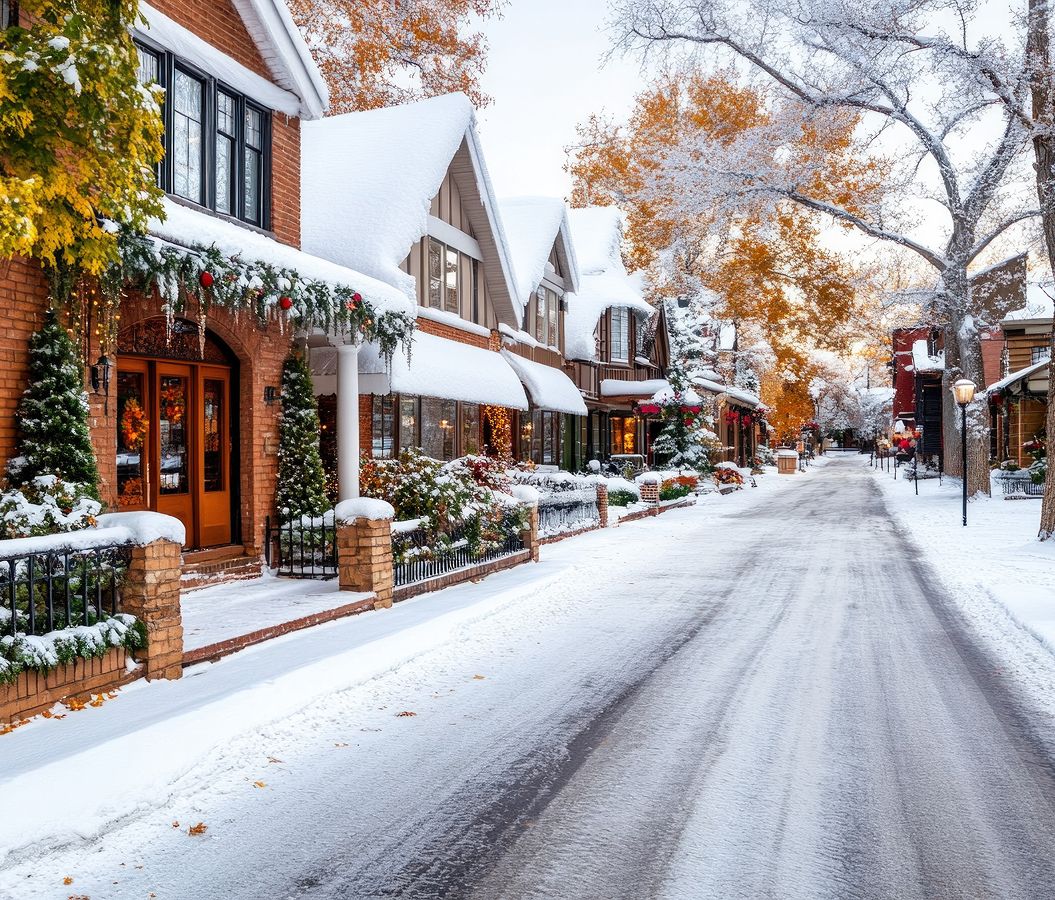
Running through Congress Park between Cheesman Park and Hale, the avenue emerged during Denver's sustained eastward expansion as carefully platted additions attracted accomplished architects, business leaders, physicians, and professionals seeking enduring residential addresses. Historic brick residences, Denver Squares, masonry apartment buildings, landscaped parkways, and mature tree canopies preserve a streetscape shaped through decades of thoughtful development. The corridor ultimately expresses how careful planning, exceptional craftsmanship, and sustained investment established one of Denver's most cohesive residential environments. The result is an experience defined by architectural richness, historical continuity, and timeless neighborhood character.
What you should know 12th Avenue.
12th Avenue is best known for extending across Congress Park Addition, Harman's Subdivision, Montclair, and adjoining nineteenth-century plats that guided Denver's residential expansion beyond the original city during the 1880s and 1890s. Residential construction accelerated between 1890 and 1940, producing an extensive collection of Queen Anne, Classical Revival, Craftsman, Colonial Revival, Denver Square, and Period Revival architecture reflecting changing architectural preferences across successive decades. Building permits, subdivision records, and historic resource inventories prepared by the City and County of Denver document substantial brick residences, duplexes, apartment houses, and institutional buildings occupying much of the corridor. Construction methods evolved from load-bearing brick masonry and sandstone foundations toward reinforced concrete framing, decorative terra-cotta detailing, pressed-metal cornices, limestone trim, and increasingly sophisticated interior planning as residential architecture matured throughout the early twentieth century.
Property records identify long-term ownership by physicians affiliated with nearby medical institutions, university faculty, attorneys, merchants, and civic leaders whose commissions supported increasingly ambitious residential architecture throughout the surrounding neighborhood. Historic architectural surveys also preserve original wood sash windows, leaded and stained-glass assemblies, decorative brick corbelling, carved stone lintels, slate roofing, ornamental millwork, and intact carriage houses that collectively demonstrate an exceptional level of craftsmanship across multiple generations of construction. Documentation further demonstrates that original lot dimensions, landscaped setbacks, alley access, and neighborhood block patterns survived extensive twentieth-century redevelopment elsewhere in Denver, preserving an unusually cohesive record of residential planning and architectural evolution. Together, subdivision history, documented ownership patterns, construction technology, architectural inventories, and remarkably intact residential craftsmanship establish 12th Avenue as one of Congress Park's defining historic corridors.
How 12th Avenue fits.
12th Avenue works as an exploration of Congress Park's architectural heritage, landscape design, and cultural legacy.
Begin at Congress Park, where broad lawns and historic recreational spaces introduce the neighborhood's original planning vision while establishing the landscaped setting that shaped surrounding residential development. Continue to the Denver Botanic Gardens, whose internationally recognized collections expand the narrative by demonstrating how horticultural excellence complements the surrounding architectural character and enriches the neighborhood's identity. Conclude at the Bluebird Theater, where a beautifully preserved twentieth-century performance venue provides the historical payoff by illustrating how entertainment, neighborhood life, and architectural preservation continue shaping this part of Denver. The sequence progresses from planned public landscape through botanical achievement before culminating in a preserved cultural venue that synthesizes the neighborhood's continuing historical evolution.
Where your story begins.
Foresyte Travel reveals places that feel extraordinary long before you arrive.
Enjoy editorial crafted for luxury travelers.
Foresyte may earn a commission when you book.