Why 14th Avenue matters.
14th Avenue is a refined corridor where Cheesman Park's residential elegance, architectural heritage, cultural depth, and enduring neighborhood character unfold across one of Central Denver's defining east-west streets.
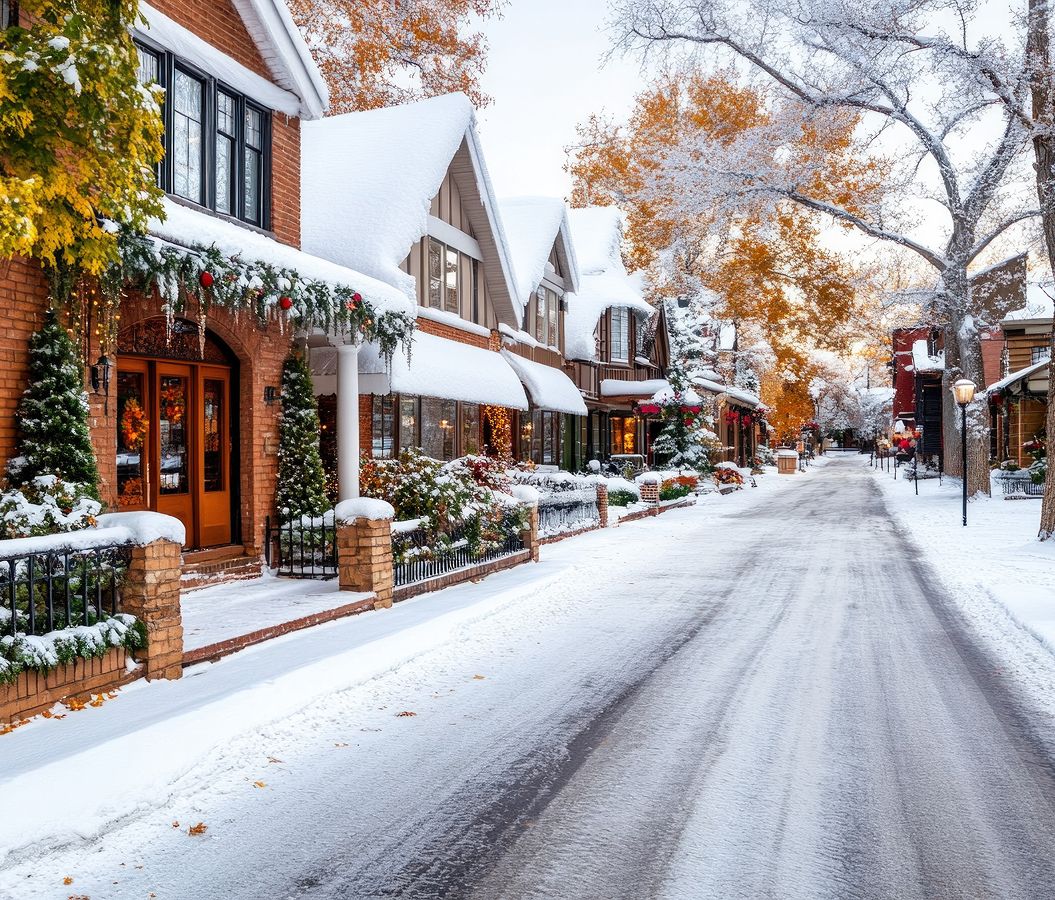
Running through Cheesman Park between Capitol Hill and Congress Park, the avenue developed during Denver's eastward expansion as carefully planned subdivisions attracted architects, physicians, merchants, and civic leaders seeking distinguished residential addresses. Stately brick residences, Denver Squares, mature tree canopies, masonry apartment houses, and thoughtfully preserved streetscapes reveal more than a century of continuous architectural evolution. The corridor ultimately expresses how craftsmanship, planning, and long-term stewardship shaped one of Denver's most admired residential environments. The result is an experience defined by architectural richness, neighborhood continuity, and enduring urban character.
What you should know 14th Avenue.
14th Avenue is best known for extending through land opened by Wyman's Addition (1872), Cheesman & Moffat's Addition, and later subdivision plats that expanded Denver's residential grid eastward beyond the original city. Residential construction accelerated between the 1880s and the 1930s, producing an extensive collection of Queen Anne, Richardsonian Romanesque, Classical Revival, Denver Square, Colonial Revival, and Tudor Revival architecture that documents nearly fifty years of changing residential design. Building permits and historic resource inventories prepared by the City and County of Denver identify substantial brick residences, masonry apartment buildings, duplexes, and professionally designed homes occupying successive blocks along the corridor. Construction techniques evolved from load-bearing brick masonry and sandstone foundations to reinforced concrete framing, ornamental terra-cotta detailing, pressed-metal cornices, and decorative limestone trim as architectural practices matured during the early twentieth century.
Property ownership records document long-term investment by physicians, attorneys, merchants, university professors, and business executives whose commissions supported increasingly sophisticated residential architecture across successive decades of neighborhood growth. Architectural surveys also preserve evidence of original wood sash windows, stained-glass transoms, carved stone lintels, decorative brick corbelling, slate roofing, and intact carriage houses that collectively demonstrate the corridor's exceptional level of residential craftsmanship. Historic documentation further demonstrates that much of the avenue retained its original lot configuration and building rhythm despite later redevelopment elsewhere in Central Denver, preserving an unusually cohesive architectural record spanning multiple generations. Together, subdivision history, documented ownership patterns, evolving construction methods, architectural inventories, and surviving residential craftsmanship establish 14th Avenue as one of Cheesman Park's defining historic corridors.
How 14th Avenue fits.
14th Avenue works as an exploration of Cheesman Park's architectural heritage, artistic legacy, and historic landscape.
Begin at Cheesman Park, where sweeping lawns and formal pathways introduce the landscape that inspired the surrounding neighborhood's distinguished residential development while establishing the setting for the avenue's architectural character. Continue to the Denver Botanic Gardens, whose internationally respected plant collections and carefully composed landscapes expand the experience by revealing how horticultural excellence complements the neighborhood's residential heritage. Conclude at the Molly Brown House Museum, where one of Denver's finest preserved Victorian residences provides the historical payoff by illustrating the ambition, craftsmanship, and social history that defined the city's most accomplished residential era. The sequence progresses from landscape to horticultural achievement before culminating in the residence that most completely synthesizes the neighborhood's architectural and cultural legacy.
Where your story begins.
Foresyte Travel reveals places that feel extraordinary long before you arrive.
Enjoy editorial crafted for luxury travelers.
Foresyte may earn a commission when you book.