Why 14th Street matters.
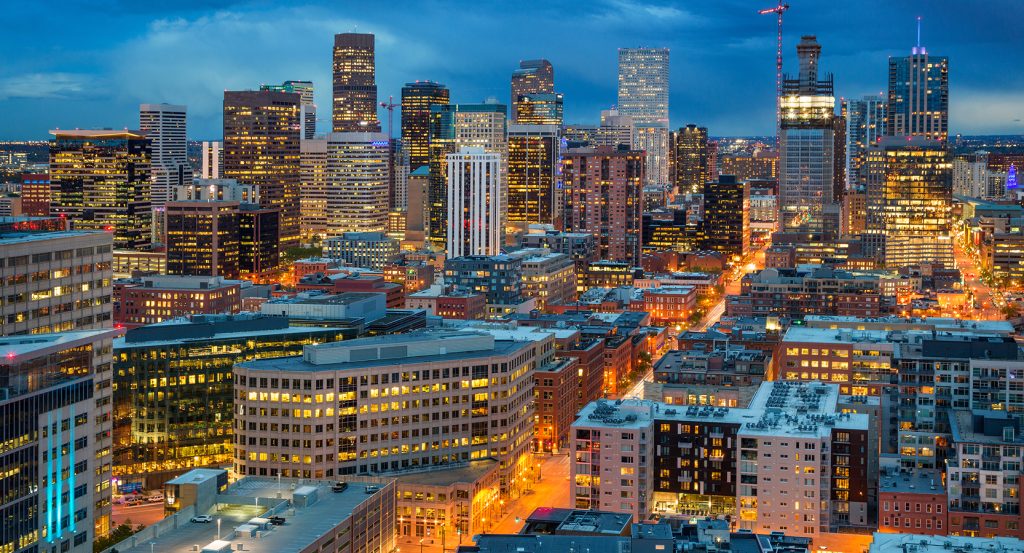
14th Street is a polished corridor where Civic Center's institutional heritage, architectural ambition, cultural prominence, and enduring civic character converge across one of Denver's defining urban streets.
Running through Civic Center between Auraria and Capitol Hill, the corridor developed alongside Denver's emergence as Colorado's governmental and cultural center, where successive generations of architects and planners established an exceptional concentration of public buildings. Grand civic architecture, broad streets, mature landscaping, historic masonry structures, and contemporary cultural venues reveal a corridor shaped by more than a century of continuous public investment. The corridor ultimately reflects Denver's evolution into the political and cultural heart of Colorado. The result is an experience defined by architectural distinction, civic purpose, and enduring urban character.
What you should know 14th Street.
14th Street is best known for developing beside the Civic Center neighborhood, whose formal plan originated from Charles Mulford Robinson's 1906 “Denver Municipal Facts” report before being refined through Edward H. Bennett's 1917 City Beautiful plan, establishing a coordinated structure for state, municipal, and cultural architecture. Construction campaigns throughout the early twentieth century introduced the Denver City and County Building (completed 1932), the Byron G. Rogers Federal Building and United States Courthouse (completed 1965), and numerous administrative and institutional structures that collectively reshaped the corridor's skyline. Historic preservation surveys document successive architectural movements including Beaux-Arts, Classical Revival, Moderne, and International Style construction, reflecting changing civic design philosophies across multiple generations. Engineering advances accompanying these projects incorporated structural steel framing, reinforced concrete construction, Indiana limestone cladding, expansive colonnades, and expansive ceremonial interiors that distinguished the corridor from Denver's earlier commercial streets.
Architectural commissions attracted nationally recognized firms alongside prominent Colorado designers whose work introduced refined stone carving, decorative bronze detailing, sculptural ornament, terrazzo flooring, and expansive stair halls throughout successive public buildings. Documentary records also trace the concentration of legal offices, engineering consultancies, professional organizations, and governmental agencies that established the surrounding district as Colorado's principal administrative center throughout the twentieth century. Historic resource inventories preserve original façades, ornamental metalwork, carved pediments, limestone cornices, and carefully documented construction records that collectively demonstrate the evolution of civic architecture without relying upon destinations featured elsewhere along the visitor sequence. Together, City Beautiful planning, documented engineering methods, architectural commissions, institutional growth, and preserved public craftsmanship establish 14th Street as one of Civic Center's defining historic corridors.
How 14th Street fits.
14th Street works as an exploration of Denver's artistic, governmental, and cultural identity.
Begin at the Denver Art Museum, where internationally recognized collections establish the city's creative ambitions while introducing the architectural confidence that defines the surrounding Civic Center district before continuing deeper into its public landscape. Continue to the Colorado State Capitol, whose commanding presence expands that narrative through Colorado's governmental history, adding historical depth while reinforcing the district's role within the state's civic development. Conclude at the Civic Center Park, where carefully composed landscapes, public gatherings, and surrounding architectural vistas provide the historical payoff by uniting art, government, and public space into a single expression of Denver's enduring civic identity. The sequence moves from artistic achievement through governmental history before culminating in the public landscape that most completely synthesizes the district's architectural and cultural legacy.
Where your story begins.
Foresyte Travel reveals places that feel extraordinary long before you arrive.
Enjoy editorial crafted for luxury travelers.
Foresyte may earn a commission when you book.