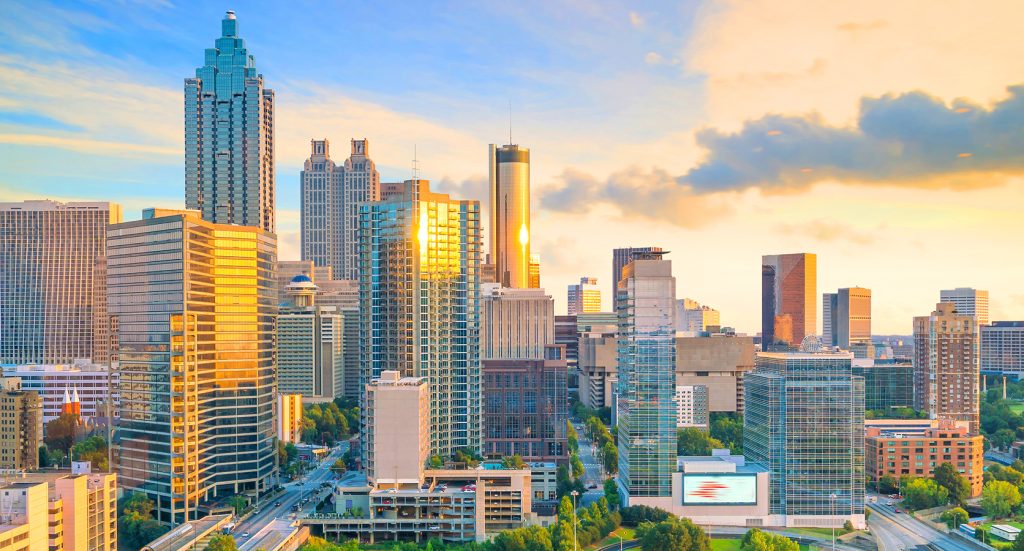
Why 17th Street matters.
17th Street is an enterprising corridor where Atlantic Station's industrial legacy, transportation engineering, urban reinvention, and commercial energy converge along one of Atlanta's most consequential thoroughfares.
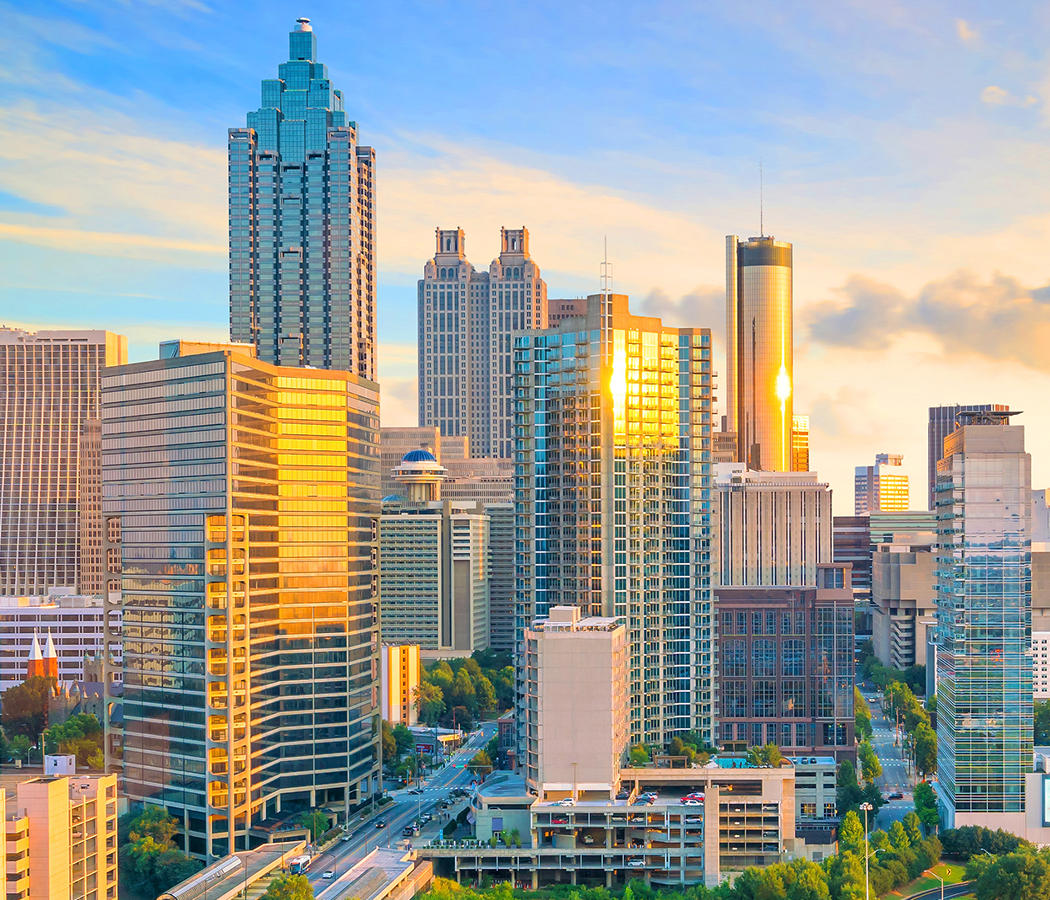
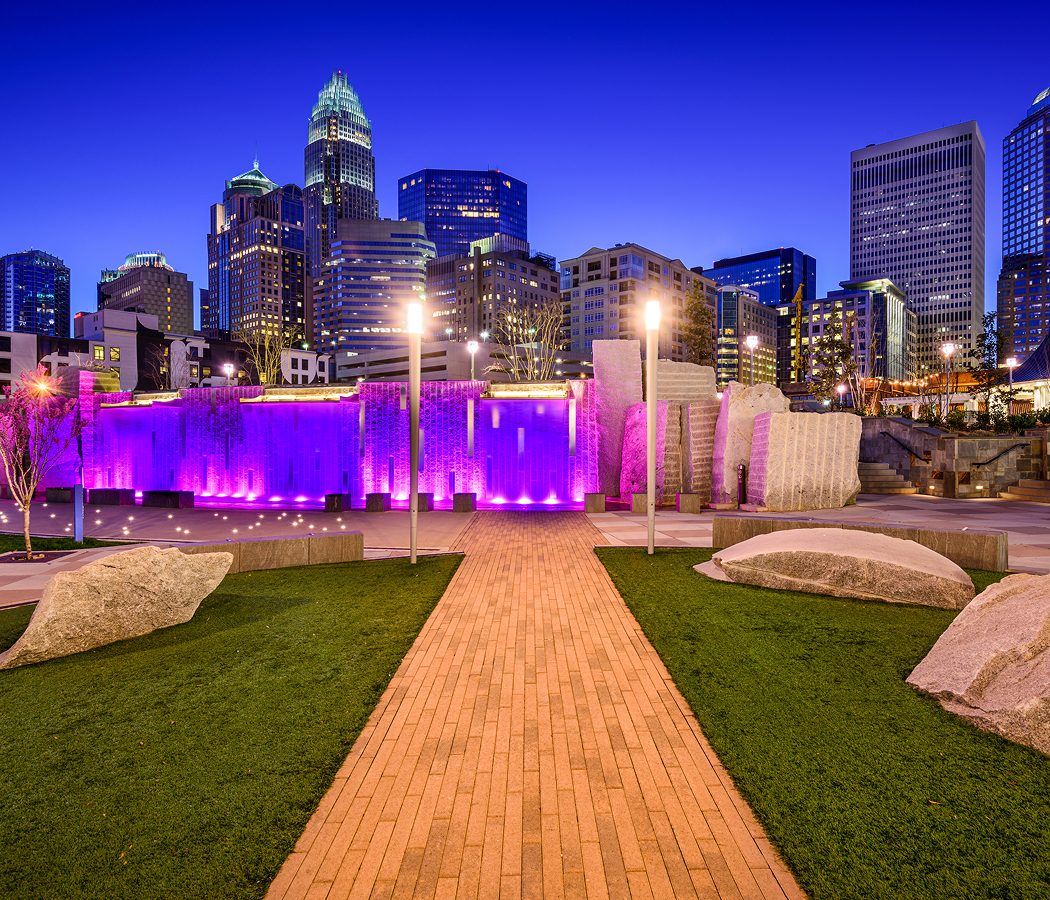
Running through Atlantic Station between Home Park and Loring Heights, the corridor binds Midtown's innovation economy to one of the nation's most ambitious former industrial redevelopments while linking workplaces, residences, retail, and civic spaces through infrastructure that permanently reshaped the surrounding district. Successive blocks reveal how engineering investment, environmental restoration, and coordinated urban design transformed a once-isolated steel mill into a fully integrated neighborhood. Broad sidewalks, contemporary buildings, landscaped medians, and multimodal connections demonstrate how modern infrastructure became the structure for Atlantic Station's continued evolution. The result is an experience defined by connectivity, ingenuity, and one of Atlanta's most influential corridors.
What you should know 17th Street.
17th Street is best known for carrying the 17th Street Bridge, completed in 2004, whose construction reestablished a direct connection between Midtown and the former Atlantic Steel property after decades of separation created by the Downtown Connector (Interstates 75 and 85). The bridge formed the transportation centerpiece of the 138-acre Atlantic Station redevelopment, transforming land occupied by the Atlantic Steel mill from 1901 until 1998 into one of the nation's largest urban brownfield redevelopment projects following extensive environmental remediation and engineered site preparation. Designed to accommodate automobiles, pedestrians, cyclists, and transit while spanning active interstate lanes, the structure became a nationally recognized example of transportation infrastructure supporting urban redevelopment. Completion of the crossing enabled construction of new streets, utility corridors, commercial buildings, residential development, and public spaces that collectively reconnected western Midtown with a district long isolated by industrial land use and interstate construction. Together, the bridge's engineering, Atlantic Steel's industrial history, nationally significant brownfield remediation, multimodal transportation design, and comprehensive redevelopment established 17th Street as one of Atlanta's defining contemporary corridors.
Beyond the bridge itself, engineered retaining structures, reinforced embankments, deep foundation systems, and carefully coordinated grading allowed 17th Street to transition seamlessly between Midtown's established street network and Atlantic Station's higher industrial plateau, overcoming one of the corridor's greatest topographic challenges. Advanced stormwater infrastructure beneath the roadway captures, conveys, and manages runoff generated by the surrounding redevelopment, extending the corridor's engineering role beyond transportation into long-term environmental performance. Continuous investment introduced LEED-certified office buildings, high-performance building envelopes, and district-scale utility systems along the corridor, reinforcing its importance as a destination for technology firms, corporate offices, and regional commerce. Together, the sophisticated civil engineering, integrated environmental infrastructure, sustainable construction standards, and ongoing commercial investment demonstrate how 17th Street evolved from a transportation connection into the structural backbone of Atlantic Station's continued growth.
How 17th Street fits.
17th Street works as an exploration of Atlanta's industrial transformation, engineering achievement, and contemporary urban design.
Begin at Millennium Gate Museum, where exhibitions interpreting Georgia's political, economic, and cultural history establish the broader context before naturally introducing Atlantic Station's remarkable redevelopment story. Continue to Atlantic Green, where the neighborhood's central gathering space demonstrates the pedestrian-first philosophy that defines the district while extending the experience through its civic centerpiece. Conclude at SCAD FASH Museum of Fashion + Film, where internationally focused exhibitions provide a fitting finale celebrating the creative and cultural energy that complements Atlantic Station's architectural evolution. The progression moves naturally from historical interpretation to urban public space before concluding with contemporary culture, revealing why 17th Street serves as the district's defining connective corridor.
Where your story begins.
Foresyte Travel reveals places that feel extraordinary long before you arrive.
Enjoy editorial crafted for luxury travelers.
Foresyte may earn a commission when you book.