Why 6th Avenue matters.
6th Avenue is an energetic corridor where Lincoln Park's civic heritage, transportation legacy, neighborhood diversity, and urban evolution converge along one of Denver's defining east-west thoroughfares.
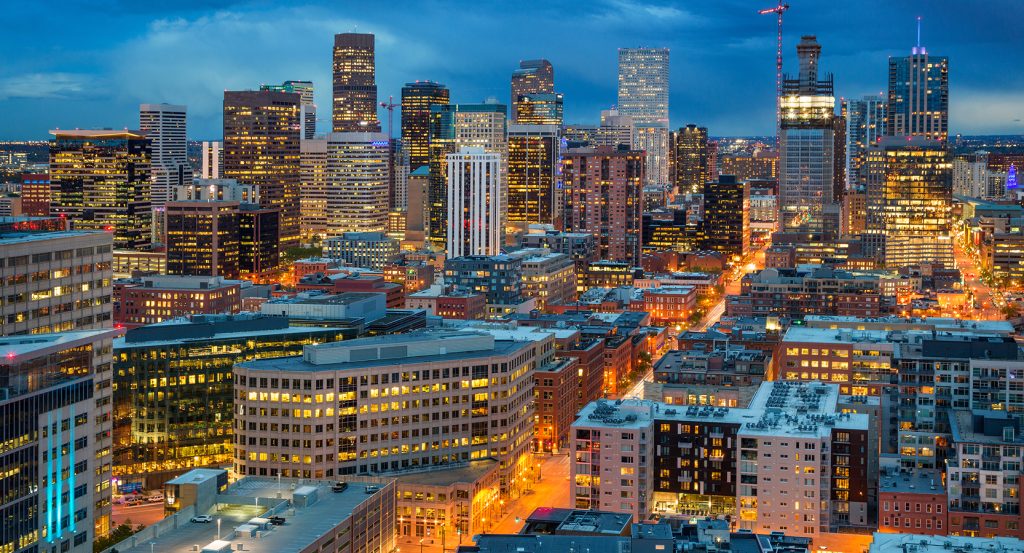
Running through Lincoln Park between Sun Valley and Capitol Hill, 6th Avenue connects historic residential districts, government institutions, neighborhood businesses, and cultural destinations that collectively reflect more than a century of Denver's growth immediately west of downtown. Early twentieth-century masonry buildings, landscaped medians, mature street trees, civic architecture, and thoughtfully integrated redevelopment create a streetscape where historical continuity and contemporary investment remain closely intertwined. The corridor reaches its defining character where transportation history, architectural endurance, and neighborhood resilience reinforce one another across successive generations. The result is an experience defined by vitality, connectivity, and Lincoln Park's enduring role within Denver's urban fabric.
What you should know 6th Avenue.
6th Avenue is best known for serving as one of Denver's principal east-west transportation corridors, evolving from a nineteenth-century city street into the eastern approach to the 6th Avenue Freeway, among Colorado's earliest limited-access highways constructed during the 1950s to improve regional travel between Downtown and the western suburbs. Long before freeway construction, extension of the Denver Tramway streetcar network supported intensive residential and commercial development along the corridor during the late nineteenth and early twentieth centuries, establishing a continuous streetscape of Commercial Style, Classical Revival, Denver Square, and Craftsman architecture. The surrounding Lincoln Park Historic District, listed on the National Register of Historic Places in 1973, preserves one of Denver's oldest residential neighborhoods through an extensive collection of nineteenth-century brick houses, institutional buildings, and historic streetscapes. Original masonry construction, long-established commercial frontages, and continuing reinvestment have enabled 6th Avenue to retain significant architectural character while accommodating evolving transportation demands across successive decades.
Construction of the 6th Avenue Freeway reshaped regional mobility while preserving the avenue's continuing importance as a neighborhood connector east of its grade-separated alignment, illustrating the corridor's dual role within Denver's local and metropolitan transportation network. Research conducted by History Colorado, Historic Denver, and the Denver Public Library has documented the avenue's relationship to Lincoln Park's early urban expansion, historic architecture, and changing transportation infrastructure through preservation surveys and historical archives. Decorative brick corbelling, sandstone lintels, pressed-metal cornices, original storefront proportions, and surviving ornamental masonry continue illustrating the craftsmanship associated with Denver's formative period of commercial and residential construction. Together, transportation innovation, preservation scholarship, enduring architectural craftsmanship, and sustained neighborhood investment explain why 6th Avenue remains one of Denver's most historically significant urban corridors.
How 6th Avenue fits.
6th Avenue works as an exploration of Denver's civic history, public art, and cultural heritage.
Begin at the Colorado State Capitol, where the landmark's expansive architecture, legislative history, and panoramic views establish the civic foundations that shaped Denver before naturally leading west along 6th Avenue. Continue to the Denver Art Museum, whose internationally recognized collections and striking contemporary architecture deepen the experience through one of the city's foremost cultural institutions. Conclude at Sunken Gardens Park, where historic landscaping, broad lawns, and neighborhood gathering spaces provide a fitting finale celebrating the longstanding relationship between Denver's civic development and its public green spaces. The progression moves naturally from Colorado's governmental center through artistic achievement before concluding within one of west-Central Denver's enduring historic parks.
Where your story begins.
Foresyte Travel reveals places that feel extraordinary long before you arrive.
Enjoy editorial crafted for luxury travelers.
Foresyte may earn a commission when you book.