Why you should experience 7th Avenue in Denver, Colorado.
7th Avenue is a distinguished corridor where Country Club's parkway elegance, landscape vision, architectural heritage, and enduring prestige create one of Denver's most celebrated residential streets.
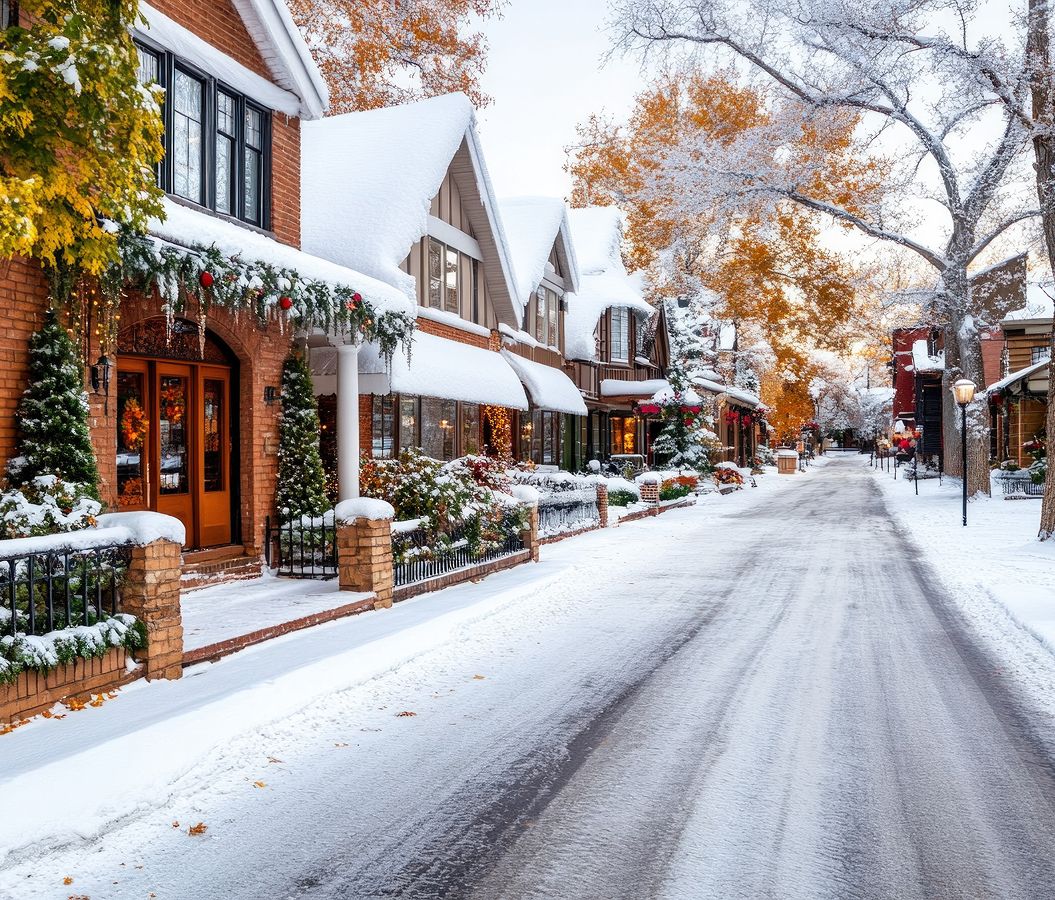
Running through Country Club between Capitol Hill and Cherry Creek, 7th Avenue connects convivial residential blocks, landscaped parkways, neighborhood institutions, and historic civic spaces that collectively reflect more than a century of thoughtful planning inspired by Denver's City Beautiful ideals. Broad medians, mature American elms, stately masonry residences, generous setbacks, and carefully composed streetscapes establish an environment where landscape architecture and residential craftsmanship remain inseparable. The corridor reaches its defining character where visionary planning, architectural continuity, and long-term stewardship reinforce one another across successive generations. The result is an experience defined by quiet grandeur, timeless design, and Country Club's enduring place among Denver's most admired historic neighborhoods.
What you should know about 7th Avenue.
7th Avenue is best known for forming the centerpiece of the 7th Avenue Parkway Historic District, a residential boulevard developed between the 1900s and 1930s under planning principles associated with the City Beautiful movement and the landscape vision of Saco Rienk DeBoer, whose work helped establish Denver's celebrated parkway system. Construction along the corridor introduced an exceptional concentration of Colonial Revival, Georgian Revival, Mediterranean Revival, Tudor Revival, and Italian Renaissance Revival residences designed by prominent architects including Burnham Hoyt, Fisher & Fisher, Temple Hoyne Buell, and Merrill H. Hoyt, creating one of Denver's finest collections of early twentieth-century domestic architecture. The 7th Avenue Parkway Historic District was listed on the National Register of Historic Places in 1985, recognizing the boulevard's exceptional architectural integrity, landscaped medians, and coordinated residential planning. Original brick paving elements, formal setbacks, mature tree canopy, and carefully preserved residential estates continue establishing 7th Avenue as one of Denver's defining historic parkways.
Landscape preservation has maintained the corridor's broad planted medians, ornamental lawns, and continuous canopy of mature American elms, reinforcing the boulevard composition envisioned during its original development. Research by Historic Denver, History Colorado, and the Denver Public Library has documented the avenue's architectural significance, influential designers, and role within Denver's nationally recognized parkway network through extensive preservation surveys and historical archives. Limestone detailing, hand-laid brick masonry, decorative wrought iron, carved stone entrances, and original slate roofing remain visible throughout much of the corridor, illustrating the extraordinary craftsmanship associated with Denver's most distinguished residential commissions. Together, landscape stewardship, preservation scholarship, enduring architectural excellence, and visionary planning explain why 7th Avenue remains one of the city's premier historic residential corridors.
How to fold 7th Avenue into your trip.
7th Avenue works as an exploration of Denver's landscape design, architectural heritage, and cultural institutions.
Begin at Cheesman Park, where sweeping lawns, formal promenades, and mountain views establish the City Beautiful planning philosophy that profoundly influenced the surrounding neighborhoods before naturally leading toward 7th Avenue. Continue to Denver Botanic Gardens, whose internationally acclaimed plant collections and meticulously composed landscapes deepen the experience while celebrating the horticultural traditions reflected throughout the adjacent parkway system. Conclude at the Kirkland Museum of Fine & Decorative Art, where internationally significant decorative arts, regional masterpieces, and modern design provide a fitting finale celebrating the artistic refinement that has long characterized this part of Denver. The progression moves naturally from civic landscape design through botanical excellence before culminating in a museum that reflects the enduring cultural sophistication of the surrounding neighborhood.
Where your story begins.
Foresyte Travel reveals places that feel extraordinary long before you arrive.
Experience premium editorial crafted for luxury travelers.