Why 7th Street matters.
7th Street is an animated corridor where East Little Havana's immigrant heritage, civic identity, neighborhood traditions, and urban energy create one of Miami's most culturally resonant streets.
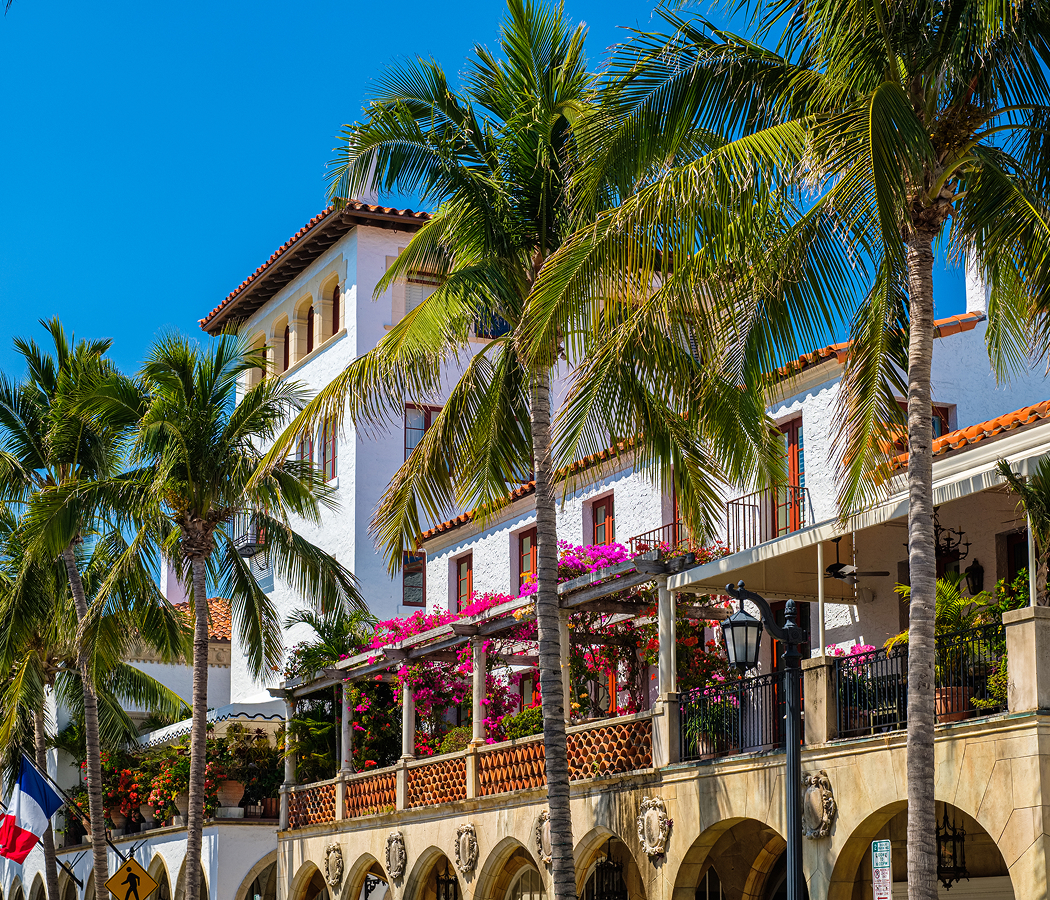
Running through East Little Havana between Downtown and Shenandoah, the corridor connects longstanding residential blocks, neighborhood businesses, schools, churches, and community institutions that collectively reflect more than a century of Miami's westward urban expansion. Mature royal palms, colorful murals, independent storefronts, and shaded sidewalks create a streetscape where Cuban, Central American, and Caribbean influences remain deeply woven into everyday neighborhood life. Throughout the corridor, family-owned businesses, cultural organizations, and flourishing subtropical landscaping reinforce an environment shaped by successive generations of immigration, entrepreneurship, and community stewardship. The result is an experience defined by cultural continuity, neighborhood authenticity, and one of Miami's most enduring urban corridors.
What you should know 7th Street.
7th Street is best known for extending through East Little Havana, where early twentieth-century residential development accelerated west of the Miami River before the neighborhood became the cultural center of Miami's Cuban exile community following the 1959 Cuban Revolution. The corridor evolved from a modest residential street into an important neighborhood connector serving apartment buildings, churches, social organizations, schools, small manufacturers, and independently owned commercial enterprises established by successive immigrant communities. Construction throughout the surrounding district introduced Mediterranean Revival residences, Mission Revival buildings, masonry duplexes, reinforced concrete apartment houses, decorative stucco façades, clay barrel roof tiles, and terrazzo entrances that continue illustrating Miami's architectural development during the Florida land boom and the decades that followed. Miami-Dade County Public Schools, neighborhood parishes, civic associations, and charitable organizations established enduring institutional anchors that strengthened the corridor as East Little Havana continued expanding throughout the twentieth century. Royal palms, live oaks, gumbo limbo, sabal palms, flowering tabebuia, white ibis, monk parakeets, and native butterfly species remain closely associated with neighborhood streetscapes, preserving the tropical character that distinguishes the corridor today.
José Martí's writings and political philosophy continue shaping the surrounding community through neighborhood memorials, educational programs, cultural organizations, and public commemorations that celebrate the Cuban independence leader's enduring influence on Little Havana. Spanish-language publishing, neighborhood radio broadcasters, locally owned bookstores, and independent newspapers strengthened the corridor's role in preserving language, literature, and civic discussion as new immigrant communities established themselves throughout the second half of the twentieth century. Family-operated bakeries, cigar workshops, Latin American markets, and neighborhood cafés continue reflecting the entrepreneurial traditions introduced by Cuban, Nicaraguan, Honduran, and Dominican residents whose businesses transformed East Little Havana into one of Miami's most culturally diverse communities. Together, these literary traditions, community institutions, and immigrant business networks demonstrate how 7th Street preserves the cultural evolution of East Little Havana while extending far beyond its role as a neighborhood thoroughfare.
How 7th Street fits.
7th Street works as an exploration of East Little Havana's artistic heritage, neighborhood traditions, and immigrant history.
Begin at Cubaocho Museum & Performing Arts Center, where Cuban fine art, historical collections, and live music establish the cultural foundation before following 7th Street through East Little Havana. Continue to Tower Theater, whose 1926 opening and longstanding role in Spanish-language cinema broaden the appreciation for the neighborhood's remarkable cultural evolution. Conclude at Domino Park, where generations of residents have gathered around the beloved domino tables, providing the culminating reward by revealing one of Little Havana's most enduring community traditions. The progression moves naturally from artistic heritage through cinematic history before concluding with a living neighborhood tradition, revealing how 7th Street connects cultural preservation, community memory, and Miami's immigrant identity.
Where your story begins.
Foresyte Travel reveals places that feel extraordinary long before you arrive.
Enjoy editorial crafted for luxury travelers.
Foresyte may earn a commission when you book.