Why you should experience Hotel Chimayo in New Mexico.
Hotel Chimayo is a study in threshold control, how a place manages proximity, quiet, and access so precisely that the city remains close enough to feel alive while never intruding on your internal pace.
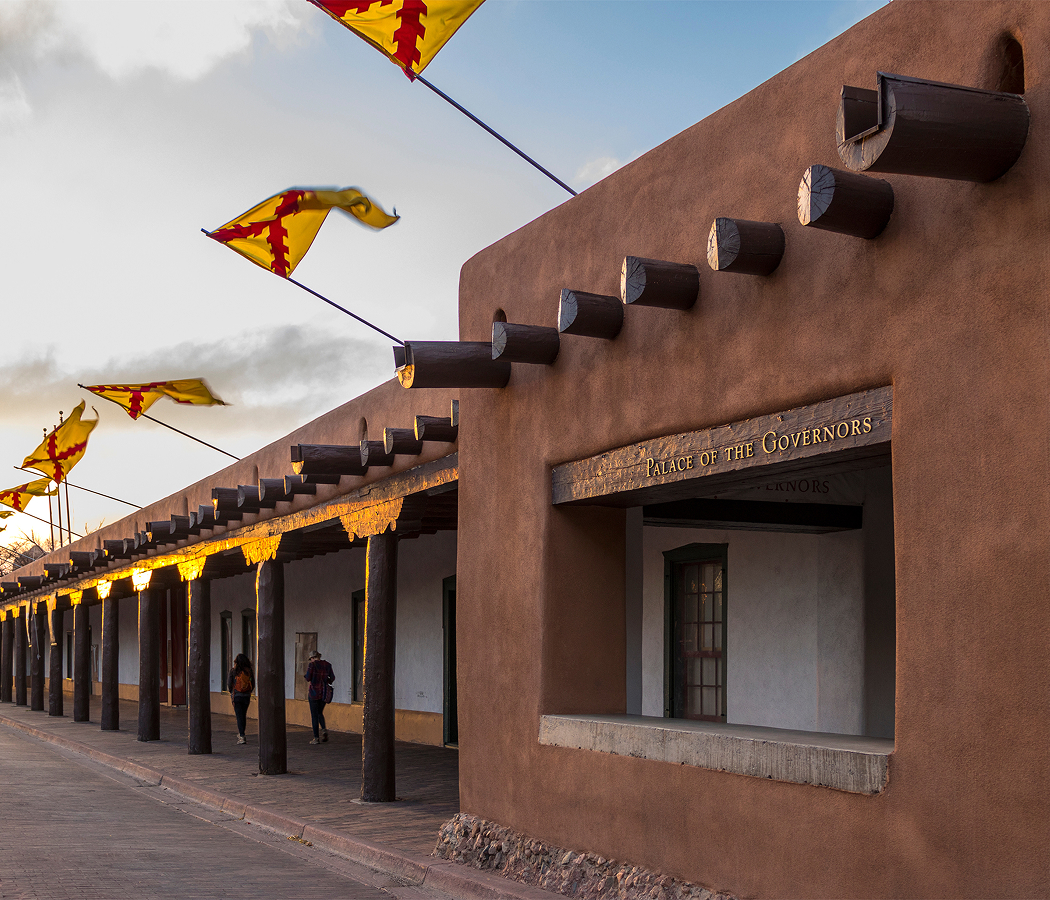
This is not a hotel that announces itself through performance or scale. It works through subtraction. From the street, the adobe exterior blends seamlessly into Santa Fe's historic fabric, offering no dramatic reveal, only continuity. The effect is intentional. You step inside and the city does not disappear; it simply lowers its volume. Sound drops first. Then light softens. Then time stretches. The hotel's architecture operates like a filter, regulating physical input. Corridors are short, rooms are few, and movement is contained. Nothing pushes you forward. The absence of sprawl becomes its defining feature. Guest rooms feel composed. Layouts are efficient but never tight, with furnishings placed to support rest. Beds are substantial and inviting, designed to restore. Materials are tactile and honest, wood that shows grain, textiles that carry weight, stone that grounds the room visually and physically. Fireplaces in select rooms are not decorative anchors but functional centers, changing the room's resonant temperature once evening arrives. Lighting is restrained and layered, allowing the room to respond to Santa Fe's extreme brightness. Bathrooms follow the same logic: practical, calm, and quietly refined, encouraging unhurried routines. The experience does not try to feel “special.” It feels controlled, intentional, and deeply respectful of your attention. Staying at Hotel Chimayo feels like occupying a pocket of calm engineered through restraint, where the city remains reachable.
What you should know about Hotel Chimayo.
Hotel Chimayo is less about hospitality theater and more about spatial discipline, and that discipline is what gives the property its unusual staying power.
Many hotels attempt to simulate intimacy through design cues while still operating at volume. Chimayo does the opposite. Its limited room count, compact footprint, and deliberate circulation patterns ensure that quiet is structural, not aspirational. You rarely encounter other guests unintentionally. There are no large congregating zones that amplify sound or energy. This is not accidental. The building's configuration prioritizes separation without isolation, allowing you to feel alone without feeling removed. Another underappreciated element is how the hotel manages visual hierarchy. There are no dominant focal points demanding attention, no statement art pieces, no grand lobbies, no sweeping views framed for consumption. Instead, the environment asks you to notice small shifts: light moving across plaster, temperature changes near adobe walls, the way silence deepens. This trains your attention outward once you leave the property. Santa Fe's details become sharper because the hotel does not exhaust your senses before you step outside. Service culture reinforces this discipline. Interactions are concise, warm, and precise. There is no scripted friendliness or performance of intimacy. Staff understand that the value here lies in continuity. Recommendations tend to focus on timing and proximity rather than must-see lists, when the Plaza is least crowded, which streets feel quietest at dusk, how long altitude fatigue typically lingers. The hotel does not attempt to interpret Santa Fe for you. It preserves your capacity to interpret it yourself. Over multiple nights, this restraint compounds. You realize you are sleeping better, walking longer, and processing the city more deeply because your base is not competing for cognitive space. Chimayo's distinction lies in its refusal to escalate. It stays exactly where it is, and that consistency becomes its luxury.
How to fold Hotel Chimayo into your trip.
Hotel Chimayo works best when you treat Santa Fe as a place to circulate through repeatedly rather than conquer in a single sweep, using the hotel as a pressure-release valve rather than a destination layer.
Begin mornings. Step out early, when the Plaza is still rearranging itself, and let proximity do the work. Because Chimayo sits so close to the historic core, you can move in and out of the city multiple times a day. This changes behavior. You are more to return mid-morning, drop off a purchase, rest briefly, then head back out. Midday returns become functional resets. The room absorbs heat, noise, and visual saturation so you can recalibrate quickly. Sit, hydrate, reset. No rituals required. Afternoons benefit from this elasticity. You can walk Canyon Road without committing to hours, explore residential blocks without planning routes, or simply wander until curiosity runs out, knowing your base is close and quiet. Evenings highlight the hotel's core strength. After dinner or a gallery opening, the return is immediate and gentle. Firelight replaces streetlight. Sound collapses into silence. Sleep arrives. Over several nights, a pattern emerges. Santa Fe stops feeling like a destination layered with obligation and starts feeling navigable, repeatable, and personal. You begin to recognize streets by feel. Timing becomes intuitive. Energy expenditure becomes intentional. Hotel Chimayo does not ask to be remembered as a highlight. It asks to be trusted. And by the end of the stay, that trust is complete. The hotel has not narrated your experience or framed your memories. It has simply held space while Santa Fe did the rest. Hotel Chimayo delivers a stay defined by control, proximity, and restraint, where luxury exists in the management of attention, silence is structural, and the city remains present.
Where your story begins.
Foresyte Travel reveals places that feel extraordinary long before you arrive.
Experience premium editorial crafted for luxury travelers.