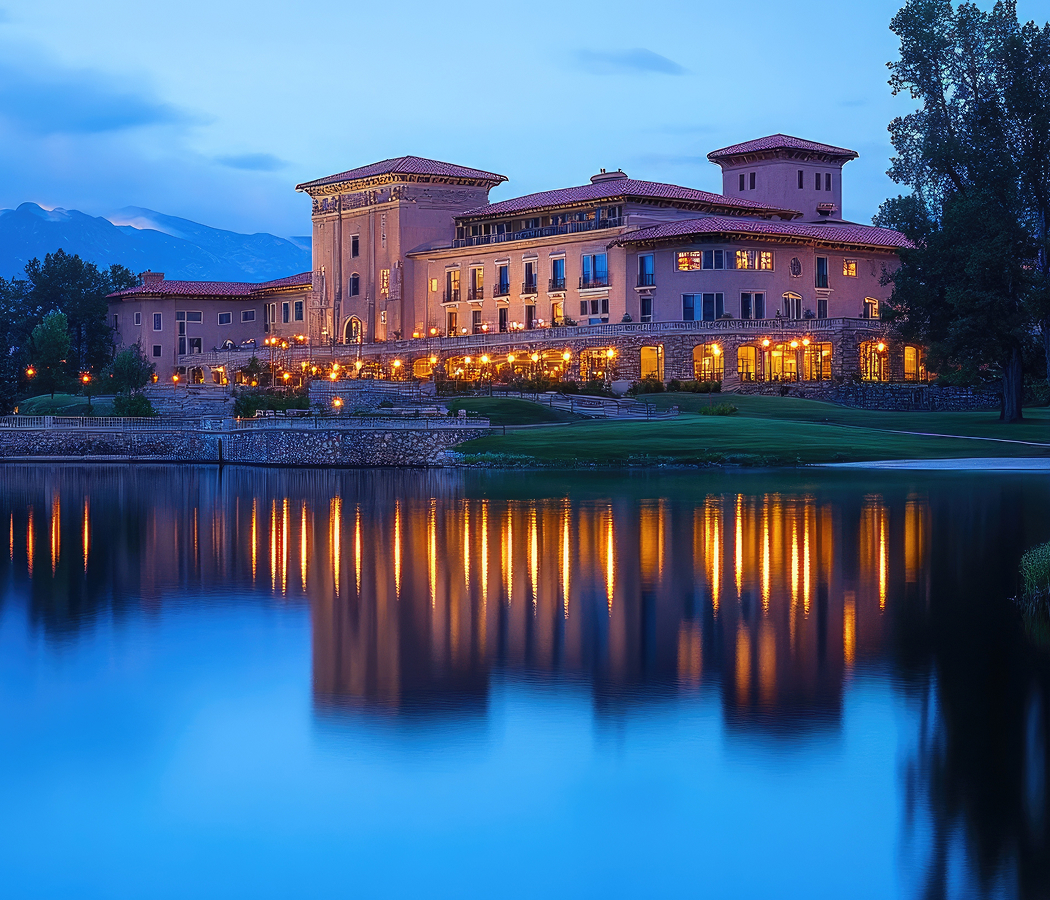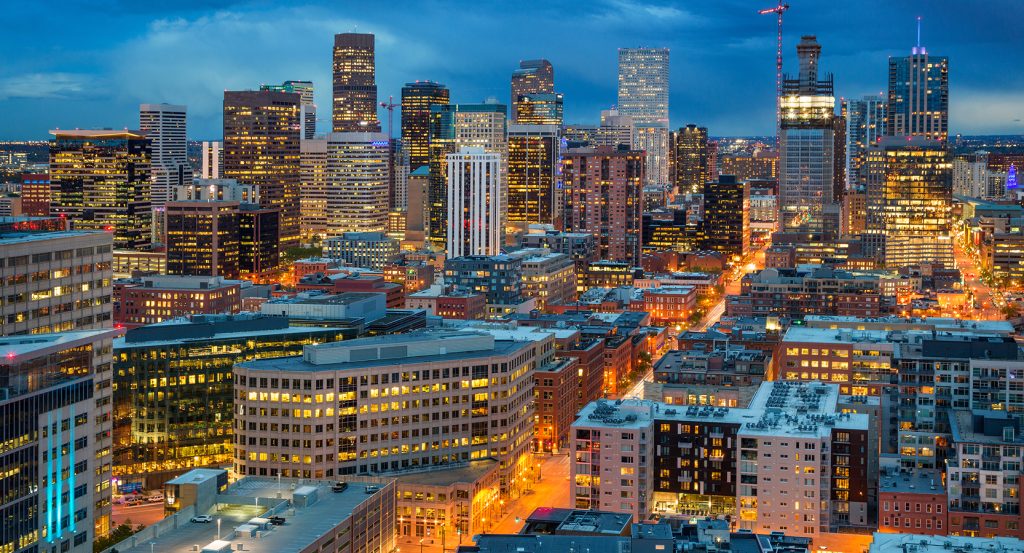
Why you should experience Albion Street in Denver, Colorado.
Albion Street is a graceful corridor where Hale's residential heritage, institutional legacy, architectural refinement, and enduring neighborhood character unfold across one of East Denver's defining north-south streets.
Running through Hale between Montclair and Park Hill, the corridor reflects Denver's twentieth-century eastward expansion as carefully planned subdivisions, healthcare institutions, and enduring residential neighborhoods established a balanced urban landscape. Mature tree canopies, brick residences, landscaped parkways, masonry apartment buildings, and thoughtfully integrated institutional campuses reveal a streetscape shaped through generations of steady investment. The corridor ultimately expresses how neighborhood planning, architectural craftsmanship, and civic development combined to create one of Denver's most cohesive residential environments. The result is an experience defined by architectural continuity, quiet elegance, and lasting community identity.
What you should know about Albion Street.
Albion Street is best known for extending through portions of Mayfair, Bellevue Park, and adjoining twentieth-century subdivision plats that guided Denver's residential expansion east of Colorado Boulevard during the 1910s, 1920s, and 1930s. Residential construction introduced substantial collections of Denver Squares, Tudor Revival, Colonial Revival, Mediterranean Revival, and Minimal Traditional homes that reflected evolving architectural preferences throughout the first half of the twentieth century. Building permits and historic resource inventories prepared by the City and County of Denver document brick residences, duplexes, apartment buildings, neighborhood commercial structures, and institutional facilities occupying successive blocks along the corridor. Construction methods evolved from load-bearing brick masonry and sandstone foundations toward reinforced concrete foundations, steel lintels, decorative clinker brick, limestone trim, and increasingly sophisticated interior planning as residential building practices matured across successive decades.
Property records document sustained investment by physicians, educators, business executives, architects, and professional families whose commissions encouraged consistently high-quality residential construction throughout the surrounding neighborhood. Architectural surveys preserve original steel casement windows, leaded-glass assemblies, decorative brick corbelling, carved stone surrounds, clay tile roofing, ornamental wrought iron, and intact detached garages that collectively demonstrate the craftsmanship associated with Denver's interwar residential expansion. Historic documentation also demonstrates that much of Albion Street retained its original parcel dimensions, landscaped setbacks, alley relationships, and residential rhythm despite later redevelopment elsewhere in East Denver, preserving a remarkably cohesive architectural record. Together, subdivision history, documented ownership patterns, evolving construction technology, architectural inventories, and preserved residential craftsmanship establish Albion Street as one of Hale's defining historic corridors.
How to fold Albion Street into your trip.
Albion Street works as an exploration of Hale's residential heritage, cultural attractions, and thoughtfully planned neighborhoods.
Begin at the Lindsley Park, where mature landscapes and neighborhood open space introduce the planning principles that shaped Hale's residential character while establishing a relaxed beginning to the experience. Continue to the Denver Museum of Nature & Science, whose renowned collections broaden the narrative by connecting the surrounding neighborhood with one of Colorado's foremost educational and scientific institutions. Conclude at the City Park, where expansive landscapes, historic park design, and sweeping views provide the historical payoff by illustrating how East Denver's residential growth was intentionally linked with some of the city's most celebrated public spaces. The sequence progresses from neighborhood planning through scientific discovery before culminating in the park that most completely synthesizes the area's civic and cultural legacy.
Where your story begins.
Foresyte Travel reveals places that feel extraordinary long before you arrive.
Experience premium editorial crafted for luxury travelers.