Why you should experience 24th Street in Denver, Colorado.
24th Street is a connective corridor where Jefferson Park's nineteenth-century origins, riverfront industrial legacy, neighborhood architecture, and continuing urban evolution remain closely intertwined.
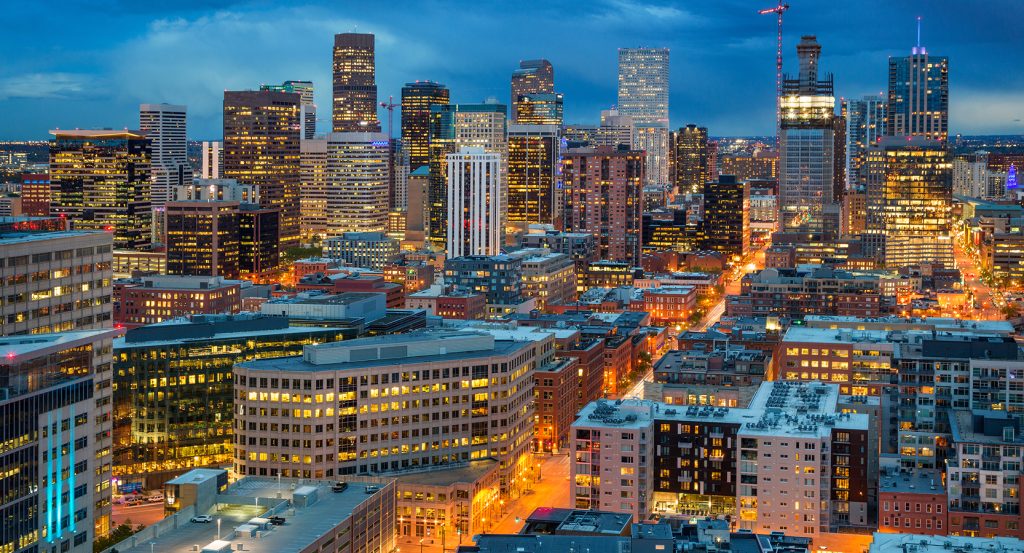
Running through Jefferson Park between Highland and Auraria, the corridor links some of Northwest Denver's earliest residential blocks with the South Platte River landscape that shaped the city's first generations of commercial and industrial growth. Historic brick residences, early twentieth-century commercial buildings, mature street trees, and long-established street grids reveal a corridor whose physical character still reflects successive eras of neighborhood development. The corridor ultimately expresses how Jefferson Park evolved from an independent suburb into one of Denver's oldest surviving urban neighborhoods. The result is an experience defined by continuity, neighborhood identity, and the enduring legacy of Denver's west-side expansion.
What you should know about 24th Street.
24th Street is best known for traversing land that formed part of Denver's original Congressional Grant of 1864, the first federally recognized municipal boundaries for the city, before becoming incorporated within the Town of Highlands, founded in 1871, incorporated in 1875, and annexed into Denver in 1896. The corridor developed through successive nineteenth-century subdivision plats including Hager's Addition (1873), Crane's Addition (1873), River Front (1881), and Tynon's Addition (1888), each contributing to the street grid that continues defining Jefferson Park today. Residential construction accelerated during the 1880s and 1890s, producing a neighborhood characterized by Queen Anne, Victorian, Foursquare, Denver Square, and Craftsman architecture that survives throughout the surrounding corridor in one of Northwest Denver's oldest concentrations of historic housing. Historic Denver's Discover Denver survey documented 86 individually researched historic properties within Jefferson Park, identifying 24th Street as part of a neighborhood retaining significant architectural and cultural resources from the late nineteenth and early twentieth centuries.
Architectural continuity along the corridor is reinforced by individually documented residences associated with prominent Denver families, including the Onofrio Residence on West 24th Avenue, completed in 1909 for piano dealer Angelo F. Filippo” Onofrio, whose expanding music business became one of Denver's best-known regional enterprises during the early twentieth century. Construction of a substantial brick piano storage barn behind the residence in 1912, nearly matching the footprint of the house, reflected the commercial success of the family's piano business and survives in historic Sanborn Fire Insurance Map documentation. Historic Denver's neighborhood research further demonstrates how surviving residential architecture, original lot patterns, and documented ownership histories collectively preserve Jefferson Park's transition from an elite Highlands suburb into a mature urban neighborhood across multiple generations. Together, the Congressional Grant, Highlands incorporation, nineteenth-century subdivision history, documented architectural survey, and individually researched historic properties establish 24th Street as one of Jefferson Park's most historically significant residential corridors.
How to fold 24th Street into your trip.
24th Street works as an exploration of Jefferson Park's architectural heritage, civic history, and nineteenth-century suburban development.
Begin at Jefferson Park, where Denver's oldest public park west of downtown introduces the civic landscape around which the surrounding neighborhood matured during the late nineteenth century. Continue to Adams Mystery Playhouse, housed within the former William Simpson residence, where one of Jefferson Park's distinguished historic homes demonstrates the prosperity that accompanied the neighborhood's early residential growth. Conclude at Empower Field at Mile High, whose contemporary presence demonstrates how the surrounding district continued evolving while remaining anchored by one of Denver's oldest surviving neighborhood street grids. The progression moves naturally from civic space through historic residential architecture before concluding with the institution that represents Jefferson Park's continuing evolution.
Where your story begins.
Foresyte Travel reveals places that feel extraordinary long before you arrive.
Experience premium editorial crafted for luxury travelers.