Why you should experience Lantern Souk at Khan el-Khalili in Cairo, Egypt.
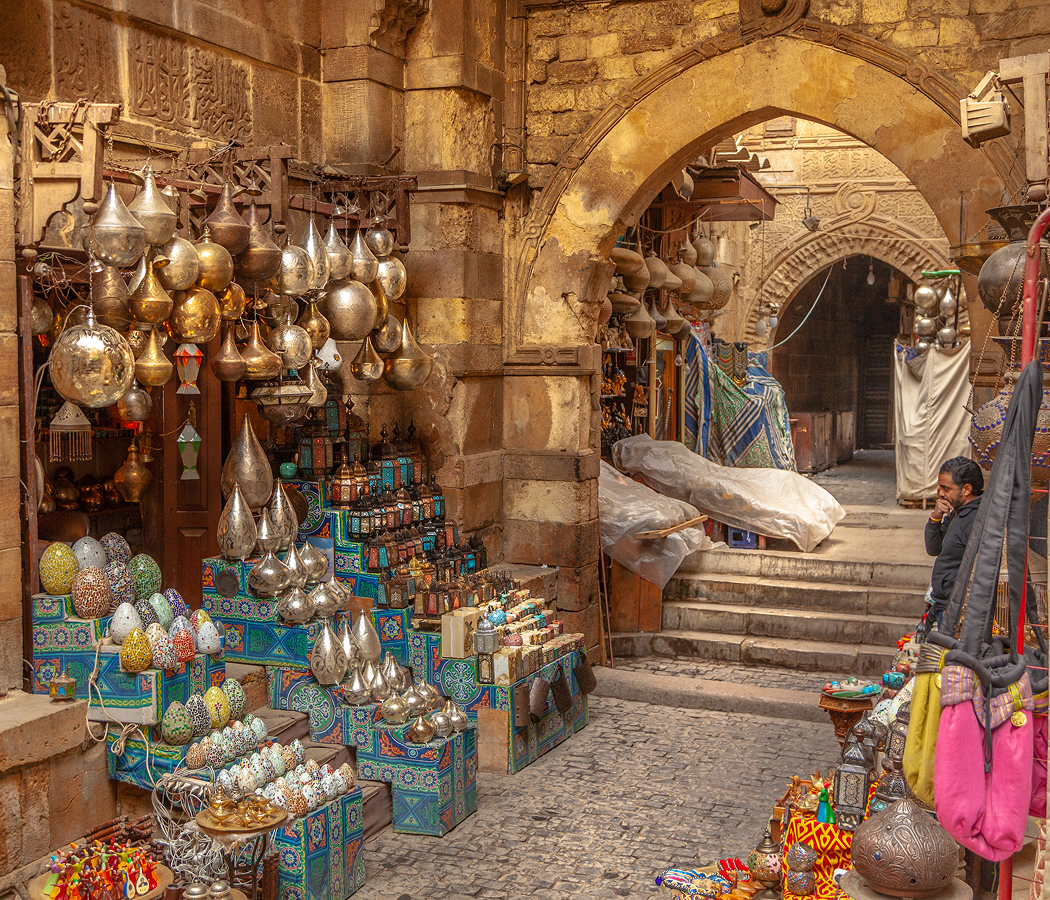
The Lantern Souk inside Khan el-Khalili glows like a constellation come to earth, a marketplace where metal, fire, and imagination merge into light.
Step beneath its low arches, and the world changes hue. Lanterns of every size and shape hang in clusters from the ceiling, stars of brass, silver, and glass shimmering in patterns that seem to breathe with the rhythm of the street. The air hums with the soft percussion of hammers tapping copper, the hiss of molten tin, and the murmur of craftsmen whose techniques trace back centuries. Light refracts off mirrored mosaics and colored glass, scattering patterns across the ancient walls like fragments of Cairo's soul. In the Copper and Lantern Souk, time slows. What begins as shopping soon turns into reverence, a meditation in gold and flame, where every lamp feels like a story, and every story begins with light.
What you didn't know about Lantern Souk at Khan el-Khalili.
The Lantern Souk is among the oldest surviving artisan quarters in Khan el-Khalili, its roots stretching back to the 14th century Mamluk era.
Originally part of Cairo's souq al-nahhasin, the copper market, this section evolved as a hub for metalworkers who supplied Cairo's mosques, palaces, and caravansaries with lamps, trays, and intricate household ornaments. The lantern craft, or fanous making, gained prominence during the Fatimid period, when illuminated processions celebrated Ramadan and religious festivals. The artistry you see today, geometric perforations, stained glass inserts, and filigreed metalwork, is still guided by ancient proportions and hand tools unchanged for hundreds of years. Many of the shops are family-run workshops, their trade passed from father to son over generations. The soundscape, rhythmic hammering, polishing, the faint whoosh of a bellows, forms a living symphony of continuity. During Ramadan, the souk transforms entirely: the lanterns blaze to life, flooding the alleys with a glow so intense that locals say “the night prays with light.” Some artisans are known to craft pieces commissioned by mosques as far away as Istanbul and Marrakech, while others export globally under Cairo's artisan guilds. The copper itself often arrives from Upper Egypt or recycled antique materials, giving each lantern a life that bridges centuries of reuse and ritual.
How to fold Lantern Souk at Khan el-Khalili into your trip.
A visit to the Lantern Souk is one of the most atmospheric experiences in Khan el-Khalili, best savored unhurried and with eyes attuned to detail.
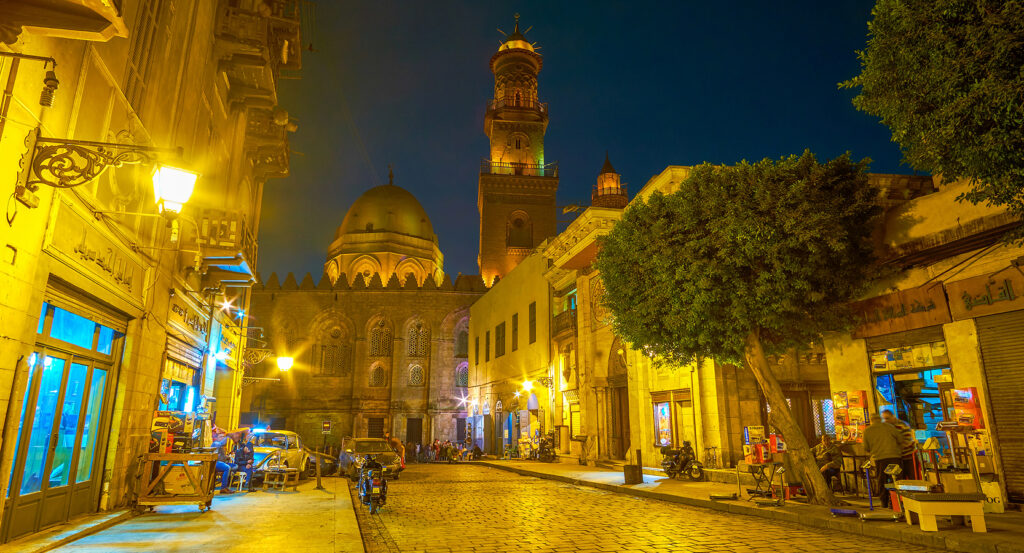
Enter from Al-Muizz Street, following the faint shimmer of brass into the narrower lanes branching toward Souq al-Nahhasin. The best time to visit is late afternoon, when the artisans' lamps begin to flicker on and sunlight still filters through the wooden mashrabiya screens, merging day and night in a golden haze. Spend 45, 60 minutes wandering the stalls, pausing to observe the craftsmen shaping molten copper or cutting lattice patterns by hand. Ask before taking photos, most are proud to share their art if approached respectfully. If you find a lantern that speaks to you, take your time; haggling here is part performance, part poetry. For the most cinematic experience, return after dark when the entire souk ignites with color, blues, ambers, and reds dancing across cobblestones. Step outside for tea at El Fishawy Café, letting the glow spill into your cup as Cairo hums around you. It's in that moment, half dream, half devotion, that the Copper and Lantern Souk reveals its truth: Cairo doesn't just build with stone; it builds with light.
Where your story begins.
Start your planning journey with Foresyte Travel.
Experience immersive stories crafted for luxury travelers.