Why you should experience Faculty of Islamic Theology at Al-Azhar University in Cairo, Egypt.
The Faculty of Islamic Theology at Al-Azhar University is where the pulse of Cairo's thousand-year spiritual heritage beats strongest, a living sanctuary of reasoned faith and sacred study.
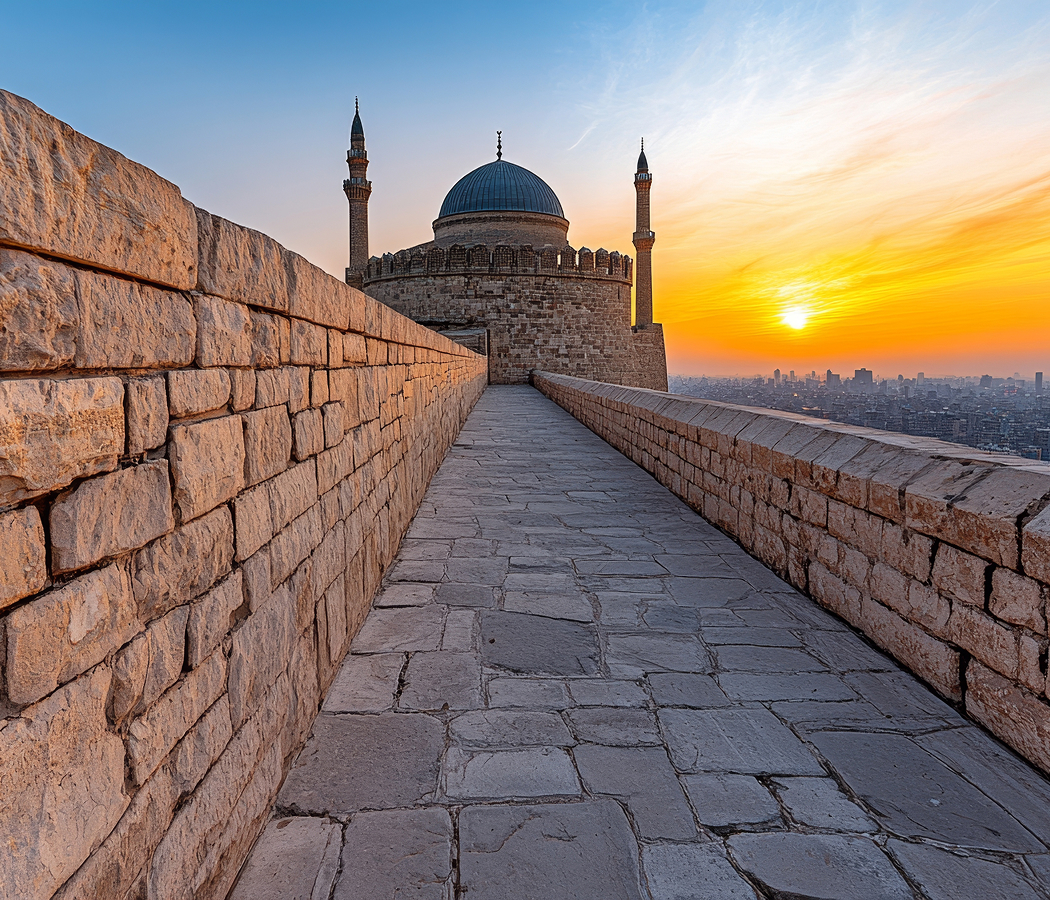
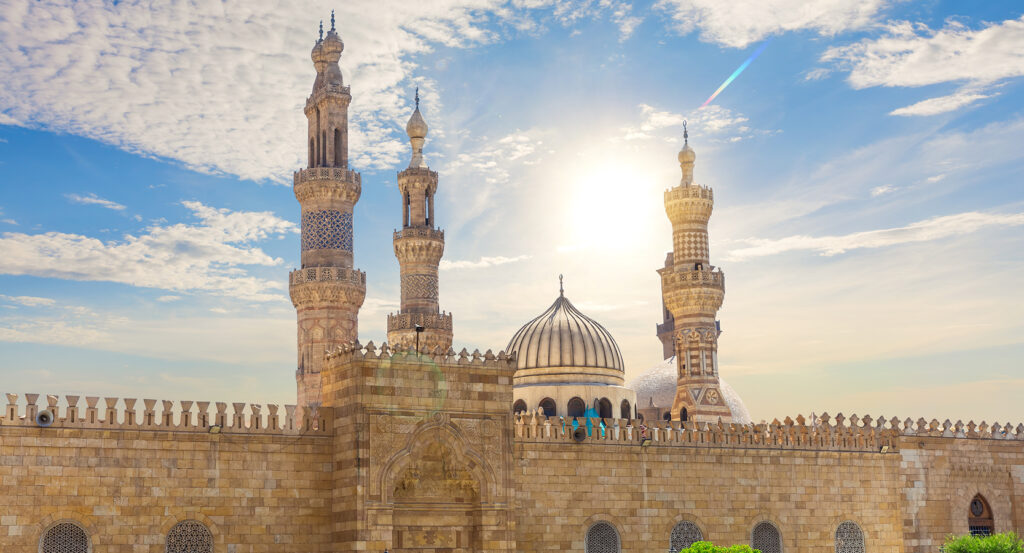
Walk through its gates and you step into a continuum of thought that has shaped generations of scholars across the Islamic world. The courtyards are lined with date palms and white-arched colonnades, echoing the architecture of the old Al-Azhar Mosque, while inside, lecture halls hum with discussion, voices parsing scripture, ethics, and philosophy with timeless precision. Here, theology is not abstract, it is alive, debated, lived, and felt. Students from every corner of the world sit cross-legged with notebooks open, carrying forward the same oral tradition that began beneath the marble arcades of the Fatimids. It is the heart of Al-Azhar's soul, a place where light and logic still meet under the same roof.
What you should know about Faculty of Islamic Theology at Al-Azhar University.
The Faculty of Islamic Theology (Kulliyat al-Usul al-Din) stands among the oldest and most revered faculties of Al-Azhar University, serving as the direct descendant of the original study circles established inside Al-Azhar Mosque over a millennium ago.
Formally institutionalized in the 1930s, the faculty's roots trace to the earliest halaqat, open-air classes led by prominent imams who specialized in Qur'anic interpretation (tafsir), prophetic traditions (hadith), jurisprudence (fiqh), and scholastic theology (kalam). Its modern building, located on the Nasr City campus, was completed in the 1960s as part of Al-Azhar's expansion following Nasser's educational reforms, which integrated classical Islamic studies into a university structure alongside the sciences. The faculty's curriculum remains anchored in traditional scholarship, focusing on aqidah (creed), comparative religion, logic, and philosophy, while engaging with modern ethical and social questions. Among its graduates are grand imams, judges, professors, and global muftis, many of whom continue to guide theological discussion across Africa, Asia, and the Middle East. The library within the faculty houses rare manuscripts on tawhid (the oneness of God), medieval commentaries on al-Ghazali and Ibn Taymiyyah, and handwritten student notes dating back centuries, preserved as relics of unbroken transmission. Architecturally, the building mirrors its purpose, modest and balanced, with geometric marble floors, vaulted lecture halls, and a mihrab set within its main seminar room where teaching often begins with prayer. The faculty remains the philosophical backbone of Al-Azhar, the place where orthodoxy and inquiry meet, not in opposition, but in harmony.
How to fold Faculty of Islamic Theology at Al-Azhar University into your trip.
Visiting the Faculty of Islamic Theology offers a window into the living heart of Al-Azhar's intellectual tradition, where history still speaks through every debate and every page of scripture.
Located on the Nasr City campus, the faculty is easily accessible from Central Cairo by taxi or ride-share; plan the visit in the late morning, when classes are in session and the campus is alive with movement. Begin at the main courtyard, where students gather under shaded porticoes before lectures, and listen for the soft cadence of Arabic recitations floating through open windows. If possible, arrange a guided visit through the Public Relations Office to explore the main lecture halls and library. Spend time observing a theology session, discussions on ethics, theology, and law that unfold in the same disciplined cadence heard at Al-Azhar since the 10th century. The faculty's inner mosque, reserved for midday prayers, is open to respectful visitors; remove your shoes, sit quietly along the wall, and take in the rhythm of devotion intertwined with learning. Allocate 45-60 minutes for the experience, allowing time to walk the colonnaded corridors where portraits of past imams and scholars line the walls. As you exit, look once more toward the arches leading back into the sunlight, and you'll sense what every student who studies here knows: that faith, when refined by intellect, becomes not doctrine but illumination.
Where your story begins.
Foresyte Travel reveals places that feel extraordinary long before you arrive.
Experience premium editorial crafted for luxury travelers.