Why you should experience Al-Mu’izz Street in Cairo, Egypt.
Al-Mu‘izz Street is Cairo’s a living museum of Islamic civilization, where more than a thousand years of history, architecture, and life coexist in one breathtaking stretch.
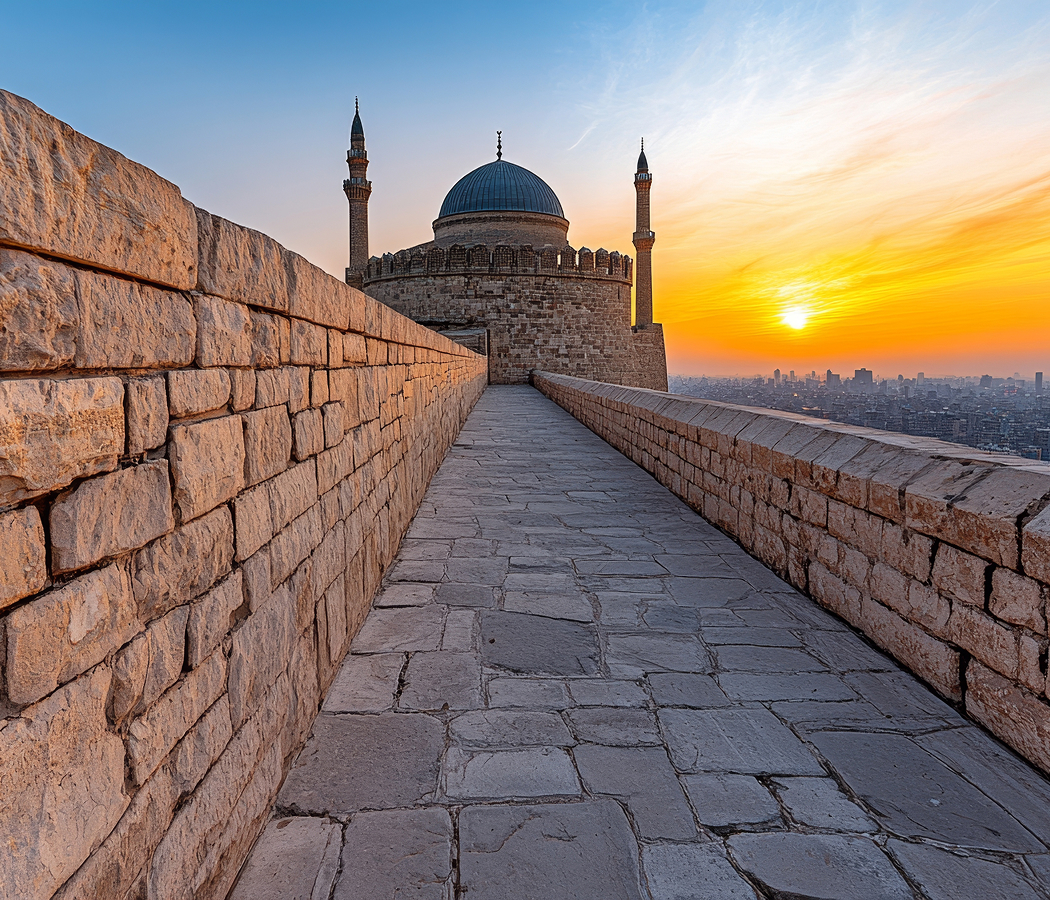
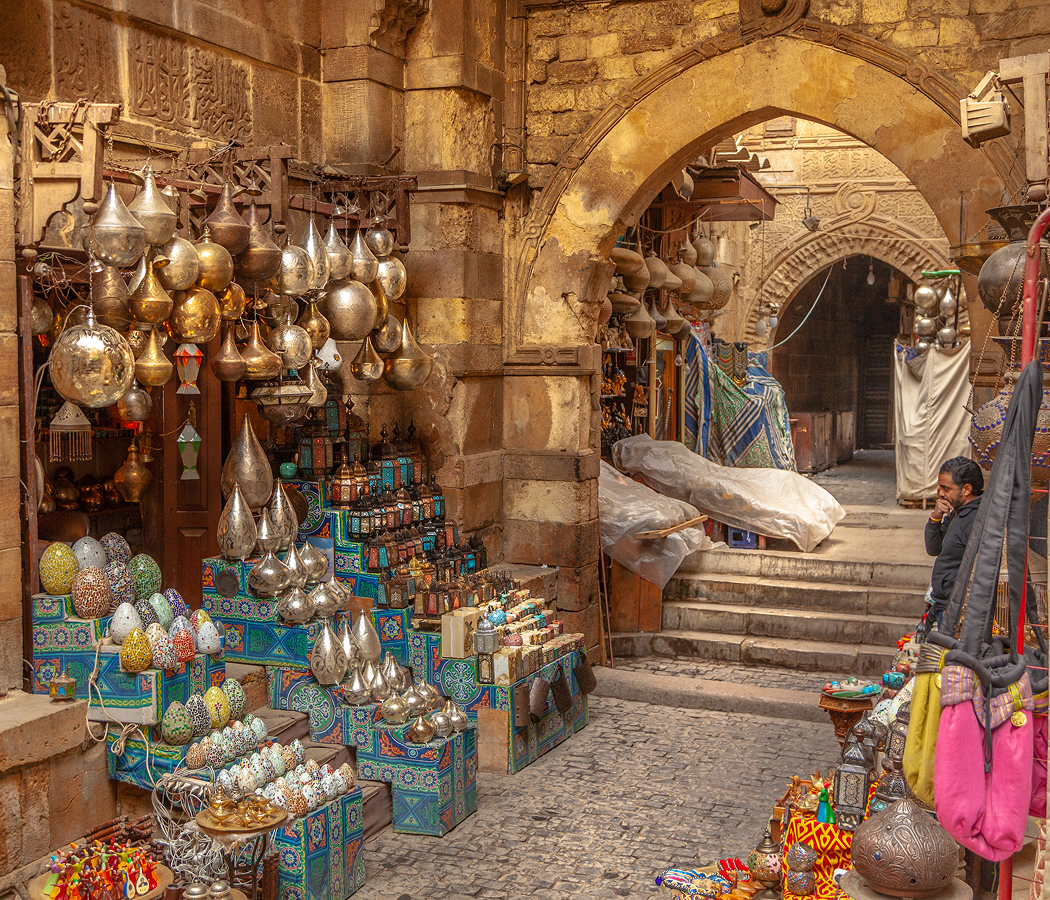
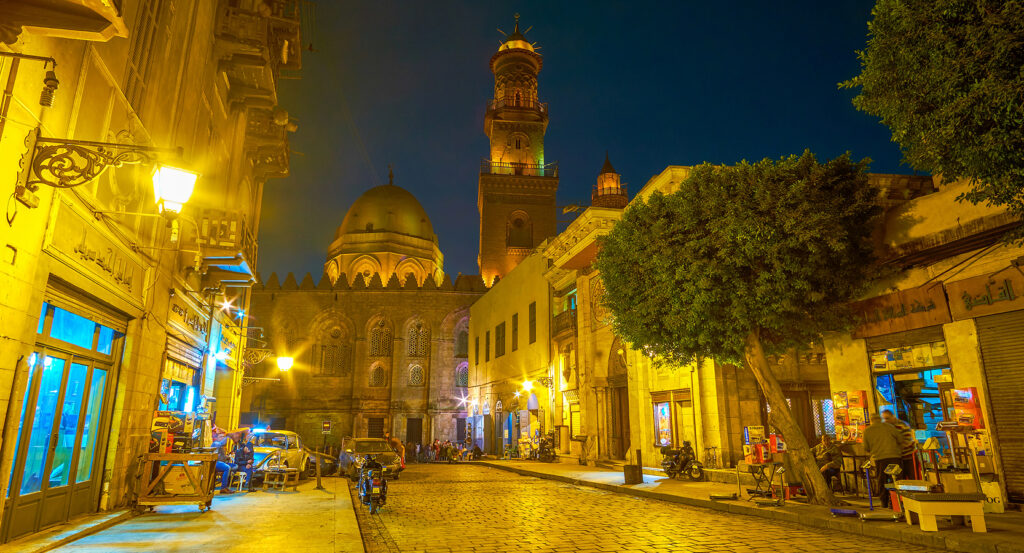
Winding through the heart of historic Cairo, Al-Mu‘izz is a world unto itself, a place where minarets pierce the sky, brass lamps gleam in the sunlight, and the air hums with the sounds of merchants, prayers, and everyday life. The street dates back to the Fatimid dynasty of the 10th century and remains one of the oldest continuously inhabited streets in the world. Walking its length feels like passing through a living timeline: ornate mosques, sabils, and madrassas line both sides, their intricate mashrabiya windows and carved stone façades preserved with astonishing care. As you wander, you pass the grand portals of the Qalawun Complex, the elegance of the Al-Aqmar Mosque, and the dazzling Khanqah of Sultan Barquq, each an architectural testament to Egypt's Islamic Golden Age. The street's energy is immersive, its rhythm set by craftsmen hammering copper, vendors calling out their wares, and the scent of cardamom and jasmine wafting through the alleys. Under the glow of lanterns, Al-Mu‘izz transforms from a bustling artery into something spiritual, a place where centuries meet in the quiet shimmer of Cairo's eternal soul.
What you didn’t know about Al-Mu’izz Street.
Al-Mu‘izz Street is more than Cairo's architectural crown jewel, it's a meticulously preserved masterpiece of urban archaeology.
Originally commissioned by the Fatimid caliph Al-Mu‘izz li-Din Allah in 969 CE, the street was conceived as the ceremonial spine of Cairo, a grand avenue lined with mosques, palaces, and markets designed to showcase the splendor of the new Islamic capital. Its significance deepened under successive dynasties, Ayyubid, Mamluk, and Ottoman, each leaving indelible marks on its skyline. By the 20th century, the street had become densely populated and deteriorated, but in the early 2000s, the Egyptian government and UNESCO launched one of the most ambitious restoration projects in the Islamic world. Over 30 historical monuments were cleaned, restored, and illuminated, transforming Al-Mu‘izz into an open-air museum that rivals the grandeur of entire cities. Few visitors realize that beneath the cobblestones lies an ancient drainage system still in partial use, evidence of the Fatimids' urban engineering sophistication. The street also connects two of Cairo's most iconic market districts, Khan el-Khalili to the south and Bayn al-Qasrayn to the north, forming a continuous cultural corridor where history and commerce flow together. Beyond its architectural marvels, Al-Mu‘izz is also home to living traditions: craftsmen who've inherited their trades from generations past, calligraphers who etch verses into leather and brass, and families who have lived along the same alleys for centuries. At sunset, the adhan echoes across its domes, mingling with the murmur of life, a symphony that defines Cairo itself.
How to fold Al-Mu’izz Street into your trip.
Exploring Al-Mu‘izz Street is best approached as both a journey through history and a sensory immersion into the heart of Cairo.
Begin your walk at Bab al-Futuh, the northern gate of the old city, where the towering stone archways mark the entrance to Islamic Cairo. From there, move slowly southward toward Bab Zuweila, passing through Bayn al-Qasrayn, home to some of the street's most striking monuments, including the Sultan Qalawun Complex, with its mosque, madrassa, and mausoleum all housed in one breathtaking structure. Stop to admire the delicate stucco and carved stonework of the Al-Aqmar Mosque, one of the earliest examples of Cairo's decorative façades. As you continue, pause at Beit al-Suhaymi, a beautifully restored Ottoman-era house that offers a glimpse into domestic life centuries ago, complete with cooling courtyards and latticed wooden screens. For a true taste of Cairo, detour into the nearby Khan el-Khalili bazaar, where the atmosphere bursts into color, vendors selling spices, silver jewelry, and traditional lanterns that shimmer like stained glass. Return to Al-Mu‘izz at dusk, when the street glows under artful lighting that accentuates its domes and minarets. Local musicians often perform near the Qalawun Complex, their melodies drifting through the night air as families and travelers mingle in the golden light. If time allows, dine at one of the rooftop restaurants overlooking the skyline, from above, the minarets look like candles flickering across time. Al-Mu‘izz Street isn't just Cairo's most historic street, it's its soul made visible, where faith, art, and daily life have intertwined for over a millennium and continue to do so today.
Where your story begins.
Start your planning journey with Foresyte Travel.
Experience immersive stories crafted for luxury travelers.