Why Alabama Street matters.
Alabama Street is a historic Downtown corridor where railroad heritage, commercial ambition, and civic history converge along one of the city's oldest and most influential streets.
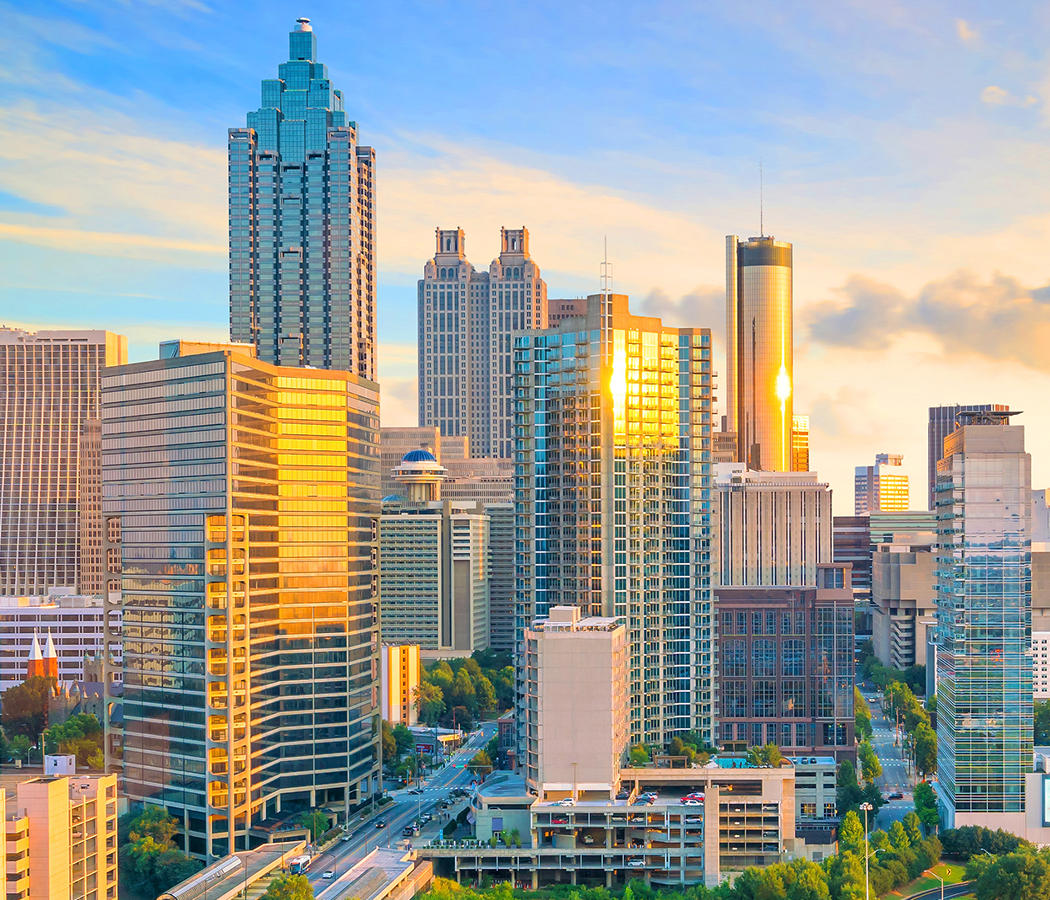
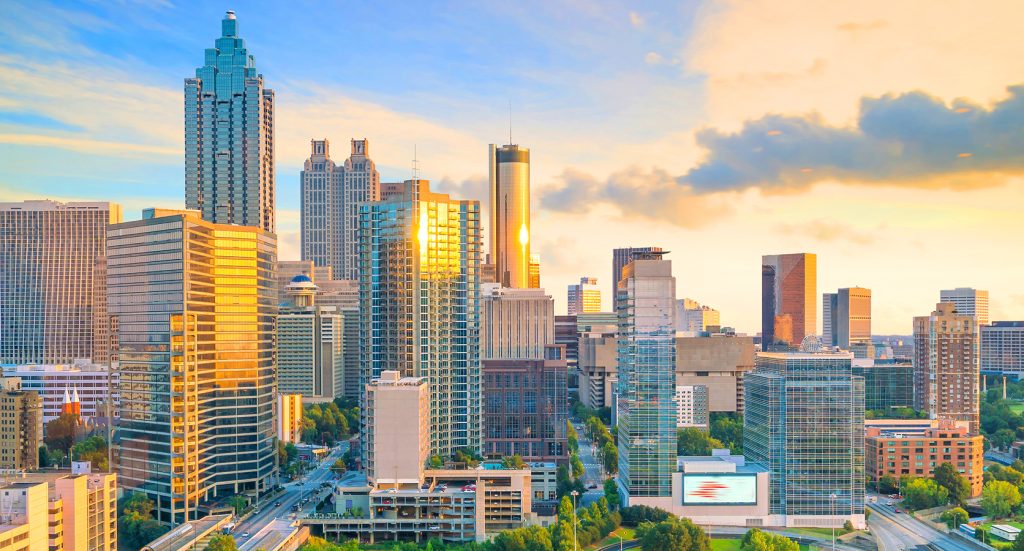
Running through Downtown between Fairlie-Poplar and South Downtown, this historic corridor connects landmark office buildings, government institutions, historic storefronts, transportation hubs, neighborhood restaurants, and cultural destinations that have shaped Atlanta for more than a century. Early skyscrapers, preserved commercial architecture, thriving sidewalks, and civic landmarks create a streetscape where the city's remarkable growth remains vividly apparent. Established alongside Atlanta's expanding railroad network, Alabama Street has long served as one of Downtown's defining thoroughfares. The result is a corridor defined by history, commerce, and enduring metropolitan significance.
What defines Alabama Street.
Alabama Street is best known for bordering Five Points, the historic crossroads where five railroad lines intersected, creating the transportation center that transformed a small railroad settlement into the commercial capital of the Southeast and one of America's fastest-growing cities during the nineteenth century.
The convergence of multiple railroads established Atlanta as the indispensable gateway between the Atlantic seaboard and the expanding interior South, attracting merchants, manufacturers, financial institutions, and civic leaders who fueled decades of extraordinary economic growth. Alabama Street quickly became one of the principal commercial corridors serving this transportation hub, lined with hotels, warehouses, banks, and businesses catering to travelers and freight moving through the city. Today, the corridor preserves that remarkable legacy as a central artery through the historic heart of Downtown.
How Alabama Street fits.
Alabama Street works as an exploration of Downtown's historic architecture, transportation heritage, and civic landmarks.
Begin at Five Points, where the city's defining transportation story immediately comes into focus. Continue toward Underground Atlanta, whose preserved nineteenth-century streets reveal the commercial foundations that shaped the surrounding district. From there, make your way to Fairlie-Poplar Historic District, where one of the Southeast's finest collections of historic commercial architecture provides a broader perspective on Atlanta's remarkable rise as a business center. Along the route, you'll encounter landmark office buildings, historic storefronts, public art, neighborhood cafés, civic institutions, and architecturally significant streetscapes that demonstrate how Alabama Street seamlessly connects Atlanta's railroad origins with one of the city's most historically significant urban corridors. The progression moves naturally from renowned railroad crossroads to preserved historic district to celebrated architectural neighborhood, revealing why Alabama Street remains one of Downtown's defining streets.
Where your story begins.
Foresyte Travel reveals places that feel extraordinary long before you arrive.
Enjoy editorial crafted for luxury travelers.
Foresyte may earn a commission when you book.