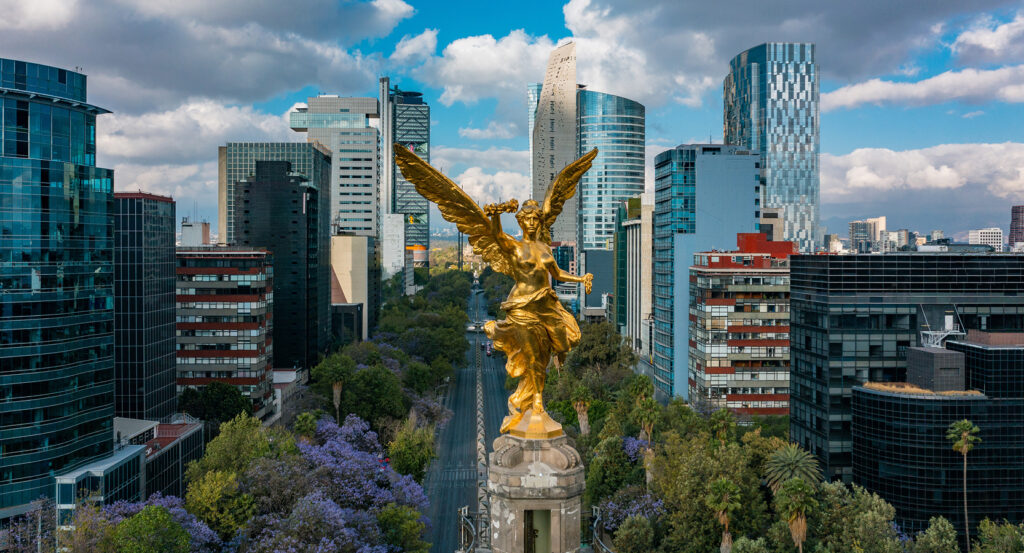
Why The Angel of Independence matters.
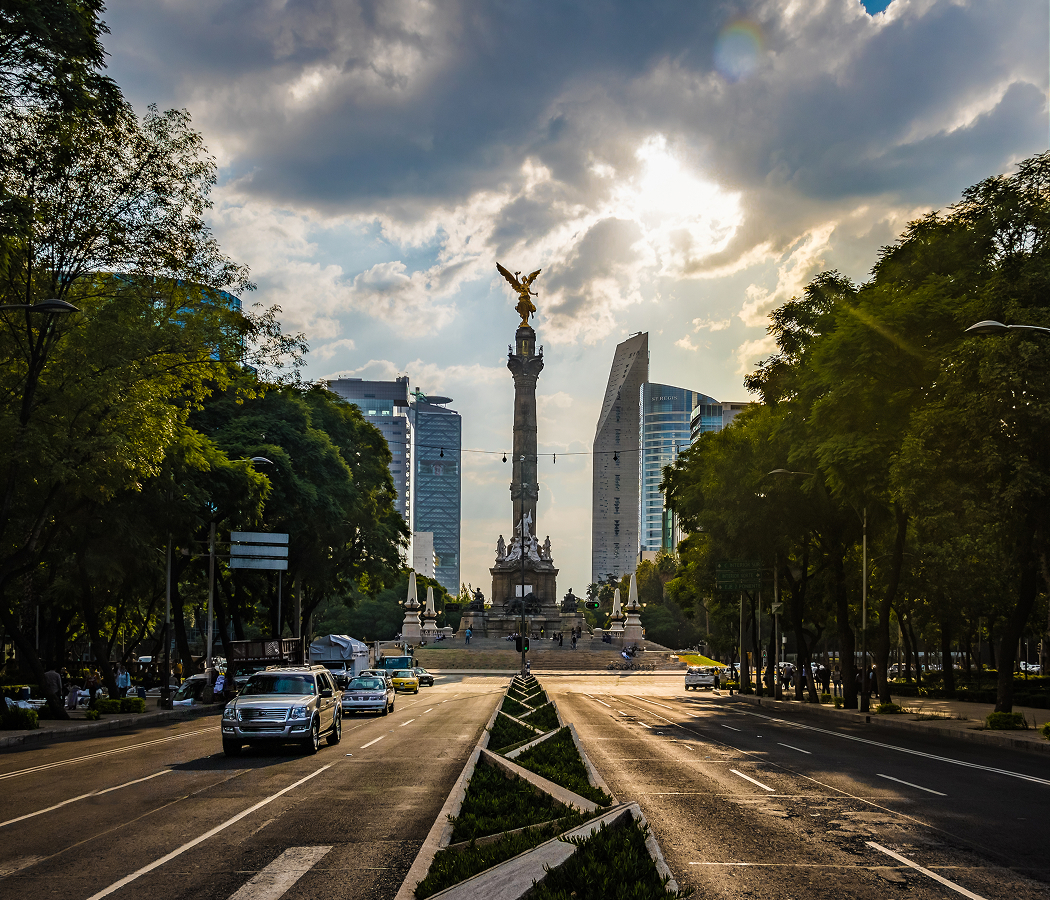
The Angel of Independence in Mexico City isn't just a monument, it's a national heartbeat cast in gold, rising from the center of Paseo de la Reforma like a symbol of victory, resilience, and eternal pride.
Standing more than 45 meters tall, this gilded winged figure, officially known as El Ángel de la Independencia, crowns a towering Corinthian column surrounded by marble steps and heroic statues. From every angle, it commands the city's rhythm, cars streaming past, flags waving in the distance, and locals gathering at its base to celebrate triumphs or mourn losses. Built to commemorate the centennial of Mexico's independence in 1910, the Angel has long transcended its commemorative purpose; it's now a sacred meeting place, where national unity finds a physical form. The bronze-and-gold figure of Victory holds a laurel wreath aloft, symbolizing freedom's enduring triumph, while the base enshrines the remains of heroes like Miguel Hidalgo, José María Morelos, and Vicente Guerrero. As sunlight catches the statue at midday, the entire monument glows, a golden beacon visible for blocks, reminding all who pass that Mexico's spirit was hard-won and unbreakable. Whether viewed by day, illuminated by night, or surrounded by a sea of cheering fans after a World Cup win, the Angel is the city's resonant epicenter, timeless, graceful, and rebelliously alive.
What defines The Angel of Independence.
The Angel of Independence tells a story that extends far beyond its marble and bronze, among artistic mastery, historical memory, and even quiet resilience against disaster.
Commissioned by President Porfirio Díaz and designed by architect Antonio Rivas Mercado, the monument was inspired by classical triumphal columns such as the Colonna di Traiano in Rome, but it carries distinctly Mexican meaning. Its golden angel, modeled after the Greek goddess Nike, was sculpted by Italian artist Enrique Alciati and covered in 24-karat gold leaf, making it shimmer like sunlight incarnate. When it was inaugurated in 1910, the Angel became the centerpiece of a modernizing capital, yet it also stood through decades of upheaval. After the devastating 1957 earthquake, the statue toppled and shattered; the government painstakingly restored it, reopening it in 1958 with even greater symbolic force. The monument's base hides a mausoleum containing the remains of several key figures from the War of Independence, brought here in a somber procession that turned the entire city into a living memorial. Since then, it has served as a stage for every chapter of national life, independence anniversaries, protests, vigils, and jubilant celebrations. Few visitors realize that the Angel was originally meant to stand in a circle of similar monuments, a grand project never completed, leaving this one as both a tribute and a tribute to endurance. Over a century later, it remains Mexico's most beloved guardian, the one that never stops watching over its people.
How The Angel of Independence fits.
Visiting The Angel of Independence is a rite of passage in Mexico City, one that connects you directly to the city's heart and history.
Set along the thriving Paseo de la Reforma, the monument is best experienced on foot, allowing you to take in its expansive scale from the base before looking upward to where the golden figure gleams against the skyline. Arrive early in the morning for quiet reflection or in the evening when spotlights bathe the statue in a warm glow, creating one of the city's most striking nightscapes. If you're visiting during a national holiday or cultural festival, you'll find the area transformed into a sea of flags, music, and celebration, the Angel serving as the symbolic anchor of collective pride. Take time to walk the surrounding plaza, where commemorative plaques detail the monument's construction and restoration, and where the marble steps double as an impromptu amphitheater for everything from wedding photos to political rallies. From here, stroll down Reforma toward Chapultepec Park, stopping for coffee or churros at a nearby café as you watch the city pulse around you. To see the Angel from above, visit one of the rooftop bars nearby, where glass walls and open-air terraces offer unparalleled views of the monument at sunset. Whether you linger for a few minutes or an entire afternoon, standing before the Angel is to stand in the presence of Mexico's soul, luminous, unyielding, and forever in motion.
Where your story begins.
Foresyte Travel reveals places that feel extraordinary long before you arrive.
Enjoy editorial crafted for luxury travelers.
Foresyte may earn a commission when you book.