Why Arch of Septimius Severus matters.
A triumphal monument that captures the imperial pulse of Rome's power. Standing tall at the northwest edge of the Roman Forum, the Arch of Septimius Severus is a marble tribute to victory, ambition, and legacy. Commissioned in AD 203 to commemorate Emperor Septimius Severus and his sons Caracalla and Geta's triumphs over the Parthians, its reliefs ripple with motion, soldiers, captives, and horses caught in an eternal march toward conquest. The arch's triple portals evoke the passage between worlds: the civic and the divine, the ephemeral and the eternal. Its weathered details whisper stories of political theater, of how monuments were propaganda in stone, commanding awe and obedience from those who passed beneath.
Visiting the Arch isn't just a step through Rome's history; it's an encounter with its ideology. The craftsmanship of the spandrels, the coffered ceilings, and the towering inscriptions dedicate not only victory to the emperor but permanence to his myth. As you gaze up, the marble seems to shimmer under the Roman sun, proof that glory, once carved, could defy decay. Standing before it, you feel small, yet connected to the current of ambition that once defined an empire.
What defines Arch of Septimius Severus.
Hidden layers of politics and artistry behind its marble grandeur. Beyond the triumphal fanfare lies a darker subtext, the manipulation of memory itself. When Geta was murdered by his brother Caracalla, his name and likeness were methodically erased from the arch, a brutal act of damnatio memoriae that transformed art into a political weapon. The void where his figure once stood reminds you that Roman stone, for all its solidity, was also a canvas for rewriting history.
The arch's reliefs, studied closely, reveal not only military victories but subtle hierarchies of divinity and power. Victories are crowned by winged figures of Victory, Jupiter looms above in divine sanction, and Severus himself is portrayed larger than life, a visual rhetoric of dominance. These details invite you to question how monuments today continue to frame power, memory, and erasure through the language of design.
How Arch of Septimius Severus fits.
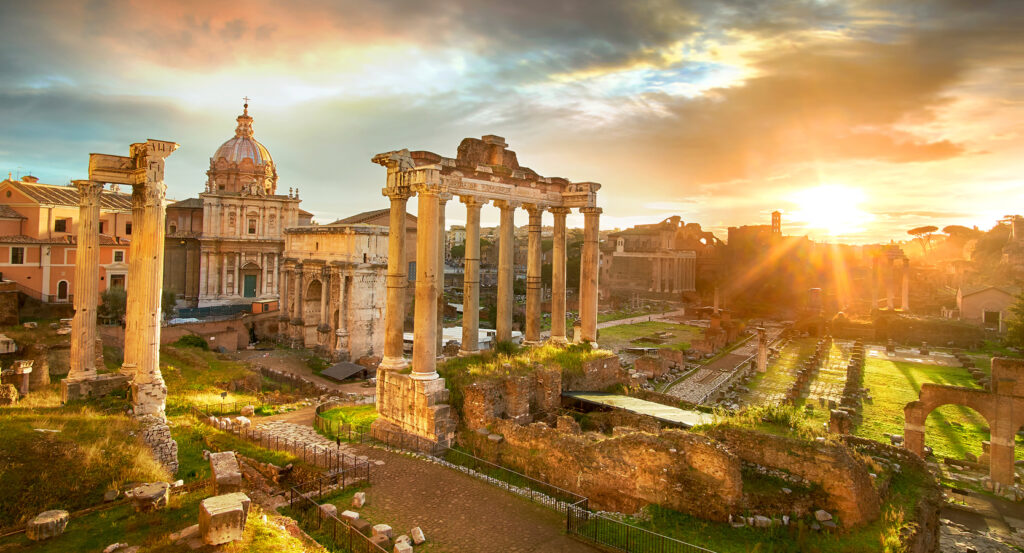
Begin your walk through the Roman Forum from the Arch itself, it acts as both a physical and symbolic gateway into antiquity.
Arriving early in the morning, you'll witness light slicing across the arch's marble, illuminating the reliefs like a slow-moving projection of history. From there, continue toward the Temple of Saturn and the Curia Julia, letting the arch anchor your sense of direction and time. It's a moment to pause before the ruins consume you, to stand under the shadow of triumph and consider how every empire writes its victories in stone, and its guilt in silence.
Where your story begins.
Foresyte Travel reveals places that feel extraordinary long before you arrive.
Enjoy editorial crafted for luxury travelers.
Foresyte may earn a commission when you book.