Why Museo Nazionale del Bargello matters.
Museo Nazionale del Bargello is an unrivaled sculpture museum where Santa Croce's medieval authority, Renaissance genius, the birth of modern sculpture, and Florence's relentless pursuit of artistic perfection unfold through the masterpieces that forever changed the language of Western art.
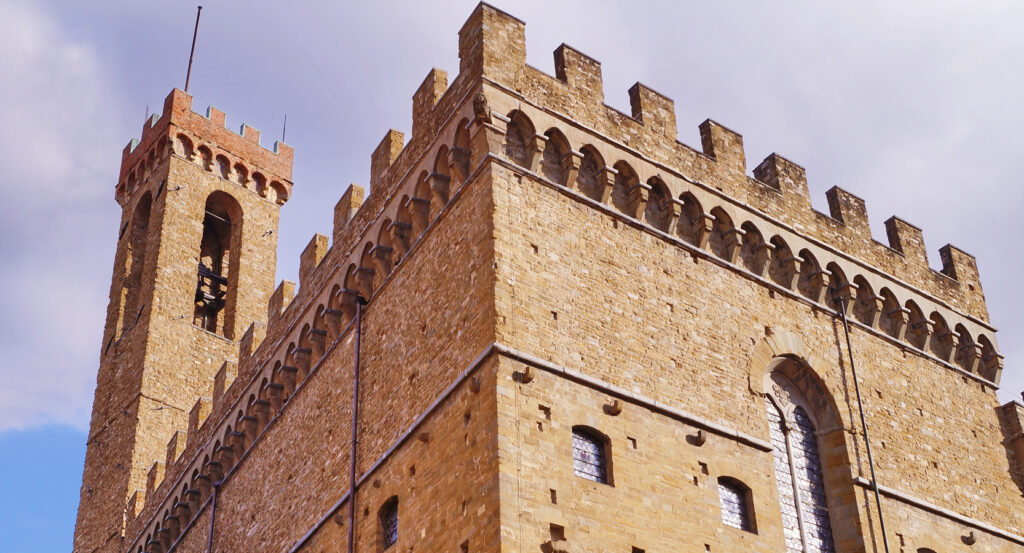
Set along Via del Proconsolo near Via Ghibellina and just steps from Piazza della Signoria, this atmospheric museum occupies Florence's oldest surviving public building, where fortress-like stone walls, vaulted halls, intimate chapels, and grand courtyards create an extraordinary setting for one of the world's greatest collections of Renaissance sculpture. Every gallery reveals the evolution of artistic innovation as marble, bronze, terracotta, ivory, enamel, and precious metalwork trace the creative breakthroughs that elevated Florence into Europe's artistic capital. Towering masterpieces, intricate decorative arts, and centuries of civic history transform every room into a compelling discussion between political power, artistic ambition, and technical mastery. The experience ultimately immerses visitors in the creative revolution that redefined what sculpture could become.
What defines Museo Nazionale del Bargello.
Museo Nazionale del Bargello is best known for housing the world's greatest collection of Renaissance sculpture inside the Palazzo del Bargello, whose construction began in 1255 as the headquarters of Florence's Capitano del Popolo before serving as the residence of the city's chief magistrate, the Bargello, and later functioning as a prison until its conversion into Italy's first national museum dedicated to the decorative arts and sculpture in 1865 during the country's unification. The museum preserves Donatello's celebrated bronze David, created during the 1440s as the first freestanding life-size nude sculpture cast in bronze since antiquity and one of the defining achievements of the early Renaissance, alongside his marble Saint George, the dramatic David by Andrea del Verrocchio, Michelangelo's Bacchus, Brutus, and Pitti Tondo, Giambologna's dynamic bronzes, Benvenuto Cellini's exquisite works in bronze and precious metals, and masterpieces by Luca della Robbia, Desiderio da Settignano, Mino da Fiesole, Andrea della Robbia, and countless sculptors whose innovations transformed European art. Beyond sculpture, the collections encompass one of Italy's finest assemblages of Renaissance decorative arts, including Limoges enamels, medieval ivories, Islamic metalwork, maiolica ceramics, textiles, armor, medals, seals, coins, and works from the Carrand Collection, illustrating Florence's role as an international center of artistic production and craftsmanship. The palace itself preserves the grand Salone di Donatello, an elegant arcaded courtyard attributed to Michelozzo, medieval frescoes, fortified architecture, and civic spaces that witnessed centuries of Florentine political history before becoming one of Italy's earliest purpose-built national museums. Designated a national museum shortly after Florence briefly served as the capital of unified Italy, the Bargello established an influential model for the preservation and interpretation of Renaissance sculpture while continuing to serve as an indispensable center for scholarship, conservation, and the study of Italian artistic achievement.
Every gallery reveals the extraordinary progression from medieval restraint to Renaissance naturalism as successive generations of sculptors mastered anatomy, perspective, movement, emotion, and classical form with unprecedented confidence. Original bronzes, marble carvings, glazed terracottas, carved ivories, and decorative masterpieces demonstrate the astonishing technical range achieved by Florence's workshops while preserving the artistic discussion between masters who continually challenged and surpassed one another. Careful conservation, rigorous scholarship, and the palace's authentic medieval architecture allow each masterpiece to retain the historical context that first gave it meaning. Every space demonstrates how artistic rivalry, civic patronage, technical innovation, and human imagination combined to establish Florence as the unquestioned center of Renaissance sculpture.
How Museo Nazionale del Bargello fits.
Museo Nazionale del Bargello works as the centerpiece of an exploration through Santa Croce's extraordinary artistic and civic heritage.
Begin at Piazza della Signoria, where Florence's republican history establishes the civic ideals that shaped generations of Renaissance artists before continuing into Museo Nazionale del Bargello to experience the masterpieces that transformed sculpture forever. Continue to Basilica of Santa Croce, whose grand tombs celebrate many of Italy's greatest artists, writers, and thinkers while extending the neighborhood's extraordinary cultural legacy. Conclude at Casa Buonarroti, where Michelangelo's early masterpieces and family history provide a fitting finale celebrating one of the Renaissance's greatest creative minds. The progression moves naturally from civic history to sculptural innovation before concluding through the life and legacy of Michelangelo, revealing why Santa Croce remains one of Florence's richest centers of artistic achievement.
Where your story begins.
Foresyte Travel reveals places that feel extraordinary long before you arrive.
Enjoy editorial crafted for luxury travelers.
Foresyte may earn a commission when you book.