
Why Beckon matters.
Beckon is a MICHELIN-starred chef's counter where RiNo's industrial reinvention meets Duncan and Allison Holmes's culinary partnership, the influence of Colorado's fine-dining pioneers and a seasonal cooking enterprise that helped establish Denver among America's recognized gastronomic destinations.
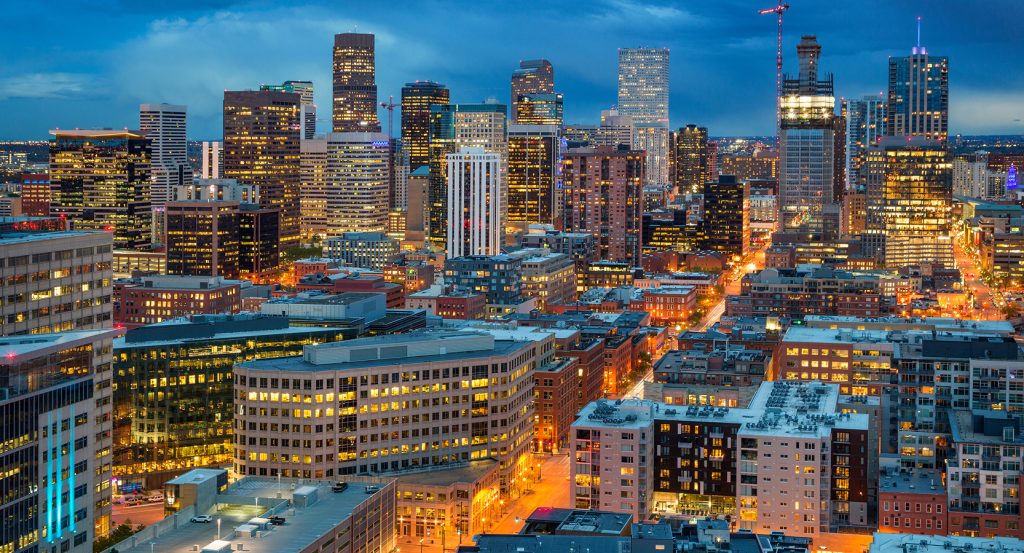
Occupying a converted bungalow along Larimer Street near 29th Street, Beckon sits between Walnut Street and Blake Street, northeast of 27th Street and close to the Brighton Boulevard corridor, within RiNo's former industrial district of warehouses, workshops and residential buildings. The restaurant preserves the intimate proportions of its original house, introducing restrained Scandinavian-inspired interiors and a three-sided counter arranged around an open kitchen. Seated directly opposite the chefs, diners follow the preparation of successive courses, with precise plating, carefully selected tableware and controlled lighting establishing a close connection between cooking and service. Colorado-grown produce, preserved seasonal ingredients and thoughtfully composed wine pairings shape a menu that changes throughout the year, bringing the agricultural rhythms of the Rocky Mountain region into a contemporary fine-dining setting. The result is a restaurant whose intimate architecture, chef-directed hospitality and evolving culinary program connect Denver's expanding gastronomic ambitions with the seasonal character of Colorado's landscape.
What defines Beckon.
Beckon is best known for Duncan Holmes and Allison Anderson, later Allison Holmes, developing Denver's first dedicated chef's-counter restaurant through an independent hospitality partnership that progressed from national recognition for a neighborhood café to MICHELIN-starred dining and an expanding restaurant group. Duncan Holmes developed his culinary career at Frasca Food and Wine in Boulder, where his responsibilities advanced to culinary director under the influence of the restaurant's Italian fine-dining traditions. Allison Anderson also worked at Frasca, establishing the professional connection that later became central to their shared hospitality enterprise. Their opportunity to create an independent restaurant emerged through Craig Lieberman, founder of 34 Degrees Crisps, and technology entrepreneur Joshua Elson, who joined the couple in developing an ambitious dual-concept project in Denver's River North district. Originally conceived under the name Paired, the undertaking transformed two adjoining residential buildings into complementary restaurants, with daytime dining occupying one house and a more specialized culinary operation planned next door. The first establishment, Call, opened in 2017 and attracted national attention when Bon Appétit selected it among America's ten best new restaurants in 2018. Its success established the partners' reputation for combining accomplished cooking with an informal neighborhood setting, providing the foundation for their more ambitious undertaking. Beckon opened in November 2018 with eighteen seats arranged around a three-sided chef's counter, introducing a prepaid tasting-menu format that placed every diner directly opposite the working kitchen. The restaurant's original eight-course program emphasized seasonal ingredients and carefully coordinated hospitality, bringing an unusually intimate interpretation of fine dining to Denver. The COVID-19 pandemic disrupted the original counter format, prompting the introduction of covered outdoor seating and individual greenhouse structures. A significant leadership transition followed in February 2021 when Holmes and Anderson departed to pursue another project, with chef Codi Simkins assuming kitchen leadership and Justin Abad becoming general manager. Simkins had previously worked at Frasca Food and Wine, Fruition and The Wolf's Tailor, preserving the restaurant's established culinary direction through the change. Holmes and Anderson subsequently returned to leadership, and the original partners expanded their enterprise in February 2023 with Major Tom, a neighboring restaurant named for David Bowie's Space Oddity and developed around seasonal cooking and a Champagne-focused wine program. That September, Beckon received one MICHELIN star during the inaugural Colorado MICHELIN Guide selection, joining the state's first group of internationally recognized restaurants. The achievement coincided with Beckon's fifth anniversary, celebrated through a series of collaborative dinners with visiting chefs. Another distinction followed in January 2024 when the James Beard Foundation named Beckon a semifinalist for Outstanding Restaurant, extending its recognition beyond Colorado. A temporary renovation during the summer of 2024 renewed the dining environment and introduced another seasonal menu. The restaurant subsequently expanded its direct relationship with Colorado agriculture through Beckon Farm, a one-acre growing operation in Lakewood whose produce influences the kitchen's changing preparations. MICHELIN recognition continued through the 2026 Colorado selection, and the hospitality partnership developed into Paired Hospitality Group, with plans for a third establishment, Holm, announced in September 2026. Beckon's development connects the partners' formative careers, the national success of Call, a significant leadership transition and reunion, and the expansion of a chef-directed restaurant into an enterprise whose influence extends across Denver's contemporary dining scene.
How Beckon fits.
Beckon works as the evening destination for an exploration of northeastern Denver connecting the medical achievements of Colorado's first Black female physician, the preservation of nineteenth-century industrial architecture and the technological history of American transportation.
Begin at Black American West Museum & Heritage Center, the institution housed in the former residence and medical office of Dr. Justina Laurena Ford, Colorado's first licensed African American female physician. Ford graduated from Chicago's Hering Medical College in 1899 and arrived in Denver in 1902, establishing a practice serving patients across racial and economic boundaries during an era of institutional discrimination. Her medical career extended across five decades, during which she delivered 7,000 babies. When developers threatened her historic residence with demolition in 1983, former patients and community leaders organized a preservation campaign. The building moved to its California Street location in 1984, and the museum opened there in 1988. Continue to The Source, the restored industrial complex developed within buildings originally associated with Colorado Iron Works during the nineteenth century. The manufacturer established a major enterprise producing equipment for ore processing, extending Denver's industrial influence into mining operations across the world. Its brick foundry buildings subsequently supported various manufacturing and warehouse activities before industrial decline left the property vacant. Zeppelin Development undertook a $4.7 million adaptive-reuse project, supported by $1.115 million in public tax-increment financing, transforming the historic structures into an artisanal market hall. The project became an important early example of the neighborhood's transition from heavy industry into creative commerce and contemporary hospitality. Conclude at Forney Museum of Transportation, the institution developed from industrialist J. D. Forney's private collection of historic vehicles. Forney founded a welding-equipment company in Fort Collins during the 1930s, and his family presented him with a 1921 Kissel automobile in 1950, inspiring a collecting pursuit that developed into a nonprofit museum in 1961. The collection subsequently occupied Denver's historic Tramway Powerhouse, where Union Pacific donated a massive Big Boy steam locomotive. After decades of expansion, the museum relocated to its Brighton Boulevard facility, opening to the public in January 2001. Its surviving locomotives, automobiles, motorcycles and carriages preserve successive chapters of American transportation engineering. The progression moves from Ford's pioneering medical career through the industrial transformation preserved at The Source into Forney's transportation collection, connecting the social, manufacturing and technological histories that shaped northeastern Denver.
Where your story begins.
Foresyte Travel reveals places that feel extraordinary long before you arrive.
Enjoy editorial crafted for luxury travelers.


























































































































