Why Bonnie Brae matters.
Bonnie Brae is a graceful corridor where Belcaro's curving streets, village-scale commercial heritage, English-inspired planning, and enduring neighborhood character create one of Denver's most distinctive main streets.
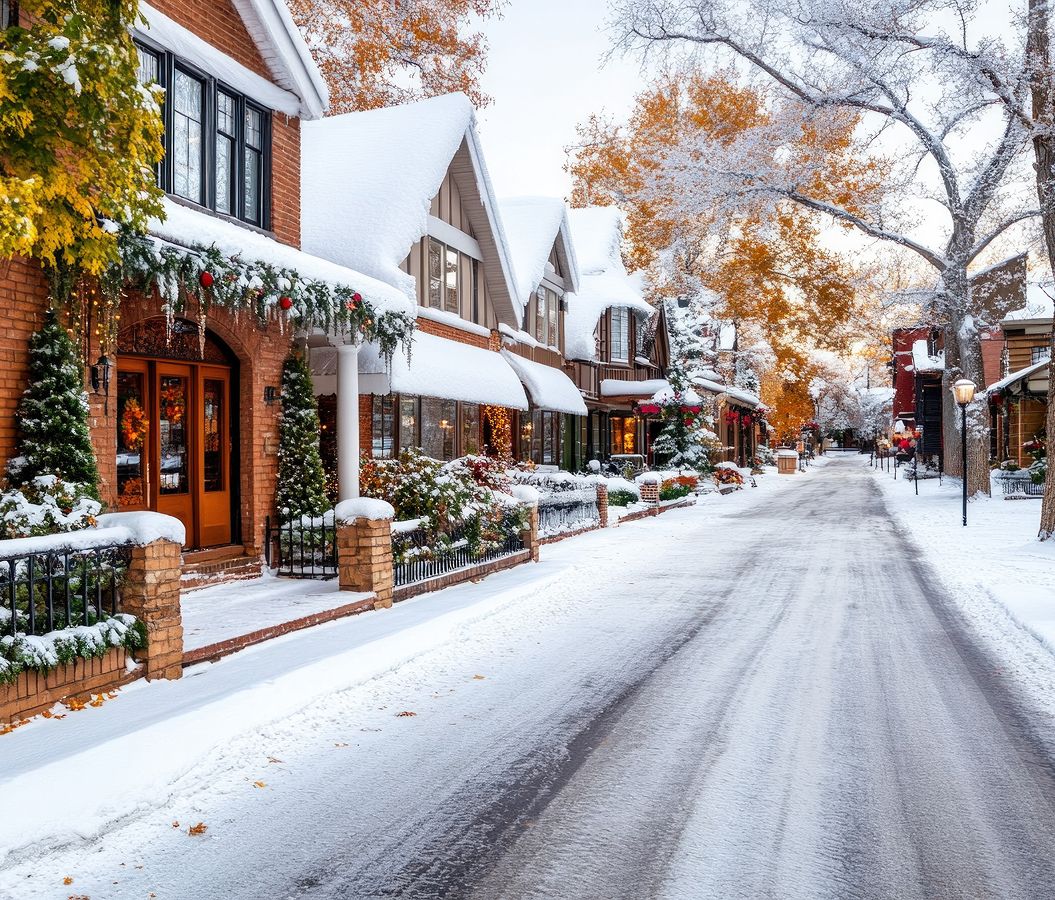
Running through Belcaro between Cory-Merrill and Washington Park, Bonnie Brae links a compact commercial village with established residential blocks, mature tree canopies, and carefully landscaped streets that collectively reflect a neighborhood planned around walkability. Gently curving roadways, brick storefronts, Tudor-inspired architecture, generous setbacks, and independent businesses create an environment where thoughtful design and neighborhood life remain closely intertwined. The corridor reaches its defining character where architectural continuity, local enterprise, and nearly a century of stewardship reinforce one another throughout the district. The result is an experience defined by timeless charm, human-scaled design, and Belcaro's enduring tradition of neighborhood-centered living.
What defines Bonnie Brae.
Bonnie Brae is best known for emerging in 1924 when developer George Olinger Jr. commissioned planner George E. Kessler to create one of Denver's earliest curvilinear residential subdivisions, intentionally departing from the city's orthogonal street grid with winding roadways inspired by traditional village planning. The name “Bonnie Brae,” derived from the Scottish phrase meaning “pleasant hill,” reflected the development's scenic planning philosophy, while deed restrictions, landscaped parkways, and coordinated architectural standards established a cohesive residential environment uncommon in Denver during the early twentieth century. Construction throughout the 1920s and 1930s introduced distinguished Tudor Revival, Colonial Revival, and English Cottage residences alongside a compact neighborhood commercial center designed to serve surrounding residents on foot. Nearly a century later, the original street pattern, architectural character, and village-scale commercial core remain defining features of one of Denver's most recognizable planned neighborhoods.
Preservation of Bonnie Brae's original curving alignment continues distinguishing the corridor from nearly every surrounding Denver street, reinforcing the landscape vision established by George E. Kessler rather than the city's conventional survey grid. Independent businesses occupying the historic commercial center have sustained the neighborhood's longstanding tradition of locally focused retail, dining, and everyday services while maintaining storefronts scaled to the original village concept. Documentation by History Colorado, Historic Denver, and the Denver Public Library has emphasized Bonnie Brae's significance as an early example of landscape-oriented neighborhood planning and cohesive architectural design. Together, innovative planning, enduring commercial continuity, preservation scholarship, and remarkably intact architectural character explain why Bonnie Brae remains one of Denver's most influential neighborhood corridors.
How Bonnie Brae fits.
Bonnie Brae works as an exploration of Denver's neighborhood planning, public landscapes, and architectural heritage.
Begin at Washington Park, where formal gardens, Smith Lake, and scenic parkways establish the landscape traditions that influenced many of Denver's early twentieth-century residential communities before naturally leading toward Bonnie Brae. Continue to Bonnie Brae Park, whose open green space and mature canopy reinforce the neighborhood's original planning philosophy while providing a natural transition into its intimate village atmosphere. Conclude at Denver Botanic Gardens, where internationally acclaimed plant collections, conservatories, and carefully composed landscapes provide a fitting finale celebrating the horticultural ideals and landscape design traditions that continue defining this part of Denver. The progression moves naturally from one of Denver's great civic parks through Bonnie Brae's neighborhood green space before culminating in the city's premier botanical institution, revealing the enduring relationship between landscape design and community planning.
Where your story begins.
Foresyte Travel reveals places that feel extraordinary long before you arrive.
Enjoy editorial crafted for luxury travelers.
Foresyte may earn a commission when you book.