Why Cairo Marriott Hotel matters.
Cairo Marriott Hotel is not simply a place to stay, it is a living palatial complex where imperial ambition, layered history, and contemporary hospitality coexist inside one of the most extraordinary buildings in the city.
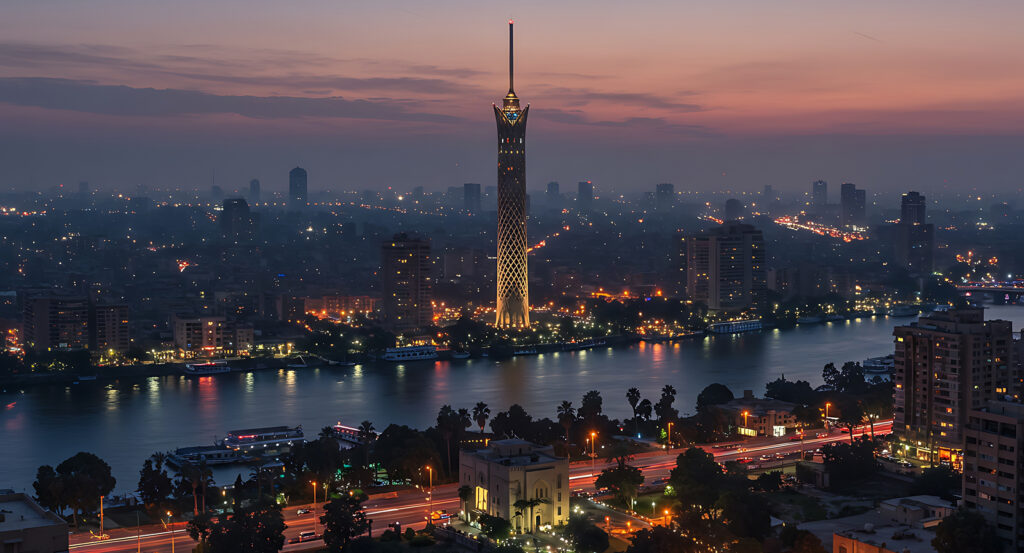
Set within the historic Gezira Palace on Zamalek Island, Cairo Marriott Hotel operates on a scale and depth few hotels anywhere in the world can claim. This is not a structure built for hospitality; it is a structure repurposed into it, one that has carried royalty, empire, diplomacy, and cultural transformation long before travelers arrived with suitcases. From the moment you enter the palace wing, the experience feels fundamentally different from that of a modern hotel. You are not greeted by neutrality or minimalism. You are greeted by history that refuses to fade quietly. Soaring ceilings, gilded arches, intricate mosaics, hand-painted ceilings, and expansive staircases announce immediately that this is a place shaped by power and performance. The building does not attempt to soften itself for comfort; instead, comfort is layered carefully on top of grandeur. Public spaces feel vast yet ceremonial, designed to impress not through trend but through endurance. Walking through the palace corridors feels like moving through a preserved artifact that continues to function. The modern hotel towers that flank the palace provide contrast, cleaner lines, contemporary materials, and updated conveniences, yet the palace remains the resonant and architectural core of the experience. Guest rooms vary dramatically depending on location, and this variability is part of the hotel's identity. Palace wing rooms feel historic and atmospheric, with higher ceilings, classical proportions, and a sense of inhabiting a space that has witnessed centuries of change. Tower rooms are more contemporary, offering functional comfort, consistency, and in many cases sweeping Nile or garden views. Across both, rooms are generous in size, designed to accommodate real stays. Beds are plush and reliable, layouts are practical, and sound insulation provides relief from the city beyond. Bathrooms range from classic marble spaces to modernized configurations, always emphasizing space and usability over theatrics. What unifies the rooms is a sense of solidity, you feel housed, not staged. Dining at Cairo Marriott Hotel reflects the property's dual identity. Restaurants housed within the palace feel formal and timeless, spaces where meals unfold slowly beneath ornate ceilings and carved details that remind you of the building's origins as a royal residence. Elsewhere on the property, dining becomes more contemporary and social, with terraces, lounges, and casual venues that draw both guests and Cairo residents. The hotel's gardens are among its most defining features. Lush, expansive, and im calm given the urban context, they function as a green lung within the city, places where you can walk, pause, or dine surrounded by palms and flowering plants while traffic hums distantly beyond the walls. These gardens are not decorative; they are experiential, shaping the rhythm of the stay and offering psychological space that is increasingly rare in Cairo. The pool areas and leisure facilities extend this sense of enclosure and retreat. Service at Cairo Marriott Hotel reflects the complexity of the property itself. Staff navigate a massive, multifaceted operation with practiced ease. Interactions feel professional and structured rather than intimate, shaped by the scale and diversity of guests passing through. This is a hotel accustomed to hosting heads of state, large conferences, weddings, diplomats, long-stay visitors, and first-time travelers simultaneously. The service culture prioritizes reliability, discretion, and institutional knowledge over performative warmth. Location is inseparable from the experience. Zamalek Island sits between Downtown Cairo and the Nile's main channels, offering access to cultural institutions, embassies, galleries, and dining while maintaining a residential calm distinct from the city's most congested districts. Cairo Marriott Hotel is ideal for travelers who want to experience Cairo through architecture, continuity, and scale, those who understand that some places are not meant to feel new, but to feel enduring.
What defines Cairo Marriott Hotel.
Cairo Marriott Hotel occupies the former Gezira Palace, built in 1869 by Khedive Ismail as a royal residence designed to rival Europe's grandest courts.
The palace was constructed to host dignitaries attending the opening of the Suez Canal, a moment when Egypt sought to position itself as a modern power bridging continents. European architects and craftsmen were commissioned to create an environment that fused Islamic, Moorish, and European classical styles, resulting in a structure that was intentionally opulent and internationally legible. The palace quickly became a symbol of Egypt's ambition, an architectural declaration that Cairo belonged among the world's great capitals. Over the decades, the building transitioned through multiple lives: royal residence, diplomatic venue, social hub, and eventually hotel. Unlike many historic properties that were stripped of their original character during conversion, the Gezira Palace retained much of its decorative core. The transformation into a Marriott was not about erasure, but accommodation, integrating modern infrastructure into a building never designed for mass hospitality. This decision preserved the palace's grandeur while allowing it to remain inhabited. Culturally, the hotel has functioned as a social axis within Cairo for generations. Its ballrooms, salons, and gardens have hosted state events, cultural gatherings, weddings, and celebrations that cut across class, nationality, and era. During moments of political transition, the property served as neutral ground, a place where continuity could be maintained even as the city outside shifted dramatically. A lesser-known aspect of the hotel is how its scale has influenced guest behavior. Unlike smaller boutique properties that encourage inward focus, Cairo Marriott Hotel invites exploration. Guests wander, get slightly lost, rediscover spaces, and gradually build a mental map of the palace and gardens. This spatial complexity creates a sense of inhabitation. Architecturally, the palace wing remains one of the most intact examples of 19th-century royal design in Egypt still in daily use. The ceilings, arches, and decorative motifs are not replicas; they are originals, maintained through ongoing conservation. This authenticity gives the hotel an authority that cannot be fabricated. In a hospitality landscape increasingly dominated by new builds and brand uniformity, Cairo Marriott Hotel stands apart as a structure that carries its own narrative weight. It does not need to explain itself, it contains history.
How Cairo Marriott Hotel fits.
Cairo Marriott Hotel works as a central chapter, an immersive pause where history, space, and modern life overlap.
Begin your mornings by walking the gardens, allowing the property's scale and greenery to orient you before stepping into the city. Use the hotel's Zamalek location to explore galleries, cafés, and embassies nearby, or cross easily into Downtown Cairo when you're ready for intensity. Midday, return to the hotel to rest not just physically but mentally, few properties offer the same sense of enclosure and separation. Afternoons are ideal for slow lunches, quiet reading in palace lounges, or simply wandering the corridors to absorb architectural detail that reveals itself gradually. Evenings can unfold either on property, formal dining beneath ornate ceilings, drinks in garden-facing lounges, or outward into Zamalek's understated nightlife, knowing you can return to a place that feels substantial and grounded. Pair your stay here with excursions to Giza, Saqqara, or the Grand Egyptian Museum, allowing the hotel's historic gravitas to balance days spent among monuments and crowds. For longer journeys through Egypt, Cairo Marriott Hotel serves as a powerful midpoint or closing chapter, a place to process scale, history, and movement before continuing onward. By the time you leave, the hotel will not feel like a brand or an address. It will feel like a structure you briefly lived inside, one that reframed Cairo not as chaos or performance, but as a city layered with ambition, contradiction, and persistence. Cairo Marriott Hotel does not ask you to admire it. It expects you to enter it.
Where your story begins.
Foresyte Travel reveals places that feel extraordinary long before you arrive.
Enjoy editorial crafted for luxury travelers.
Foresyte may earn a commission when you book.