Why you should experience Schlossgarten Charlottenburg in Berlin, Germany.
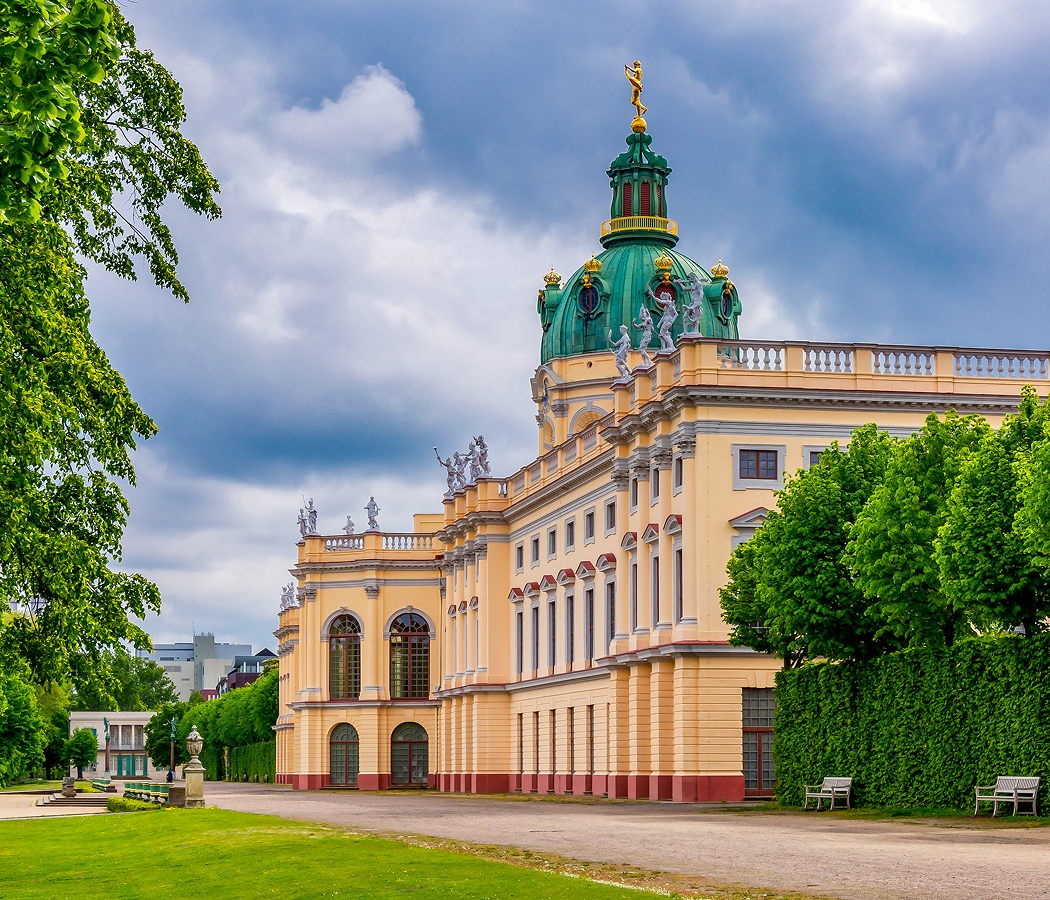
Schlossgarten Charlottenburg, or Charlottenburg Palace Gardens, is Berlin's living poem, a serene blend of geometry, grandeur, and timeless beauty.
Step through the palace gates and the city noise fades into the whisper of fountains and the rustle of lime trees. Designed in the late 17th century by Siméon Godeau, a pupil of Versailles' famed André Le Nôtre, the gardens embody French formal perfection, avenues that stretch in symmetrical harmony, flowerbeds arranged like royal embroidery, and a central axis that draws the eye straight to the glimmering palace dome. As you walk the gravel paths, golden light filters through clipped hedges and sculpted topiaries. Marble statues emerge from leafy alcoves, muses, gods, and mythic heroes once admired by Prussian nobility. Yet beyond the manicured formality, the gardens soften into English romanticism: winding trails, natural ponds, and quiet meadows added in the 18th and 19th centuries. This gradual evolution mirrors Berlin itself, structured yet soulful, disciplined yet endlessly alive. Whether in spring bloom or under a winter hush, Charlottenburg's gardens offer that rare peace found only where art and nature meet in mutual respect.
What you should know about Schlossgarten Charlottenburg.
The gardens were as much a statement of power as of beauty.
When Frederick I commissioned the palace for his wife, Queen Sophie Charlotte, he knew that grandeur wasn't complete without landscape, and so, the gardens became a symbol of divine order, each path and parterre representing harmony between man and creation. After Sophie Charlotte's death, the garden evolved alongside the palace's fortunes. Frederick the Great expanded it with ornamental lakes, an orangerie, and the exquisite Belvedere pavilion, which still crowns the far end of the central axis. The garden's transformation from French to English style reflected changing philosophies of the Enlightenment, a shift from control to contemplation. During World War II, bombs scarred the grounds, destroying many statues and fountains, but postwar restorations meticulously revived the original designs, guided by surviving sketches and early engravings. Today, the garden doubles as both museum and refuge: its baroque core a tribute to royal ambition, its outer park a sanctuary for Berliners seeking quiet. Few realize that beneath the manicured lawns lie the remains of the royal family's private burial vault, a reminder that beauty and impermanence are forever entwined here.
How to fold Schlossgarten Charlottenburg into your trip.
The gardens deserve unhurried wandering, ideally after exploring the palace interiors.
Exit the New Wing and follow the terrace steps down into the parterre, where you'll have the best view of the palace reflected in the central pool. Walk the central promenade toward the Belvedere, pausing at the marble statues that line the path; each depicts a classical myth meant to embody royal virtues. The Belvedere now houses an exceptional porcelain collection, worth a brief stop for its airy elegance and lake views. From there, follow the shaded English-style paths that curve through woodland glades and open lawns, where wildflowers bloom in summer and the scent of linden fills the air. If time allows, cross the bridge toward the Mausoleum, the final resting place of Queen Luise, whose tomb by Christian Daniel Rauch is among the masterpieces of German neoclassical sculpture. End your visit near the Orangerie, where the café terrace offers views across the formal gardens, the perfect spot for tea or a quiet reflection. Schlossgarten Charlottenburg are more than royal grounds; they are a living portrait of Berlin's grace, resilience, and love of harmony.
Where your story begins.
Foresyte Travel reveals places that feel extraordinary long before you arrive.
Experience premium editorial crafted for luxury travelers.