Why Mausoleum in the Palace Garden Charlottenburg in Berlin, Germany.
Mausoleum in the Palace Garden Charlottenburg is among the most intimate and moving monuments in all of Berlin, a place where grace, love, and legacy converge beneath the whisper of the palace gardens.
Tucked away at the far end of Charlottenburg's park, the red sandstone structure rises solemnly between tall oaks and manicured lawns, its neoclassical portico reflected in the still pond before it. Inside rests Queen Louise of Prussia, the beloved monarch whose beauty, compassion, and defiance in the face of Napoleon made her a national icon. The quiet air carries the fragrance of linden and earth; footsteps echo softly as sunlight filters through the domed skylight. At the center stands her marble sarcophagus, a masterpiece by sculptor Christian Daniel Rauch, portraying Louise as if peacefully asleep, her hands folded in eternal repose. Every detail breathes reverence. Here, the grandeur of empire gives way to human tenderness. Mausoleum isn't just a royal tomb; it's a shrine to love, courage, and the enduring spirit of a queen who became the heart of a nation.
What defines Mausoleum matters.
Built between 1810 and 1812 by Heinrich Gentz and later expanded by Karl Friedrich Schinkel, Mausoleum began as a private gesture of grief from King Frederick William III after Louise's untimely death at just 34.
It was designed to harmonize with the surrounding gardens, blending architecture and nature in quiet dialogue. The original building held only Louise's tomb, but over the decades it became the resting place of Prussia's most revered royals, including Frederick William III, Emperor William I, and Empress Augusta. Rauch's marble effigy of Louise, unveiled in 1814, became a symbol of national mourning and romantic purity, influencing funeral art across Europe. Mausoleum suffered bomb damage during World War II but was painstakingly restored, its sculptures and stained-glass windows reassembled piece by piece. Few realize that beneath the serene stillness lies a coded story of Prussia's rise, each addition to the tomb marking a new chapter in the monarchy's evolution. Today, the site remains both a memorial and a sanctuary, where time itself seems to stand still in devotion.
How Mausoleum matters.
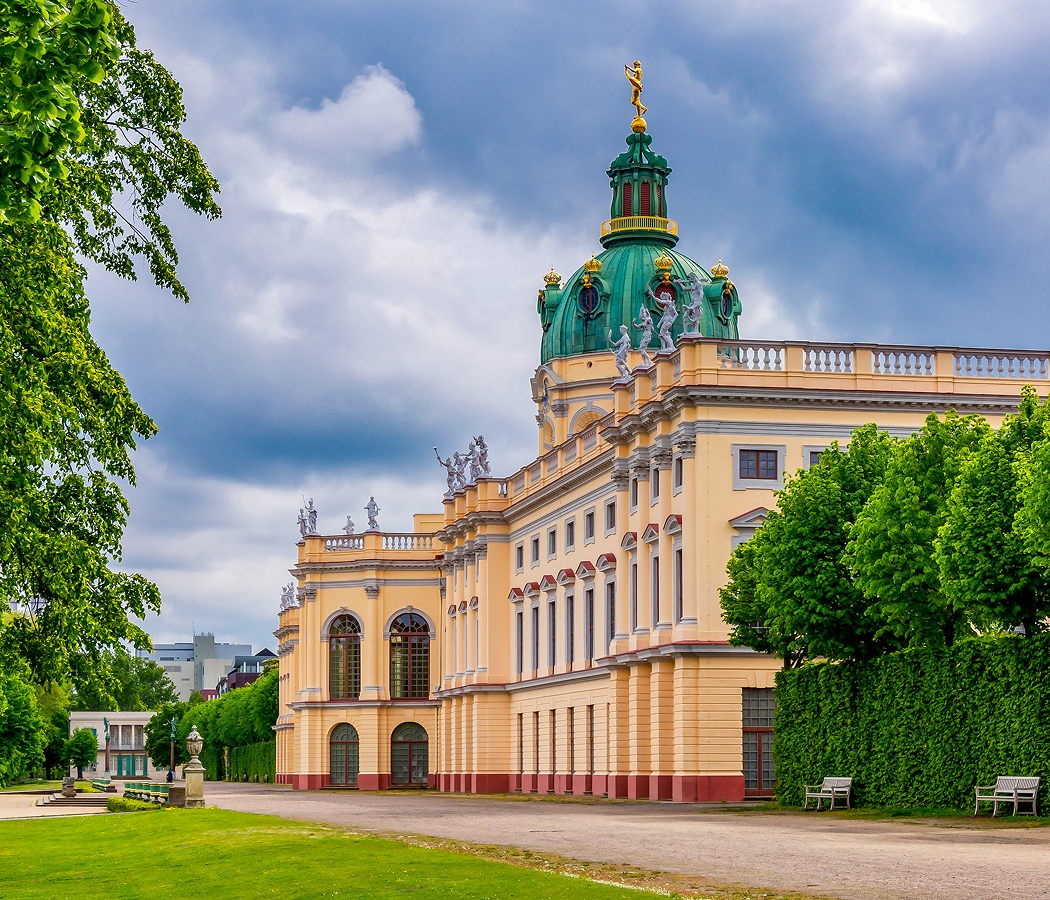
Mausoleum is best approached as the culmination of your journey through Charlottenburg Palace Gardens.
After exploring the Baroque parterres and the Belvedere Tea House, follow the long, shaded avenue that leads into the park's English landscape section. The path gradually narrows until the trees open to reveal Mausoleum, its red sandstone glowing softly against the greenery. Inside, take time to absorb the silence, no sound but the echo of your breath and the distant coo of doves outside. Circle slowly around the sarcophagi to appreciate the fine detail of Rauch's sculpting, the delicate folds of Louise's gown, the serene tilt of her head, the way light plays upon marble as though it were flesh. When you step back outside, sit by the pond for a few moments; from here, you can see the palace dome framed through the trees, creating one of Berlin's most tranquil views. Mausoleum in the Palace Garden Charlottenburg isn't simply an act of sightseeing, it's an act of remembrance, where beauty, loss, and history find perfect peace together.
Where your story begins.
Foresyte Travel reveals places that feel extraordinary long before you arrive.
Enjoy editorial crafted for luxury travelers.
Foresyte may earn a commission when you book.