Why Chatuchak Weekend Market matters.
Chatuchak Weekend Market is a sprawling open-air marketplace where Chatuchak's commercial heritage meets Bangkok's independent trading culture and one of the world's largest concentrations of small retailers, artisans and specialist merchants.
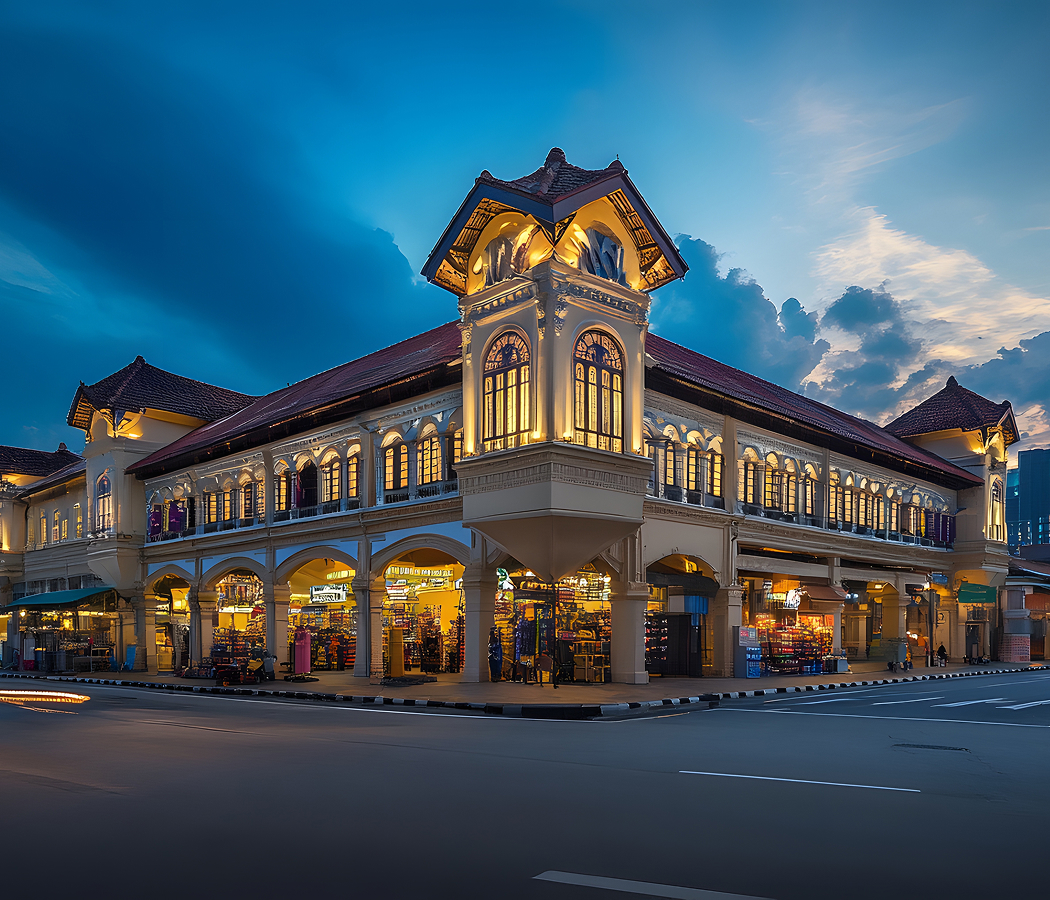
Set along Kamphaeng Phet 2 Road near Phahonyothin Road and just steps from Queen Sirikit Park, the market occupies an extensive commercial precinct north of Central Bangkok between Chatuchak Park, the railway infrastructure surrounding Bang Sue and the residential neighborhoods extending toward Lat Phrao. Thousands of compact stalls fill covered aisles and open pedestrian lanes, forming a dense arrangement of interconnected shopping sections organized around a central clock tower. Corrugated roofs, narrow passageways and informal storefronts create an architectural landscape shaped by small-scale commerce, with merchandise extending from shop interiors into the surrounding circulation spaces. Food vendors, independent boutiques, plant nurseries and specialist dealers occupy distinct areas, establishing an intricate commercial environment whose scale becomes apparent through the succession of adjoining market streets. The result is a marketplace whose extraordinary concentration of independent businesses, specialist merchandise and local trading traditions establishes one of Bangkok's most consequential commercial institutions.
What defines Chatuchak Weekend Market.
Chatuchak Weekend Market is best known for its immense concentration of independent merchants and its development from Bangkok's earlier weekend trading grounds into a permanent commercial institution associated with the city's retail economy. The market's origins belong to the mid-twentieth-century expansion of organized public markets under the administration of Field Marshal Plaek Phibunsongkhram. In 1948, the Thai government pursued a policy encouraging the establishment of flea markets as public spaces for commercial exchange and small-scale entrepreneurship. Bangkok's early weekend market operated at Sanam Luang, the ceremonial field adjoining the Grand Palace, where merchants gathered to sell household goods, clothing and other merchandise. The market subsequently underwent several relocations as municipal authorities reconsidered the use of central public spaces and the requirements of expanding commercial activity. Trading operations moved to different locations during the following decades, including areas associated with Sanam Chai and the city's northern districts. The relocation process reflected Bangkok's rapid urban expansion and the growing need for a dedicated site capable of accommodating substantial numbers of independent vendors. In 1982, the market transferred to its permanent location in Chatuchak, establishing a substantial commercial precinct on land associated with the State Railway of Thailand. The move coincided with celebrations marking Bangkok's bicentennial, connecting the development of a new public market with the capital's expanding metropolitan infrastructure. The market initially operated under the name Phahonyothin Market, reflecting its location near one of Bangkok's principal northern thoroughfares. Its subsequent identification with Chatuchak established the name through which the marketplace became internationally recognized. The new site permitted a more extensive organization of stalls, commercial sections and supporting facilities than the earlier temporary trading grounds. Bangkok Metropolitan Administration played an important role in the market's management and development, overseeing infrastructure associated with sanitation, circulation and commercial operations. The market's expansion accompanied the growth of Bangkok's small-business economy, creating opportunities for independent retailers, manufacturers, artists and traders to reach substantial numbers of customers. Its reputation extended beyond Thailand as international visitors discovered the scale and variety of merchandise available across the market's interconnected sections. Chatuchak became an important commercial destination for designers, collectors and retailers seeking products associated with Thai craftsmanship and regional manufacturing. The market's historical significance rests on its relationship with public-market policy, Bangkok's metropolitan expansion and the development of a substantial independent retail community.
The State Railway of Thailand's landholding provides the physical setting for a marketplace organized into 27 commercial sections containing thousands of individual stalls. Clothing and accessories occupy substantial portions of the trading precinct, with independent retailers presenting contemporary Thai fashion, vintage garments, footwear and locally produced accessories. Sections devoted to antiques and collectibles contain ceramics, decorative objects, historical household furnishings and specialist merchandise associated with Thai and regional material culture. Art galleries and independent workshops present paintings, prints, sculptures and handcrafted decorative pieces, supporting a commercial network of emerging artists and established makers. Furniture merchants concentrate on wooden furnishings, home accessories and objects produced through Thailand's extensive craft and manufacturing industries. The plant market occupies a distinctive position within the wider commercial landscape, bringing together nurseries and specialist growers selling ornamental plants, tropical foliage and horticultural supplies. Certain horticultural trading activities operate on weekdays, extending the market's commercial functions beyond its principal weekend schedule. Food stalls and small restaurants form another substantial component, presenting regional Thai dishes, grilled meats, noodles, sweets and refreshments throughout the trading areas. The central clock tower provides an important orientation point within the maze of covered passages, establishing a recognizable meeting location amid the surrounding commercial sections. Narrow aisles connect the principal trading corridors with smaller lanes, creating a pedestrian environment shaped by the compact dimensions of individual shopfronts. The market's architectural organization accommodates extensive merchandise displays within relatively small retail units, supporting the commercial density that distinguishes the precinct. Independent merchants contribute substantially to the market's character through specialized product knowledge, direct customer relationships and the presentation of goods associated with particular craft traditions. Textile sellers incorporate materials associated with Thai silk production and regional weaving, connecting contemporary retail with established manufacturing practices. Ceramic merchants present objects associated with traditional Thai decorative techniques, including forms inspired by historic production centers. Vintage dealers contribute another commercial dimension through collections of secondhand clothing, furniture and decorative objects acquired from different periods of Bangkok's urban development. The market's proximity to major rail and rapid transit infrastructure supports access from across the metropolitan area, connecting its concentrated commercial activity with Bangkok's wider transportation network. The combination of specialist retail sections, independent entrepreneurship and extensive pedestrian circulation establishes Chatuchak as a distinctive example of large-scale urban market organization.
How Chatuchak Weekend Market fits.
Chatuchak Weekend Market works as the commercial centerpiece for a northern Bangkok itinerary connecting the district's public gardens, Thailand's modern artistic institutions and the historical development of its metropolitan transport infrastructure.
Begin at Chatuchak Park, the extensive public green space developed on former railway land beside the market district. The park opened in 1980, introducing landscaped gardens, walking paths and recreational facilities into an area increasingly shaped by Bangkok's northern urban expansion. Its long central lake provides a distinctive organizing feature, with bridges and shaded paths connecting lawns, ornamental planting areas and public gathering spaces. The grounds contain mature trees and landscaped sections that establish a substantial recreational setting within the surrounding transport and commercial district. The park's location beside major rail connections demonstrates the integration of public green space with Bangkok's expanding metropolitan infrastructure. Continue to Bangkok Butterfly Garden and Insectarium, the educational attraction located within the landscaped grounds of Wachirabenchathat Park. The facility contains a substantial enclosed habitat designed to support butterflies and the plants associated with their life cycles. Its exhibition areas introduce the biological characteristics of butterflies, their ecological relationships and the importance of suitable habitats within tropical environments. The surrounding park incorporates cycling routes, landscaped gardens and extensive recreational spaces developed on former railway property. The attraction establishes a connection between the district's public park system and environmental education, providing a contrasting setting to the commercial concentration of the nearby market. Conclude at Bangkok Railway Station at Bang Sue, the historic railway precinct associated with the development of Thailand's northern rail network and the subsequent construction of the Krung Thep Aphiwat Central Terminal. The district became an important railway junction connecting Bangkok with northern and northeastern Thailand, contributing to the movement of passengers, agricultural products and industrial merchandise. The modern central terminal opened for long-distance rail operations in 2023, introducing a major transportation facility designed to consolidate services and improve connections across the national network. Its substantial architectural structure and extensive railway platforms represent a major phase of investment in Thailand's transportation infrastructure. The progression moves from the public landscapes established beside Bangkok's northern commercial districts through an educational garden devoted to tropical biodiversity and culminates in the railway infrastructure that connects the capital with the wider country.
Where your story begins.
Foresyte Travel reveals places that feel extraordinary long before you arrive.
Enjoy editorial crafted for luxury travelers.
Foresyte may earn a commission when you book.