Why you should experience Cenote Sagrado in Mexico.
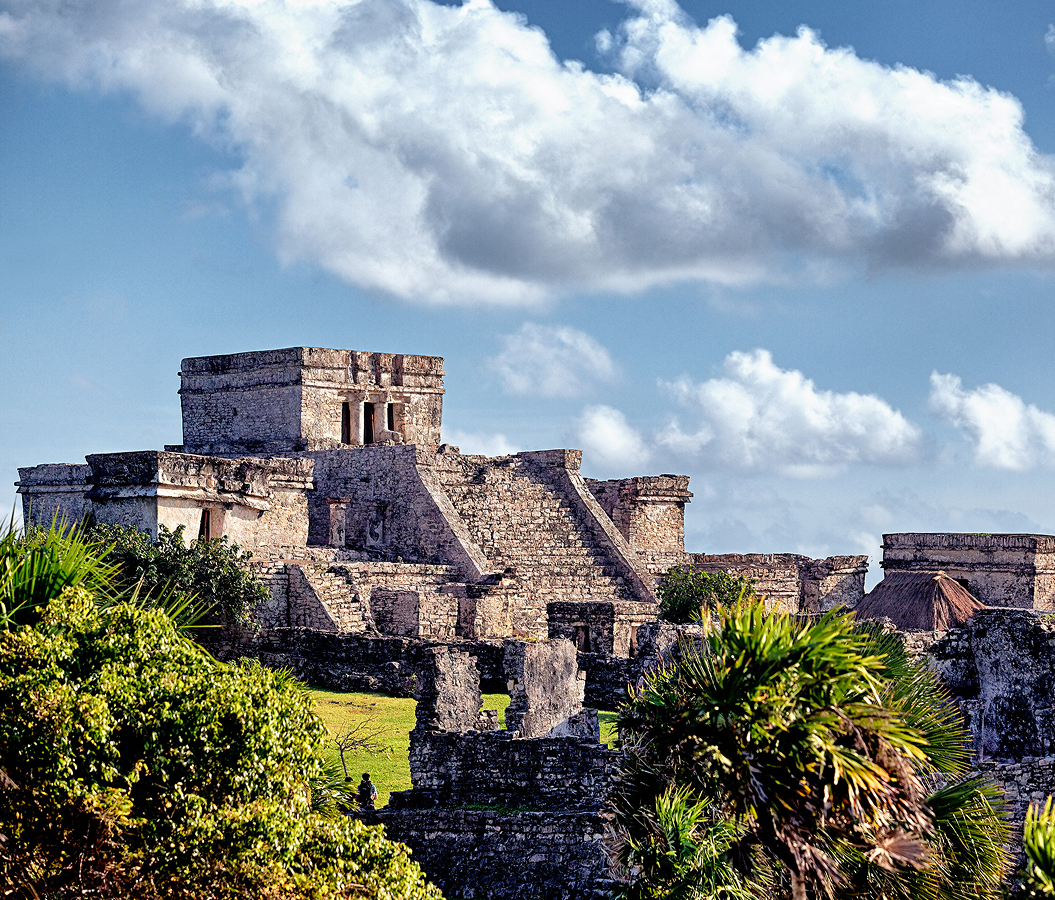
The Cenote Sagrado, or Sacred Cenote, at Chichén Itzá is among the most haunting and beautiful places in all of the Yucatán, where nature and belief converge in breathtaking harmony.
Just a few hours from Cancún, this massive limestone sinkhole opens like a green-blue eye in the earth, surrounded by lush jungle and sheer cliffs that plunge over 20 meters into the water below. To the ancient Maya, it was far more than a natural wonder, it was a portal to the divine. Here, rituals were performed, offerings were made, and the boundaries between the earthly and the spiritual dissolved. As you approach the edge, the air cools and the sound softens; birds circle lazily above, and the still water mirrors the sky. It's impossible not to feel a sense of reverence, this was a place of prayer, sacrifice, and renewal for over a thousand years. The Cenote Sagrado isn't just a geological marvel; it's a sacred heartbeat of Chichén Itzá, an enduring symbol of how the Maya saw divinity not in the heavens alone, but in the depths of the earth itself.
What you should know about Cenote Sagrado.
The Cenote Sagrado held a central role in Maya ritual life and mythology, functioning as both a source of life-giving water and a gateway to the underworld.
Measuring 60 meters across and 20 meters deep, the cenote was used for offerings to the rain god Chaac, whose favor was essential to survival in the arid Yucatán landscape. Archaeological excavations in the early 20th century revealed an astonishing array of artifacts at its bottom, jade, gold, obsidian, pottery, and even textiles preserved by the mineral-rich water. More sobering discoveries included human remains, believed to belong to individuals offered in sacred ceremonies, often during times of drought or crisis. These findings confirmed what Spanish chroniclers once described: that the cenote was a site of profound religious significance, where the Maya sought direct communion with their gods. Yet beyond sacrifice, the cenote also symbolized rebirth and balance, a reminder that all life flowed from the same source it eventually returned to. Its location at the northern edge of Chichén Itzá was deliberate, positioned to align with other ceremonial structures and forming part of the city's cosmic map. To the Maya, the Cenote Sagrado was not a place of fear, but of offering, humility, and divine conversation.
How to fold Cenote Sagrado into your trip.
When visiting Chichén Itzá from Cancún or the Riviera Maya, make the Cenote Sagrado the final stop of your exploration, it's a meditative close to the site's grandeur.
After exploring the Great Ball Court and the Temple of the Warriors, follow the shaded path north for about ten minutes; the sounds of the jungle will lead you toward the cenote. There are no swimming areas here, this cenote remains sacred, but viewing platforms allow you to peer down into the emerald water framed by vines and limestone. Visit in the early morning or late afternoon to avoid the crowds and catch the light as it filters through the canopy, turning the water a luminous green. Take a moment to pause in silence; the serenity here carries an energy that words can't quite capture. Bring water, comfortable shoes, and a respectful mindset, this isn't just another photo stop, but a place of spiritual resonance. If you wish to swim in a cenote afterward, you can stop at the nearby Cenote Ik Kil on your drive back toward Cancún. The Cenote Sagrado, however, should be experienced differently, not as recreation, but as reflection, a glimpse into how the ancient Maya saw the sacred woven through every element of the natural world.
Where your story begins.
Foresyte Travel reveals places that feel extraordinary long before you arrive.
Experience premium editorial crafted for luxury travelers.