Why El Caracol matters.
El Caracol, meaning “The Snail” in Spanish, named for its spiraling interior staircase, is among the most fascinating and mysterious structures at Chichén Itzá, located just a few hours west of Cancún.
Unlike the temples built for ceremony and performance, this rounded stone tower served a celestial purpose. Its design reflects the Maya's deep understanding of the cosmos, aligning perfectly with the paths of Venus, the sun, and the moon. Standing before it, you'll notice how distinct it looks from the pyramids and plazas around it, circular instead of angular, layered instead of monumental. From the upper platform, the observatory once offered priests and astronomers unobstructed views of the Yucatán sky, a stage for studying the heavens to guide rituals, agriculture, and even warfare. In the stillness of the site, you can almost imagine the flicker of torchlight inside, the murmur of calculations, and the reverence with which the Maya treated the stars. El Caracol is not just a ruin, it's proof that ancient science and spirituality once moved in harmony, bound by awe for the infinite.
What defines El Caracol.
El Caracol was constructed around the 10th century CE and stands as one of the earliest examples of architectural astronomy in the Americas.
The building's circular tower sits atop a series of broad rectangular terraces, rising 14 meters high. Inside, a spiral staircase winds through the core, the “snail” that gives it its modern name. The tower's narrow windows are strategically positioned to mark astronomical events: the summer and winter solstices, the equinoxes, and most notably, the extreme rising and setting points of Venus, a planet that held immense importance in Maya cosmology. To the ancient Maya, Venus represented both beauty and power, its cycle symbolized rebirth, warfare, and divine balance. The alignment of El Caracol's openings allowed priests to anticipate Venus's movements with extraordinary precision, influencing everything from seasonal planting to the timing of rituals. Its rounded shape was also revolutionary, a rare departure from the rectilinear geometry of Maya architecture, suggesting experimentation and innovation at the height of Chichén Itzá's influence. Archaeologists believe the structure may have once been painted in vivid colors, and at night, the flicker of torches from within would have turned the observatory into a glowing beacon across the jungle, a literal lighthouse of the heavens.
How El Caracol fits.
Include El Caracol as a reflective stop during your exploration of Chichén Itzá from Cancún or the Riviera Maya, it's a quieter, more contemplative part of the site.
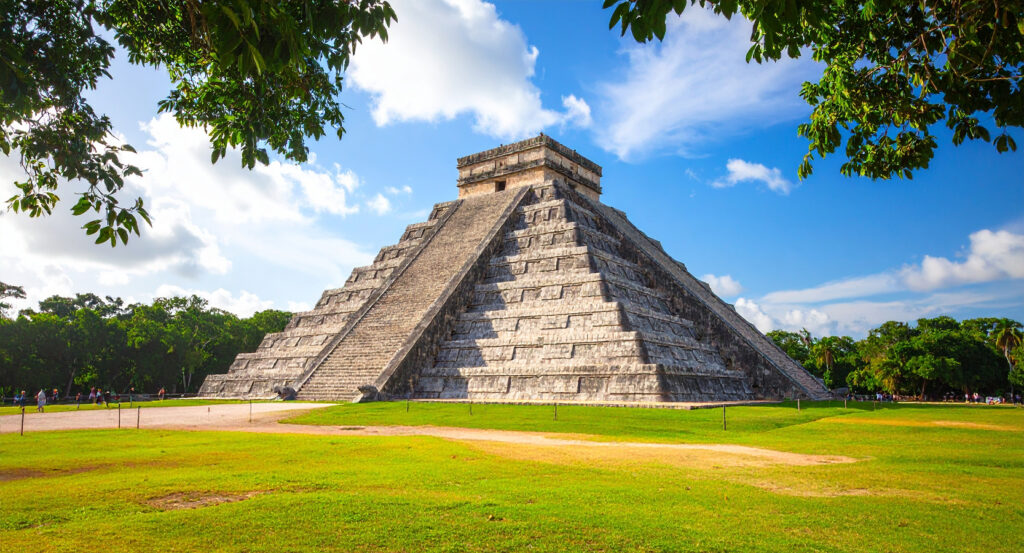
After visiting the grander monuments like El Castillo and the Temple of the Warriors, walk southwest along the main path toward the observatory complex. The area tends to be less crowded, making it ideal for taking in the subtler details, the weathered stonework, the symmetry of the terraces, and the way the tower rises gently toward the sky. Visit in the late afternoon, when the golden light softens the structure and enhances its curves. Bring binoculars or a zoom view if you're curious about the positioning of the windows and their celestial purpose. Nearby informational plaques outline the astronomical significance, but a local guide can offer insight into the Maya's calendar systems and cosmological beliefs that shaped this design. Afterward, find a shaded spot nearby and simply look upward, the same vast expanse of sky the Maya once studied. El Caracol reminds visitors that science and spirituality need not stand apart, they can coexist in a single act of wonder, carved in stone and aligned with the stars.
Where your story begins.
Foresyte Travel reveals places that feel extraordinary long before you arrive.
Enjoy editorial crafted for luxury travelers.
Foresyte may earn a commission when you book.