Why you should experience Warriors’ Temple in Yucatan, Mexico.
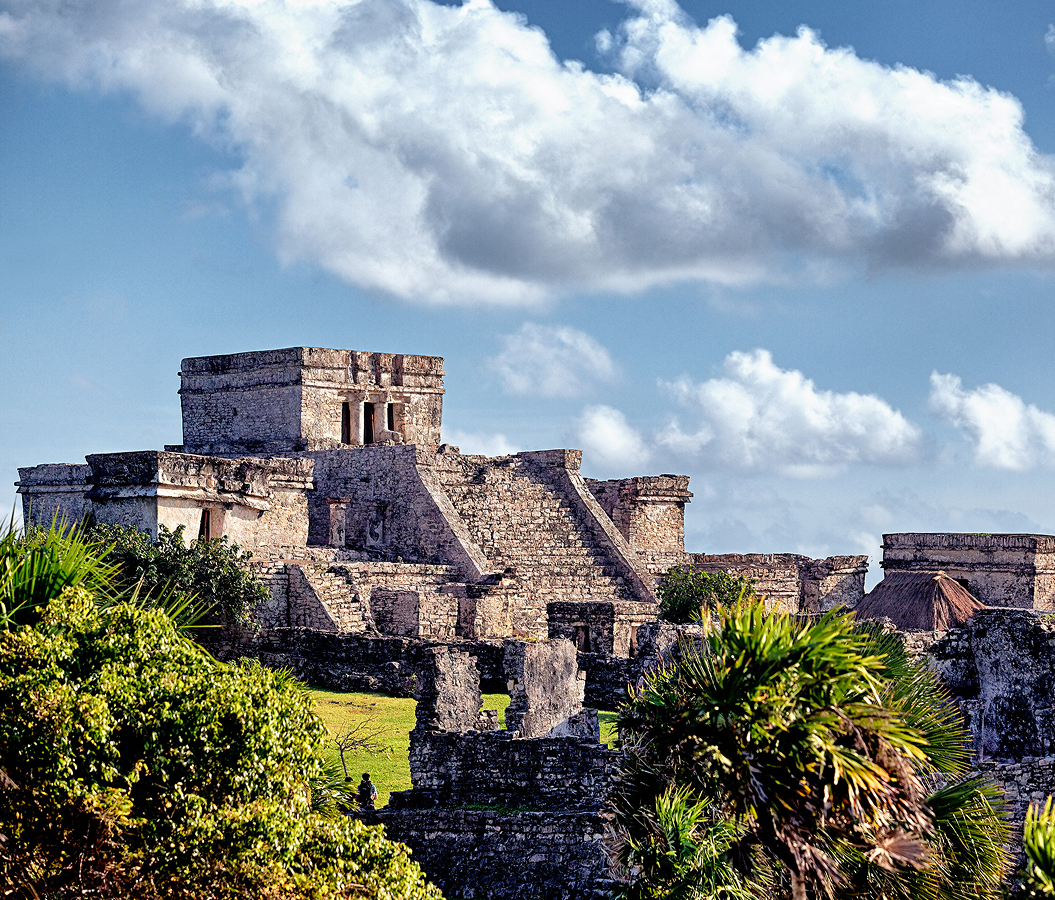
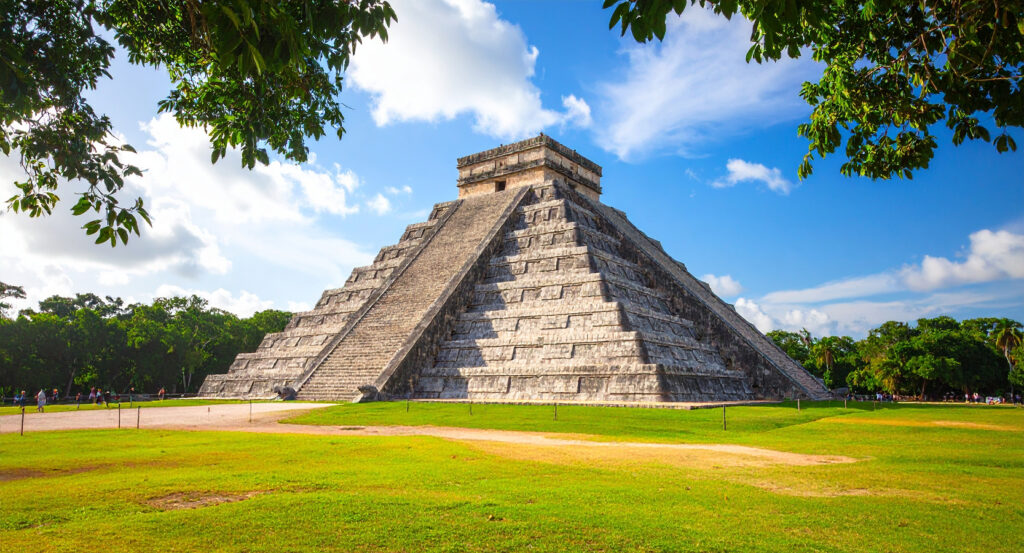
The Temple of the Warriors at Chichén Itzá, a few hours west of Cancún, is one of the most awe-inspiring testaments to the architectural brilliance and spiritual depth of the ancient Maya.
Rising from the sunbaked plains of the Yucatán, this immense stone structure commands the heart of the archaeological site with both grace and authority. Rows upon rows of carved columns, known as the Temple of the Thousand Columns, stretch outward from its base like a silent army frozen in time. At its summit, the temple's stairway climbs toward the heavens, guarded by serpent motifs and warrior reliefs that once symbolized divine power. When the morning light hits the limestone, the carvings glow with golden warmth, and the air feels charged, as if the echoes of ceremony and chant still linger in the breeze. The Temple of the Warriors isn't just an architectural wonder; it's a spiritual experience. You don't simply look at it, you stand before it and feel the weight of centuries, the brilliance of human craftsmanship, and the pulse of an ancient world still alive beneath your feet.
What you didn't know about Warriors’ Temple.
Built during the Late Classic period around the 10th century, the Temple of the Warriors marks a pivotal era in Maya history, a moment of fusion between local traditions and Toltec influence from central Mexico.
The temple's design mirrors that of Tula's Pyramid of the Warriors, reflecting the cultural exchange between two powerful civilizations. The hundreds of columns that flank its base once supported a massive roofed hall used for rituals and gatherings, a structure so advanced it required remarkable engineering precision. At the top of the central stairway sits the famed Chacmool statue, reclining with a bowl meant to receive offerings, a sacred link between gods and mortals. Every carving tells a story: the plumed serpents of Kukulcán symbolize rebirth and cosmic order, while the warrior figures represent discipline and strength in service of the divine. Archaeologists believe this temple served as both a ceremonial stage and a political statement, reinforcing Chichén Itzá's role as a spiritual and military powerhouse. Few realize that the temple's alignment with the rising sun mirrors the calendar precision found in the nearby Pyramid of Kukulcán, evidence of a civilization guided as much by astronomy as by faith.
How to fold Warriors’ Temple into your trip.
When visiting Cancún or the Riviera Maya, set aside a day to explore Chichén Itzá and stand before the Temple of the Warriors, it's an experience that defines the region's cultural depth.
The drive takes about two hours each way, making it ideal for a guided day trip or a private excursion. Arrive early in the morning to beat both the crowds and the midday heat; the first light of day casts a soft glow across the stone columns, revealing details invisible under harsh sun. Start your tour near El Castillo, then walk toward the Temple of the Warriors, allowing the complex to unfold in order of scale and significance. Wander through the surrounding columns and take your time, every angle offers a new interplay of shadow, texture, and form. Bring water, sunscreen, and your camera, but also moments of silence; the site rewards contemplation as much as curiosity. Before returning to Cancún, stop in nearby Valladolid for lunch in the colonial plaza to round out your journey through Yucatán's living history. The Temple of the Warriors is more than a monument, it's a conversation across centuries, a reminder of humanity's enduring devotion to beauty, power, and the divine.
Where your story begins.
Start your planning journey with Foresyte Travel.
Experience immersive stories crafted for luxury travelers.