Why you should experience Crossroads Temple in Mexico.
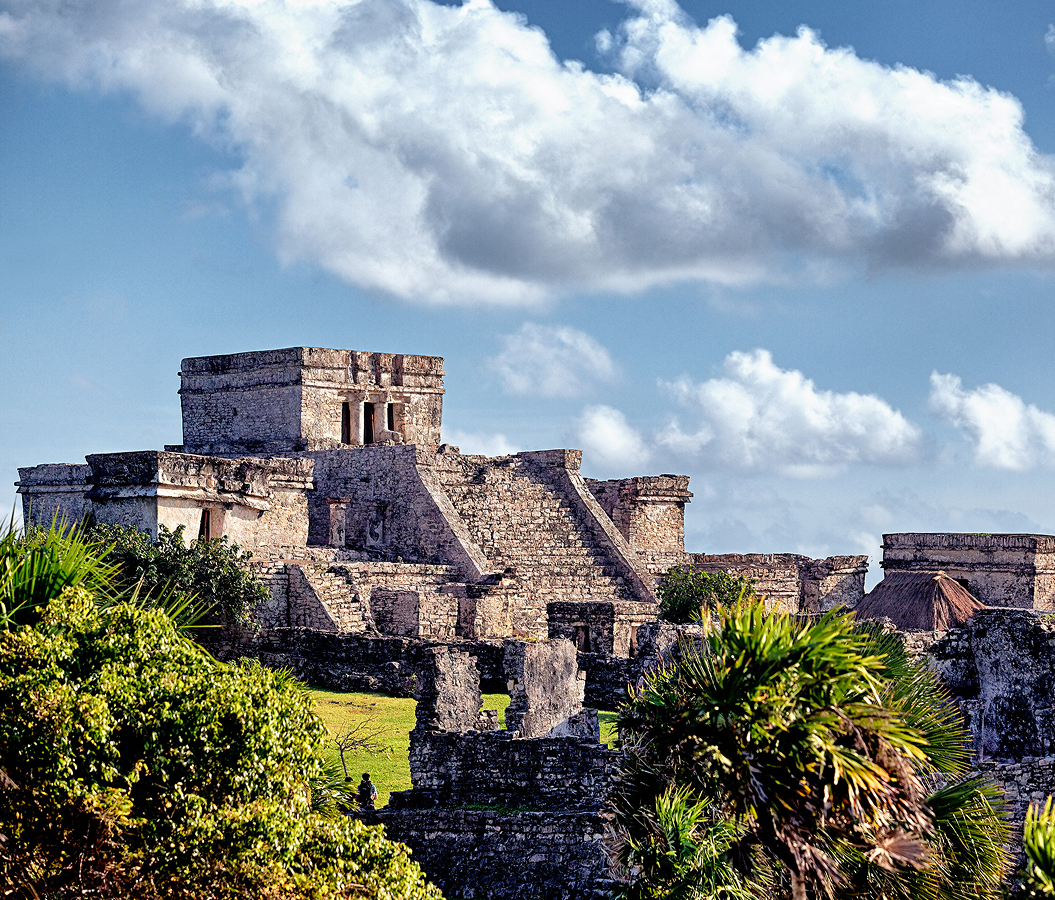
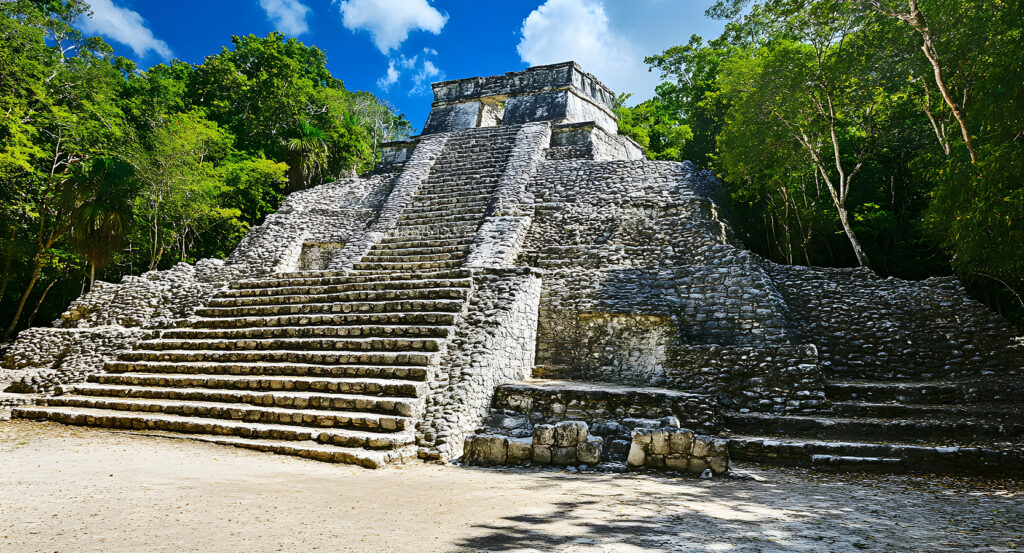
The Church Temple at the Coba Archaeological Site stands as a grand echo of the Maya's spiritual and architectural brilliance, a pyramid that gazes out over a world reclaimed by the jungle.
Unlike Nohoch Mul, which draws climbers with its towering height, the Church Temple (La Iglesia) invites reflection. Rising from a clearing near the site's entrance, its weathered limestone steps climb toward a summit that once hosted ceremonies to honor gods of rain, fertility, and maize. Birds wheel above the treetops, and the calls of howler monkeys reverberate through the canopy, creating a soundscape that feels both ancient and alive. Time has softened its edges, but the temple's power remains untouched, a reminder that Coba was once one of the greatest cities of the Maya world, a center of faith, trade, and astronomy. Standing before it, you don't just see stone; you feel the persistence of devotion, carved into every tier, whispered through every shadow.
What you should know about Crossroads Temple, Quintana Roo.
The Church Temple, named La Iglesia by early explorers, is among the oldest and most significant structures at Coba.
Its base measures nearly forty meters across, with nine steep terraces symbolizing the layers of the Mayan underworld, Xibalba. Archaeologists believe it predates Nohoch Mul by several centuries, serving as the spiritual anchor of the early city. At its summit once stood a thatched-roof shrine, where priests performed rituals tied to the nearby lagoons, whose waters represented both life and the divine. A stela discovered at the foot of the pyramid records hieroglyphic dates from the Late Classic period, offering rare glimpses into Coba's dynastic history. Interestingly, the Church faces west, toward the setting sun, suggesting it may have been aligned with celestial events marking the agricultural cycle. During excavations, fragments of incense burners, jade offerings, and ceramic figurines were unearthed, further confirming the temple's ceremonial purpose. For the Maya, this structure was more than stone, it was a stairway between worlds, bridging the human and the divine through ritual and geometry.
How to fold Crossroads Temple, Quintana Roo into your trip.
Visiting the Church Temple should be your introduction to Coba, a quiet prelude before exploring the deeper ruins.
From the entrance, follow the shaded main path that leads directly to the temple's base, where you can pause in the dappled light of the ceiba trees and take in its sheer symmetry. Arrive early in the morning when mist still lingers, the light turns the stone golden, and the jungle feels suspended in time. Although climbing is no longer permitted, the base offers an extraordinary perspective, allowing you to trace the vertical rhythm of each terrace as it disappears into the canopy. Bring water and take your time; the energy here is calm, contemplative, a place for slowing down and sensing the echoes beneath your feet. Afterward, wander toward the nearby ball court and sacbe causeways that once connected this spiritual nucleus to other ceremonial zones like Macanxoc and Nohoch Mul. End your visit by circling back to the lagoon's edge, where reflections shimmer in the still water just as they did a thousand years ago. The Church Temple at Coba is more than an archaeological site, it's an invitation to feel the continuity of belief, the weight of sky and stone, and the enduring presence of a civilization that built with faith as much as with hands.
Where your story begins.
Foresyte Travel reveals places that feel extraordinary long before you arrive.
Experience premium editorial crafted for luxury travelers.