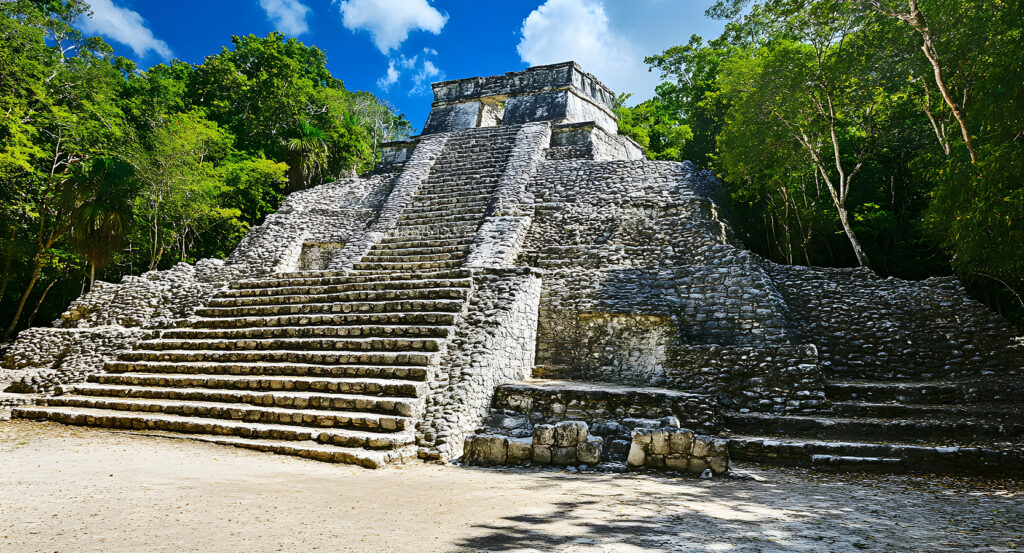
Why you should experience Grupo Macanxoc in Quintana Roo, Mexico.
The Macanxoc Group Ruins at the Coba Archaeological Site are not just remnants of stone and time, they are a window into the sacred heartbeat of the ancient Maya world.
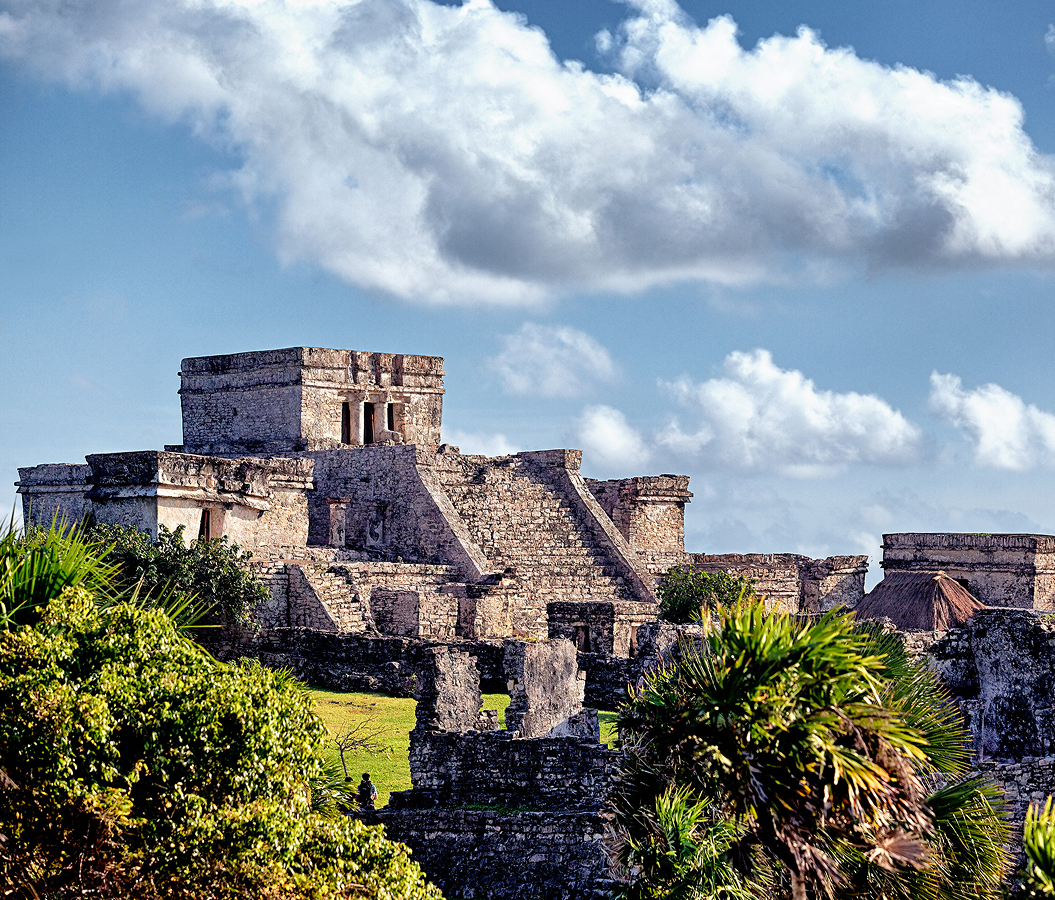
Hidden deep within the jungle's green embrace, far from the main plaza's bustle, this quiet complex feels alive in a different way. The air grows heavy with humidity and stillness, broken only by birdsong and the low whisper of wind through ceiba trees. As you follow the shaded path eastward, the ruins slowly materialize, moss-covered stelae standing like sentinels around small temples, their surfaces etched with faint hieroglyphs worn smooth by centuries of rain. This is not the grandeur of Nohoch Mul; this is intimacy, a meeting ground between earth and spirit. The Macanxoc Group was a ceremonial and administrative district that thrived on ritual, water, and reflection. Its proximity to the lagoon made it both practical and symbolic, a bridge between human settlement and divine creation. Walking through it today feels like trespassing on sacred ground, but also being quietly invited to listen to what the jungle still remembers.
What you didn't know about Grupo Macanxoc.
The Macanxoc Group is one of Coba's most spiritually charged and archaeologically significant zones.
It's home to over forty stelae, more than anywhere else in Coba, many depicting female rulers and priestesses in elaborate headdresses, suggesting this was a powerful matrilineal or ceremonial enclave. These stone slabs, aligned in near-perfect circles, tell stories of lineage, conquest, and prophecy. Unlike the grand temples built to impress, Macanxoc's architecture feels intentionally contemplative, smaller structures framed by trees, altars aligned with celestial events, and plazas that open directly toward the lagoon. This layout reflects the Maya belief in duality: every physical space mirrored a spiritual counterpart. Excavations have revealed that offerings of jade, shells, and obsidian were once buried beneath the stelae, likely as tributes to fertility deities tied to the nearby water source. The road connecting Macanxoc to the main plaza, Sacbe 1, would have carried priests and pilgrims alike, its white limestone surface glowing in the moonlight during sacred processions. Even now, archaeologists suspect that the site's alignment to solstices hints at advanced astronomical observation. To stand here is to recognize that the Maya did not separate science from spirituality, every calculation was an act of devotion.
How to fold Grupo Macanxoc into your trip.
To fully absorb the atmosphere of the Macanxoc Group, plan your visit for the early morning or late afternoon, when the heat softens and the light slants through the canopy in bands of gold.
Rent a bicycle or hire a triciclo from the main entrance, the ride to Macanxoc takes you along a shaded sacbe, one of the same limestone causeways that connected this ceremonial sector to the heart of Coba. The path winds through dense vegetation alive with birds and butterflies until you reach a clearing that feels suspended in time. Here, wander slowly, there are no fences, no crowds, only you, the jungle, and the stones. Kneel to study the faint carvings, pause beside the altars, and take in the strange hush that settles between gusts of wind. It's a silence that feels inhabited, as though the forest itself remembers the chants and drumbeats that once filled this plaza. Bring water, insect repellent, and patience; there is no rush here, only rhythm. Afterward, continue down the short trail that leads to the edge of the lagoon. From there, you can look back and imagine the processions that once crossed these waters, torches reflected in the surface, voices rising toward the stars. The Macanxoc Group Ruins at the Coba Archaeological Site aren't merely ruins; they're a living threshold between the tangible and the transcendent, proof that even in the depths of the jungle, the Maya built not just with stone, but with faith that their world would echo forever.
Where your story begins.
Start your planning journey with Foresyte Travel.
Experience immersive stories crafted for luxury travelers.