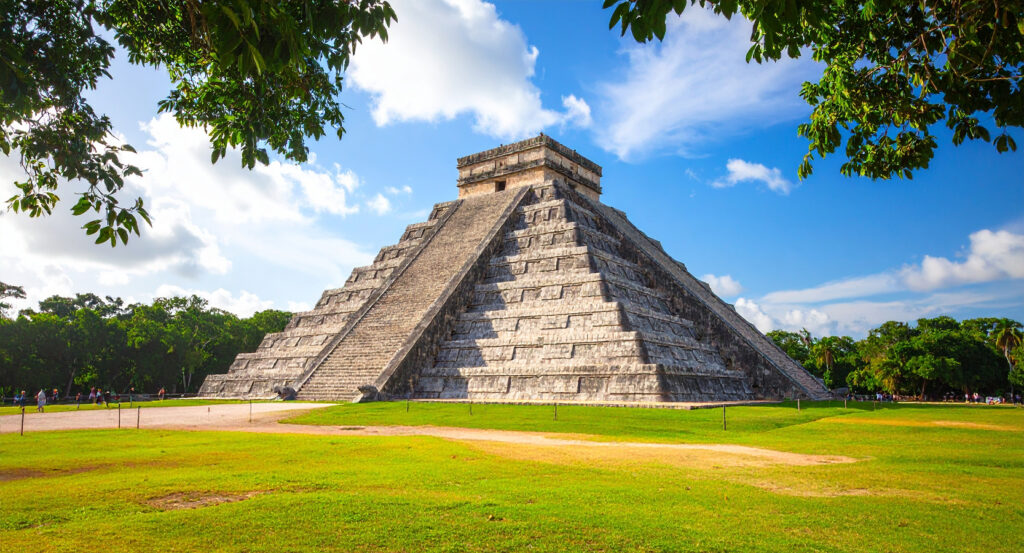
Why you should experience Mayan Ball Court of Cobá in Mexico.
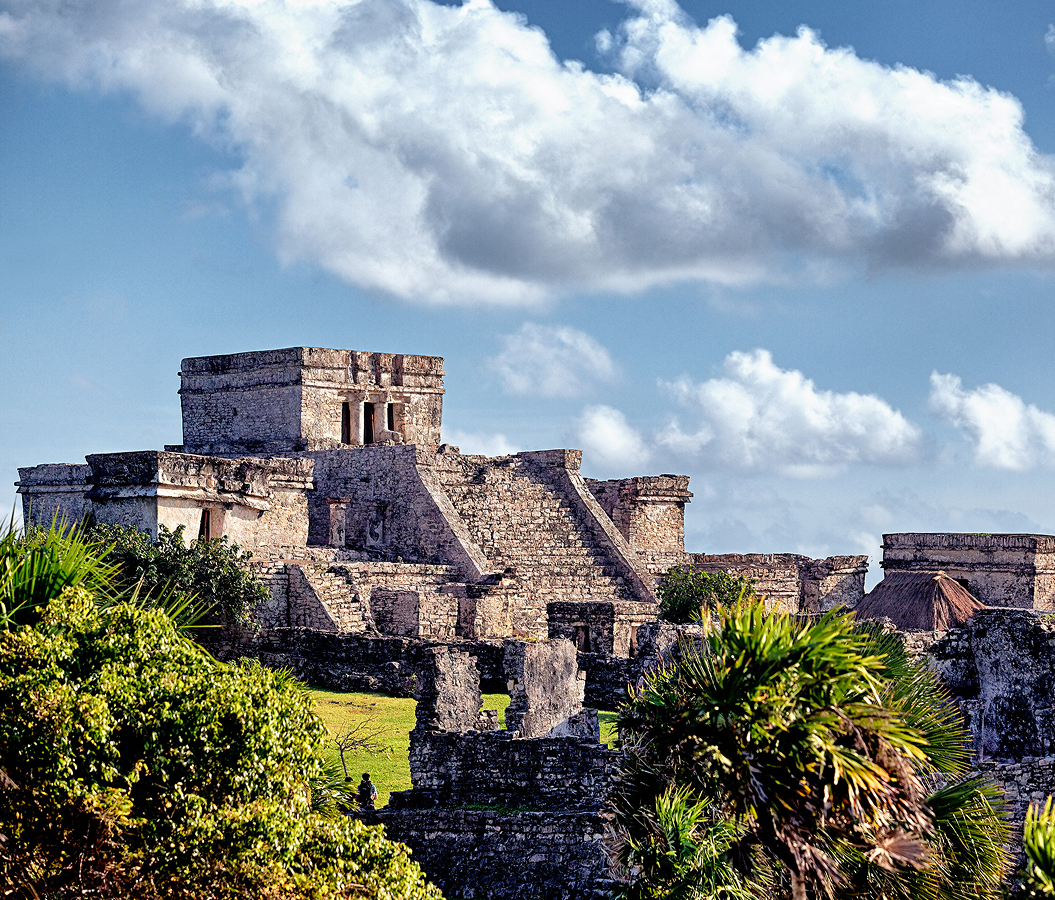
The Ball Court at Cobá is among the most atmospheric and well-preserved in the Maya world, a quiet arena hidden in the jungle, where ritual, sport, and spirituality once collided.
Tucked along the shaded causeways that connect Cobá's major temple groups, the court appears suddenly among the trees: two sloping limestone walls facing each other, their surfaces smoothed by centuries of rain and reverence. Between them lies the narrow playing alley, where players once struck a solid rubber ball using only their hips and shoulders, aiming to pass it through stone rings mounted high on the walls. Standing there today, surrounded by birdsong and filtered sunlight, it's easy to imagine the intensity of those games, the chants of spectators, the drumbeats, and the sacred tension of a contest that carried both glory and consequence. The Ball Court at Cobá may not be the largest, but it's among the most evocative, radiating a sense of ceremony and silence that feels untouched by time.
What you should know about Mayan Ball Court of Cobá.
Cobá's Ball Court, built between 600 and 900 CE, reflects the city's position as both a spiritual and political powerhouse in the Maya world.
The game played here, known as pok-ta-pok, was far more than recreation, it represented the eternal struggle between life and death, sun and shadow, gods and mortals. Archaeologists believe Cobá's court was used for ceremonial matches tied to religious festivals or dynastic rituals, with the outcomes sometimes leading to human sacrifice, either as divine offering or cosmic renewal. Reliefs found nearby depict players adorned with elaborate headdresses and protective padding, suggesting that competition here was as much performance as it was athleticism. The court's dimensions, about 20 meters long, and its orientation align with celestial events, particularly the solstices, underscoring how deeply the Maya tied their architecture to the cosmos. Unlike the grand stone arenas of Chichén Itzá, Cobá's version feels intimate, enclosed by jungle that muffles every sound. Researchers have also uncovered fragments of pigment and plaster on the sloping walls, evidence that the court was once painted in vivid colors symbolizing blood, life, and rebirth. This space wasn't just built for sport, it was a living stage for myth itself.
How to fold Mayan Ball Court of Cobá into your trip.
When visiting Cobá from Cancún or Tulum, the Ball Court makes for a natural stop on your way to the towering Nohoch Mul Pyramid.
Rent a bicycle or take a tricitaxi at the site's entrance and follow the shaded sacbeob (ancient white roads) that lead through the forest. The Ball Court sits near the central group of structures, surrounded by thick vegetation that gives it an almost hidden, sacred quality. Visit in the late morning when sunlight filters through the canopy and highlights the sloping limestone, the blend of light and shadow here is breathtaking. Spend a few moments in silence between the walls, clapping once to hear the natural echo that ancient builders designed to carry sound perfectly across the court. If you're traveling with a guide, ask them to share the symbolic meaning of the game and how it connected to the Maya calendar and cosmic order. Afterward, continue toward the Nohoch Mul Pyramid for the climb of a lifetime or cool off at nearby cenotes like Tamcach-Ha or Multun-Ha. The Ball Court at Cobá isn't just a ruin to observe, it's a place to feel the pulse of a civilization that once played for the favor of the gods, with stakes as high as the heavens themselves.
Where your story begins.
Foresyte Travel reveals places that feel extraordinary long before you arrive.
Experience premium editorial crafted for luxury travelers.