Why you should experience Ancient Egyptian Jewelry at The Egyptian Museum in Cairo, Egypt.
Ancient Egyptian Jewelry at The Egyptian Museum in Cairo is Egypt's most intimate expression of eternity, where beauty was not vanity, but belief.
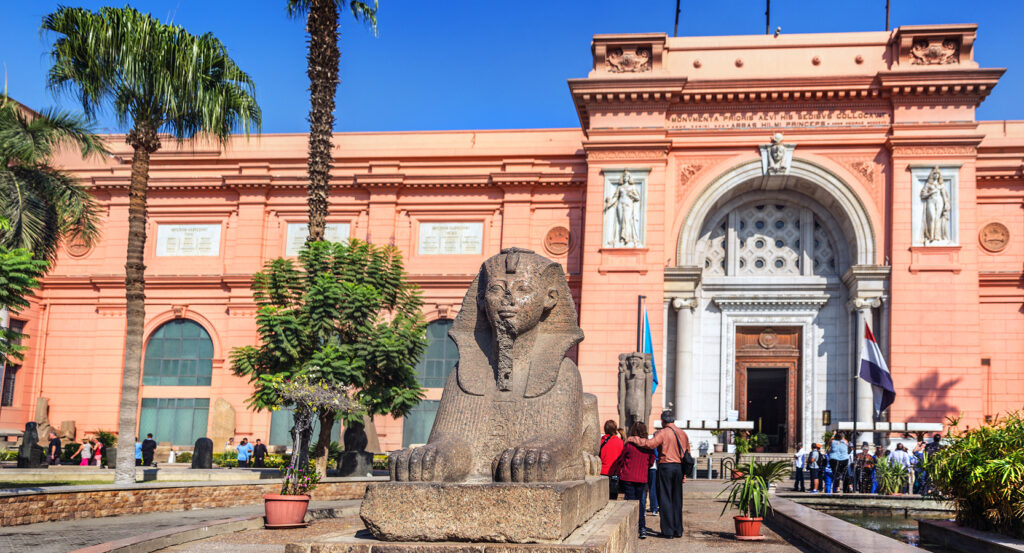
Inside the softly lit halls of The Egyptian Museum in Tahrir Square, this collection glimmers like a constellation of devotion, each piece crafted not merely to adorn, but to protect, empower, and eternalize. Gold, lapis lazuli, carnelian, and turquoise radiate in delicate harmony, stones chosen as much for their spiritual resonance as for their splendor. These were not trinkets of luxury; they were instruments of immortality. The air inside is hushed, reverent, every necklace, amulet, and crown seems to hum with invisible energy. To stand before a collar once worn by a pharaoh or a queen is to glimpse a civilization that equated craftsmanship with creation. The ancient jewelry collection is not a gallery of fashion; it's a sacred language written in light.
What you should know about Ancient Egyptian Jewelry at The Egyptian Museum.
The ancient jewelry collection is among the most exquisite and scientifically significant assemblies of adornment ever discovered, a record of Egypt's evolving cosmology, metallurgy, and artistry.
Spanning over 3,000 years, the collection includes artifacts from the Old Kingdom through the Ptolemaic Period, drawn from royal tombs, temples, and private burials across Saqqara, Thebes, and the Valley of the Kings. Among its treasures are the golden diadems and amulets of Queen Hetepheres, the mother of Khufu; the radiant jewelry of Princess Sat-Hathor-Yunet, discovered in Dahshur in 1894; and the intricate necklaces, scarabs, and bracelets from the tomb of Tutankhamun, crafted with unparalleled precision. Egyptian jewelers mastered advanced techniques, filigree, granulation, cloisonné, and stone inlay, centuries before these methods reappeared in Greek and Etruscan art. Each material carried symbolic weight: gold represented the flesh of the gods, turquoise the color of rebirth, lapis lazuli the heavens themselves. Amulets shaped like the Eye of Horus, Ankh, and Scarab were engineered with mathematical symmetry to channel divine energy. Several necklaces are designed according to astronomical alignments, the broad collar (wesekh), for example, was thought to mirror the arc of the sun as it crossed the sky. The museum's most captivating piece is the golden vulture pendant of Queen Ahhotep, its wings outstretched in eternal protection, discovered alongside weapons and ceremonial axes, symbols of her role as both mother and warrior. Other highlights include pectorals inscribed with royal cartouches, beadwork skirts woven from faience and gold thread, and anklets designed for both mortal and divine wearers. These artifacts reveal that jewelry in ancient Egypt was never mere ornamentation, it was theology made tangible.
How to fold Ancient Egyptian Jewelry at The Egyptian Museum into your trip.
The ancient jewelry collection is one of The Egyptian Museum's most luminous experiences, a gallery that rewards slow, reverent observation.
Located on the museum's upper floor, the exhibit can be easily paired with visits to the Tutankhamun Treasures Gallery and the Royal Mummies Hall for a complete journey through Egypt's material soul. Visit in the late morning, after the initial crowds have thinned, to experience the rooms bathed in natural light filtering through high arched windows. Begin with the early Old Kingdom pieces, simple gold bangles and faience amulets, then move toward the Middle and New Kingdom displays, where the artistry blossoms into full celestial expression. Take your time studying the jewelry of Ahhotep, Hetepheres, and Sat-Hathor-Yunet, each case offers magnifying lenses to reveal the im fine gold wirework and gemstone settings. The museum's curators have arranged the cases to mirror the evolution of belief: from protection in the physical world to resurrection in the afterlife. Look closely at the inscriptions etched into the tiny clasps, invocations of life, stability, and dominion, still legible after four millennia. Plan to spend 45-60 minutes in the collection, longer if you are drawn to detail. For those seeking deeper study, the museum gift hall offers reproductions based on the original molds used by 20th-century Egyptian artisans trained under the Department of Antiquities. When you exit, pause in the balcony overlooking Tahrir Square, the sunlight reflecting off Cairo's modern skyline feels almost poetic after standing amid treasures made for eternity. The ancient jewelry collection reminds us that beauty was never fleeting, it was Egypt's purest form of faith.
Where your story begins.
Foresyte Travel reveals places that feel extraordinary long before you arrive.
Experience premium editorial crafted for luxury travelers.