Why Fort Gate matters.
Fort Gate, Singapore is a historic military gateway where Fort Canning's colonial legacy, defensive engineering, British military history, and national transformation converge at one of Singapore's most enduring nineteenth-century landmarks.
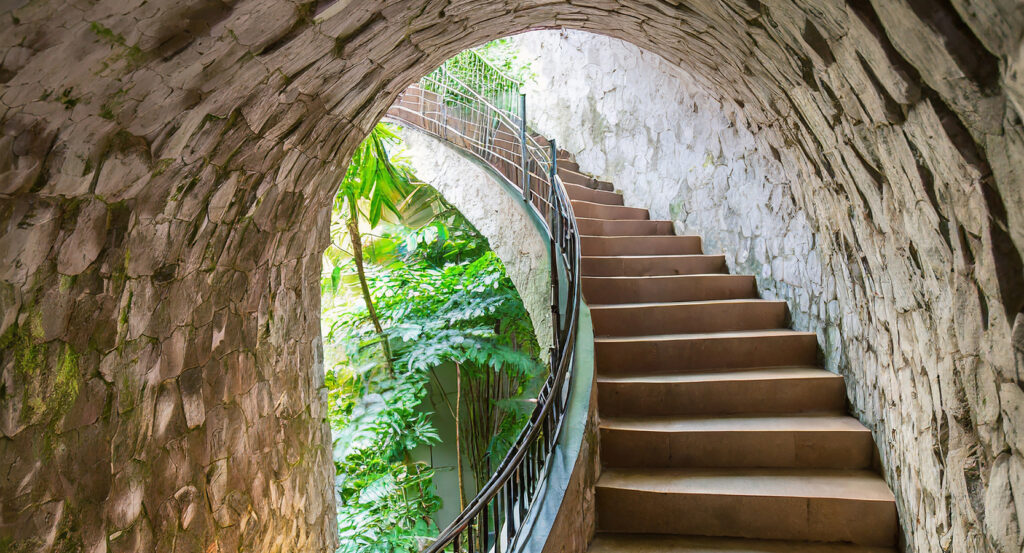
Set along Fort Canning Rise near River Valley Road and just steps from Fort Canning Centre, this imposing brick gateway stands as the last surviving entrance to the former fortress that once crowned Singapore's principal defensive hill. Massive masonry walls, carefully preserved brickwork, original defensive architecture, and elevated parkland surroundings evoke the era when Fort Canning served as the headquarters of British colonial administration and military command. Every architectural element reflects the strategic importance of the hill while preserving one of the few surviving physical remnants of Singapore's nineteenth-century fortifications. The result is a landmark defined by military heritage, architectural authenticity, and one of Singapore's most significant colonial-era monuments.
What defines Fort Gate, Singapore.
Fort Gate, Singapore is best known for being constructed in 1861 as the principal entrance to Fort Canning after the British completed a major hilltop fortress designed to defend the growing colonial port, becoming the only surviving portion of the original fortifications following the demolition of the military complex in the early twentieth century while preserving a rare architectural link to Singapore's era as one of Britain's most strategically important naval outposts in Southeast Asia. Built from brick and granite as part of defensive works that included barracks, magazines, artillery batteries, and fortified walls, the gateway remained intact after most of the fort disappeared, later becoming a protected National Monument in 1979 and an enduring symbol of Singapore's colonial military heritage within Fort Canning Park.
The surviving gateway demonstrates nineteenth-century British military engineering through its robust masonry construction, restrained classical detailing, and commanding position overlooking approaches to Government Hill. Restoration and conservation efforts have carefully preserved its historic fabric while allowing visitors to appreciate the strategic landscape that once housed Singapore's principal military headquarters, underground command facilities, and defensive batteries. Every preserved stone and brick reinforces Fort Gate's remarkable significance as the last standing entrance to a fortress that played a central role in Singapore's colonial administration, military defense, and wartime history.
How Fort Gate, Singapore fits.
Fort Gate, Singapore works as part of an exploration through Fort Canning's remarkable military history and cultural landmarks.
Begin at Fort Canning Centre, where exhibitions introduce the hill's extraordinary role in Singapore's history before walking through Fort Gate to experience the fortress's last surviving entrance. Continue to Battlebox, whose preserved underground command bunker reveals the dramatic final days preceding the British surrender in 1942. Conclude at Keramat Iskandar Shah, where one of Singapore's most significant royal heritage sites provides a memorable finale celebrating the hill's layered military, colonial, and pre-colonial history. The progression moves naturally from historical interpretation to the fortress's surviving gateway before concluding through two defining landmarks that reveal why Fort Canning remains among Singapore's most historically important landscapes.
Where your story begins.
Foresyte Travel reveals places that feel extraordinary long before you arrive.
Enjoy editorial crafted for luxury travelers.
Foresyte may earn a commission when you book.