Why Fort Canning Park matters.
Fort Canning Park is Singapore's green heart, a lush hilltop sanctuary where centuries of history are wrapped in the perfume of tropical foliage and the quiet hum of the modern city below.
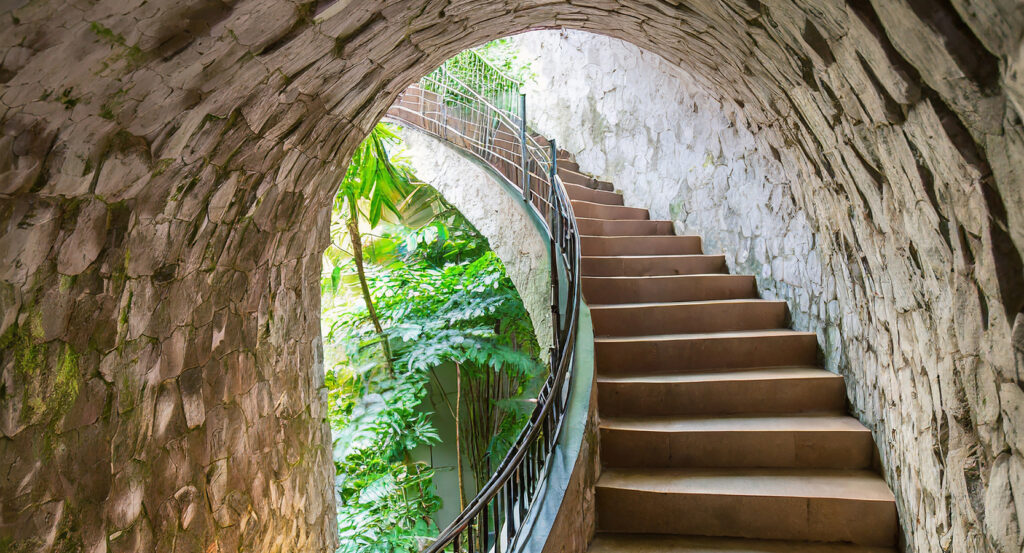
Rising gently above the downtown core, the park feels worlds away from the skyscrapers that surround it. Here, banyan trees cast dappled shadows over winding trails, colonial gates open to secret gardens, and the air hums with both memory and renewal. Once the seat of Malay kings, then a British military fortress, Fort Canning is where Singapore's story began. You can feel that lineage in the ground itself, the sense that every step carries the weight of time. Locals come to jog, picnic, and breathe in the serenity, while visitors marvel at how seamlessly the park weaves nature and narrative together. The summit offers a panoramic view that captures the spirit of the city: a harmony of heritage and progress, still anchored in the land that shaped it. At sunset, when the light filters through the canopy and the city skyline glows beyond the trees, Fort Canning feels almost sacred, a living timeline of Singapore's rise from ancient kingdom to global capital.
What defines Fort Canning Park.
Fort Canning's beauty is undeniable, but its roots run far deeper than its gardens and greenery.
Long before the British arrived, this hill was known as Bukit Larangan, or the “Forbidden Hill,” believed to be the burial ground of ancient Malay royalty. It was here that 14th-century ruler Sang Nila Utama, the renowned founder of Singapura, is said to have built his palace, making Fort Canning one of the most historically significant sites in Southeast Asia. When Sir Stamford Raffles established Singapore as a British trading post in 1819, he too recognized the hill's power, choosing it as his residence and administrative center. The British later fortified the site in the mid-19th century, giving rise to the name Fort Canning. Cannons, barracks, and underground bunkers were added, transforming the once-royal grounds into a military stronghold. During World War II, the fort became the nerve center for British defense operations in Singapore, and later, the site of their fateful surrender to Japanese forces in 1942. Today, that wartime bunker, known as The Battlebox, is preserved as a museum, offering an immersive look into one of the darkest chapters of Singapore's past. Yet Fort Canning's story didn't end there. Over time, it evolved once again, from fortress to cultural oasis. Archaeological excavations have unearthed Chinese porcelain, coins, and other relics dating back over 700 years, while restored colonial buildings now host art festivals, concerts, and heritage trails. Every path, every stone, and every plaque whispers a different part of Singapore's layered identity.
How Fort Canning Park fits.
Exploring Fort Canning Park is an essential Singapore experience, one that rewards slow wandering and open curiosity.
Begin at the Fort Canning Centre, where you can pick up a map and get your bearings before venturing out along the heritage trails. The Nine Historical Gardens each offer a different view into the park's evolution: from the Raffles Garden, a nod to Singapore's colonial botany, to the Archaeological Dig Site, where remnants of 14th-century settlements are still being studied. Don't miss the Spice Garden, a lush homage to the island's early role in the global spice trade, the scents of clove, nutmeg, and cinnamon waft through the air like whispers of the past. Continue upward to the Battlebox Museum, where dimly lit tunnels and interactive displays reconstruct the tension and turmoil of wartime command. If you're traveling with family, the park's shaded paths and open lawns make it a perfect midday escape, an oasis of calm amid the tropical heat. As the sun begins to dip, head to Fort Canning Green, the park's open amphitheater, where live performances and cultural events often unfold beneath the stars. Nearby, the Fort Gate Ruins and Sally Port, remnants of the old fortress walls, frame views of the city that are nothing short of cinematic. When night falls, stroll back toward Clarke Quay or Orchard Road, and you'll realize how seamlessly this quiet hill connects to the rhythm of the city below. Fort Canning Park isn't just a patch of green in a modern metropolis, it's Singapore's living memory, layered in soil, stone, and spirit. To walk its paths is to walk through time itself, from royal courts to colonial bastions to the creative heartbeat of a nation that never stops reinventing itself.
Where your story begins.
Foresyte Travel reveals places that feel extraordinary long before you arrive.
Enjoy editorial crafted for luxury travelers.
Foresyte may earn a commission when you book.