Why Freedom Park matters.
Freedom Park is a historic public park where Myers Park's landscaped residential character meets Charlotte's World War II commemorative heritage, the expansion of public recreation and the civic traditions that have shaped one of North Carolina's most beloved urban green spaces.
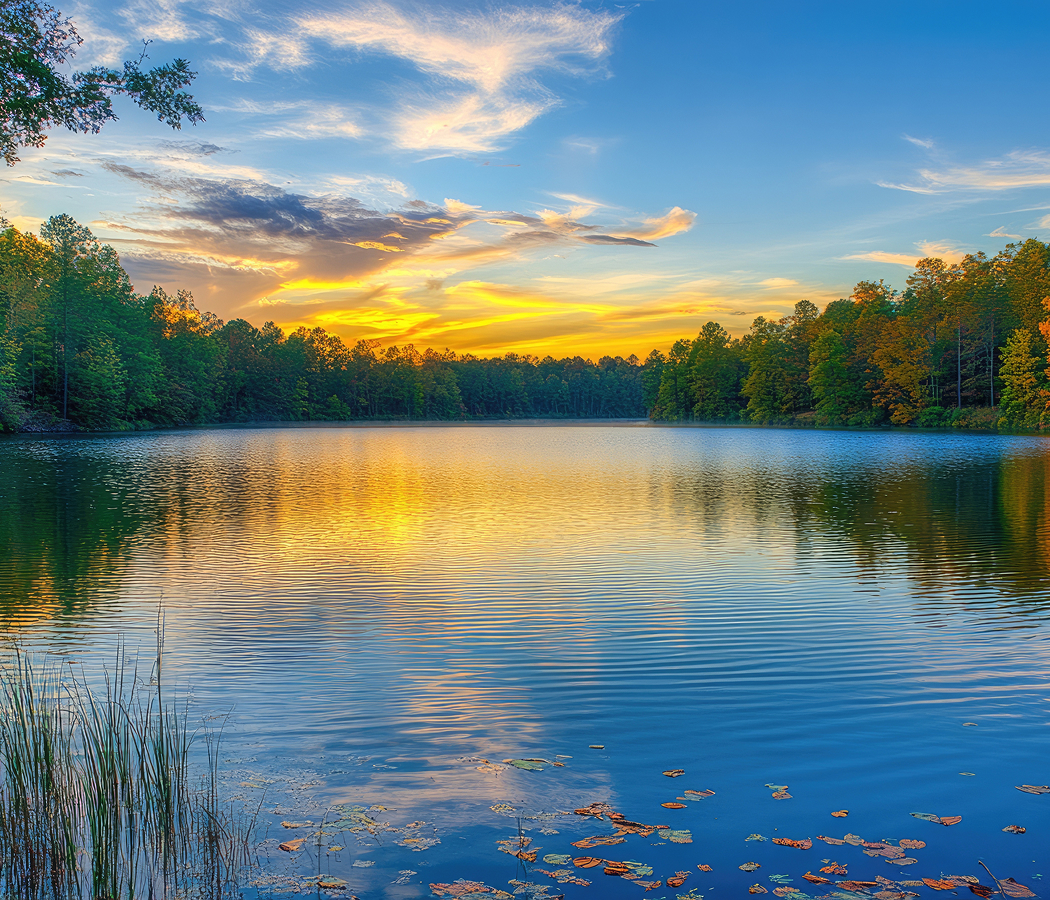
Stretching between East Boulevard and Princeton Avenue near Cumberland Avenue, the 98-acre park occupies the wooded boundary of Myers Park and Dilworth, where Little Sugar Creek passes through broad recreational grounds three miles south of Uptown Charlotte. A seven-acre lake anchors the landscape, surrounded by gently sloping lawns, mature hardwood trees and pedestrian pathways. Footbridges cross narrow waterways, connecting shaded picnic grounds with open fields and landscaped gathering areas. Athletic courts, playgrounds and an outdoor performance pavilion introduce recreational facilities across the park's varied terrain. The result is an expansive urban landscape whose established greenery, central lake and public gathering places provide a defining recreational setting for Charlotte's surrounding residential neighborhoods.
What defines Freedom Park.
Freedom Park is best known for its origins as a living memorial to Mecklenburg County residents who served during World War II and its subsequent development into one of Charlotte's principal public gathering places. The project emerged in 1939 when members of the Charlotte Lions Club began discussing the need for a substantial recreational park serving the growing city. The outbreak of war transformed their proposal into a commemorative undertaking honoring local military personnel. In 1943, the club began raising funds and acquiring former polo grounds along the creek, assembling property for an ambitious public landscape. The Charlotte Park Association subsequently coordinated fundraising and development, establishing a campaign that connected civic philanthropy with the proposed memorial. Mayor Herbert H. Baxter chaired the committee that selected the park's name in April 1945. Corporal Joe B. Gettis submitted the winning name while stationed on Corsica, expressing his hope that future generations would enjoy peace and security. Construction began in 1946, introducing recreational grounds intended to serve a rapidly expanding postwar population. The first developed section transferred to the municipal recreation commission in 1947, and the park opened to the public during the following spring. Its original development occurred under Charlotte's system of racial segregation, with deed restrictions reserving the recreational grounds for white residents. This exclusion formed part of the unequal distribution of municipal recreational facilities during the Jim Crow era. The completed park entered municipal ownership in 1949, establishing a substantial public property that would develop through later improvements and the eventual dismantling of segregated recreation.
President Dwight D. Eisenhower addressed an enormous gathering at the park on May 18, 1954, during a celebration associated with Armed Forces Day and Mecklenburg County's Revolutionary heritage. His appearance established a significant connection between the recreational grounds and national political life. Festival in the Park introduced another enduring civic tradition in 1964 through the initiative of businessman John Belk and organizer A. Grant Whitney. Whitney developed an outdoor celebration combining visual art, music, theater and family entertainment, creating a major annual gathering around the lake. The festival's original presentation incorporated colorful carnival tents, temporary performance stages and extensive volunteer participation. Its admission-free format made artistic performances and exhibitions accessible to a broad regional audience. A 2-8-0 steam locomotive became another distinctive feature of the grounds, preserving a substantial artifact of American railroad engineering. The park's athletic facilities accommodate baseball, tennis, basketball and other recreational activities, supporting organized competition alongside informal neighborhood use. A lakeside shelter completed in 2005 introduced an indoor gathering facility with views across the water. The Little Sugar Creek Greenway connection, completed through this section in 2012, strengthened pedestrian and bicycle access between the park and Charlotte's expanding network of green corridors. Memorial installations preserve associations with military service, maintaining the commemorative purpose established during the park's founding. Freedom Park's enduring importance rests in its combination of wartime remembrance, public recreation and cultural gatherings that have accompanied Charlotte's metropolitan growth.
How Freedom Park fits.
Freedom Park works as the recreational anchor for a Charlotte outing connecting the horticultural achievements of Myers Park, the development of the city's urban greenways and the historic landscapes of its first streetcar suburb.
Begin at Wing Haven Garden & Bird Sanctuary, the historic garden created by Elizabeth and Edwin Clarkson on Ridgewood Avenue. The couple established their home in 1927 and gradually transformed the surrounding red-clay property into a carefully cultivated sanctuary for birds and native wildlife. Elizabeth Clarkson developed an influential interest in ornithology, studying the relationship between garden plantings, nesting habitats and the survival of local bird populations. The nearly three-acre property incorporates brick pathways, enclosed garden rooms, fountains, birdbaths and woodland plantings designed to support wildlife throughout the seasons. Clarkson also founded the Mecklenburg Audubon Society in 1940, extending her conservation work into the wider community. Continue to Little Sugar Creek Greenway, the landscaped pedestrian and bicycle corridor following one of Charlotte's principal urban waterways. Its developed sections connect residential neighborhoods, public parks and commercial districts through a continuous network of paved paths and restored creekside landscapes. The greenway's construction incorporated substantial improvements to formerly neglected stream corridors, establishing new recreational connections through densely developed parts of the city. Pedestrian bridges, planted embankments and access points create opportunities to explore the relationship between Charlotte's natural drainage system and its urban development. The corridor also accommodates public art and community events along selected sections. Conclude at Latta Park, the historic recreational landscape associated with the development of Dilworth during the late nineteenth century. Industrialist Edward Dilworth Latta established the surrounding suburb as Charlotte expanded beyond its original downtown boundaries through electric streetcar transportation. Landscape architect Joseph Forsyth Johnson designed an elaborate pleasure ground incorporating a boating lake, terraced gardens and winding paths. The park subsequently evolved into a neighborhood recreational setting, preserving substantial green space within Dilworth's residential streets. Mature trees, pedestrian walkways and open lawns maintain its longstanding role as a gathering place for the surrounding community. The progression moves from Wing Haven Garden & Bird Sanctuary's horticultural conservation through Little Sugar Creek Greenway's restored urban waterways and culminates at Latta Park's historic suburban landscape, connecting three consequential chapters of Charlotte's environmental and recreational development.
Where your story begins.
Foresyte Travel reveals places that feel extraordinary long before you arrive.
Enjoy editorial crafted for luxury travelers.
Foresyte may earn a commission when you book.