Why you should experience French Huguenot Church in Charleston, South Carolina.
French Huguenot Church in Charleston is a jewel of the city's historic quarter, a rare and radiant emblem of faith, resilience, and architectural grace.
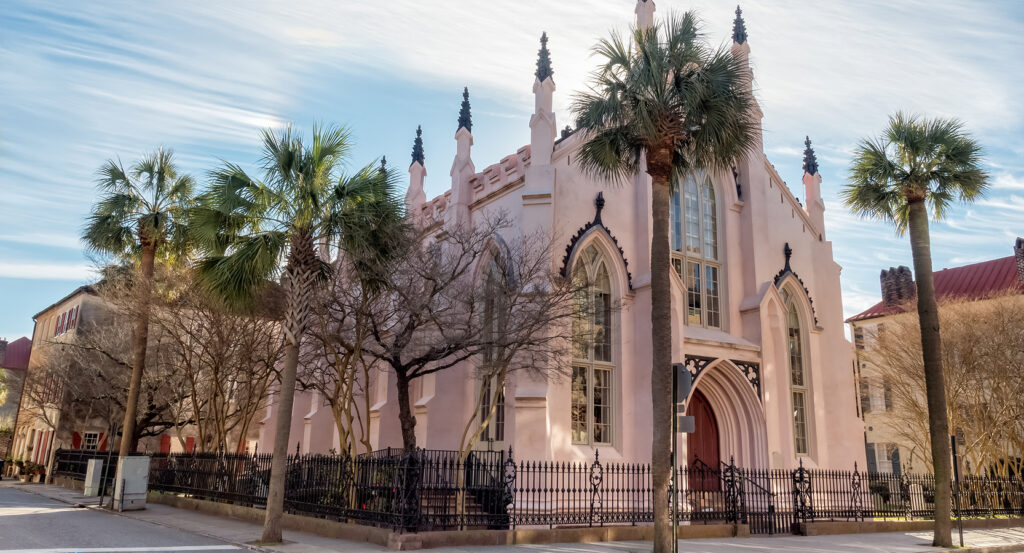
Tucked along Church Street amid moss-draped oaks and pastel façades, it stands as the only remaining independent Huguenot congregation in the United States, a living tribute to the endurance of those who fled persecution to find freedom in the New World. Its delicate pink stucco exterior and Gothic Revival design make it instantly recognizable, rising in quiet elegance beside the more imposing steeples that define Charleston's skyline. Built in 1845 and designed by architect Edward Brickell White, the church replaced two earlier structures lost to fire and hurricane. Its pointed arches, intricate pinnacles, and lancet windows capture the romantic spirit of 19th-century ecclesiastical architecture, yet its soul is unmistakably French, humble, resilient, and unwavering in conviction. Step inside, and the air feels suspended in time. Sunlight streams through stained glass onto white pews and carved woodwork, while the soft scent of wax and wood mingles with the hush of reverence. French Huguenot Church is not grand by scale, but by significance, a sanctuary that tells the story of Charleston's cosmopolitan beginnings and the enduring faith of its first refugees.
What you should know about French Huguenot Church.
French Huguenot Church's beauty conceals a history steeped in struggle, survival, and spiritual independence.
Its congregation traces its roots to 1681, when Protestant refugees from France, followers of John Calvin, arrived in Charleston after the revocation of the Edict of Nantes outlawed their religion. Welcomed by the colony's early settlers, they established their own congregation just a year later, conducting services in French and adhering to the Reformed liturgy. The first wooden church, built around 1687, stood only a few blocks from the current site but was destroyed by fire in 1796. The present structure rose half a century later on the same sacred ground, its pink hue the result of crushed coquina stone mixed with lime, a signature Charleston flourish. Throughout the 18th and 19th centuries, the church served as both a spiritual home and a cultural anchor for the Huguenot community, preserving their language, customs, and religious independence long after assimilation into the broader fabric of American life. Remarkably, French services were conducted well into the 1800s, with special commemorative services in the native tongue continuing to this day. The organ, a 19th-century tracker model still in use, fills the sanctuary with a hauntingly pure tone that seems to echo the devotion of centuries past. During the Civil War, the building narrowly escaped destruction when Union shells struck nearby, sparing the fragile spire that remains intact today. The church's design, light, vertical, and graceful, contrasts with Charleston's heavier colonial forms, symbolizing spiritual uplift amid historical weight. Few realize that French Huguenot Church also played a quiet role in the city's humanitarian history: its congregation supported early education and charity efforts for immigrants and the poor, setting a precedent for civic compassion that endures in Charleston's DNA.
How to fold French Huguenot Church into your trip.
Visiting French Huguenot Church offers one of the most peaceful and profound experiences in Charleston.
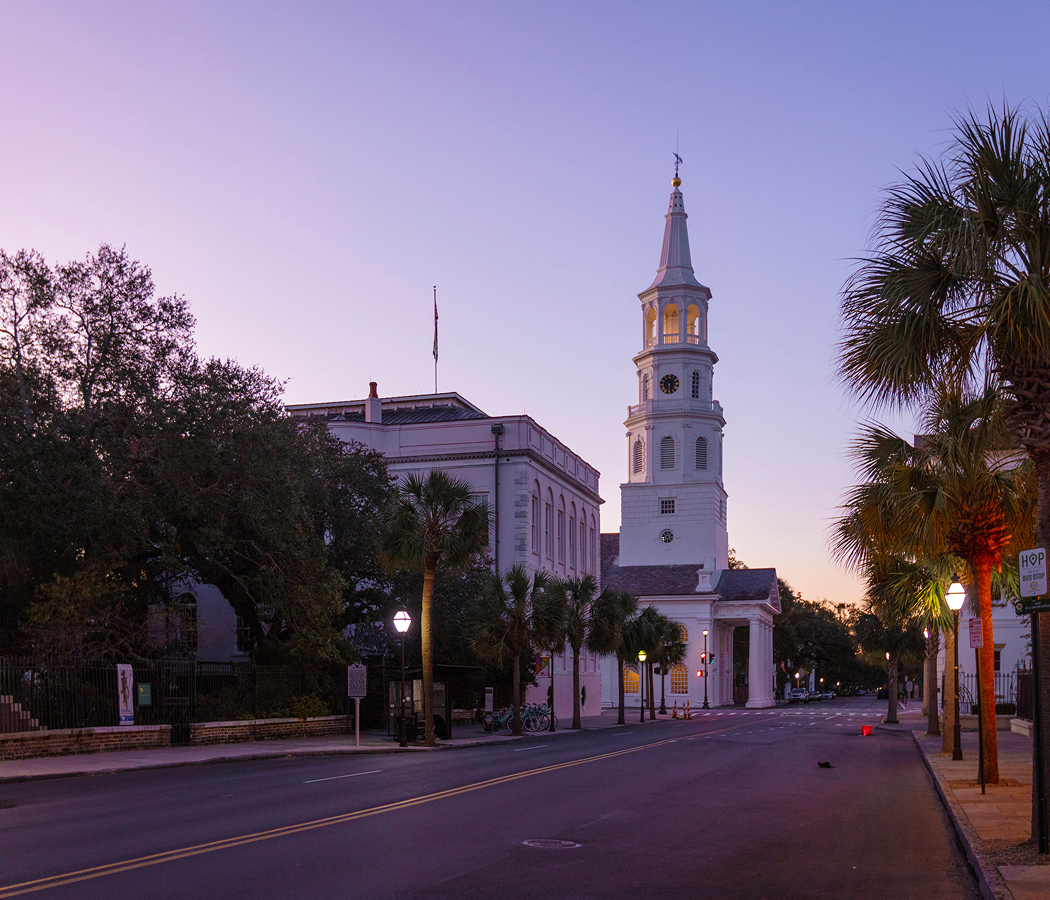
Located in the heart of the French Quarter, it pairs beautifully with a walking tour of the city's most picturesque streets, a neighborhood where every corner hums with history. Begin at the church itself, where volunteers often welcome visitors during open hours and share the story of its origins. Step inside to admire the Gothic details up close: the vaulted ceiling, the iron chandeliers, and the pulpit carved from native mahogany. The stillness here invites reflection; it's easy to imagine the prayers whispered in French centuries ago by those seeking safety and renewal. Outside, take time to admire the delicate pinnacles and buttresses, their coral-pink hue glowing in the afternoon light, before strolling down Church Street toward St. Philip's Church, whose towering steeple has long been its neighbor and counterpart. From there, the cobblestone lanes of the French Quarter lead naturally toward Waterfront Park, offering glimpses of Charleston Harbor and the soft salt air that has carried ships, and stories, for generations. For an immersive experience, attend a Sunday service, where hymns fill the sanctuary and centuries of history seem to breathe again. If you visit in the spring, the annual French service commemorating the Edict of Nantes is a moving tribute to the congregation's origins, sung in the same language their ancestors once risked their lives to preserve. French Huguenot Church is not just a historic site; it's a living thread between past and present, faith and freedom, Charleston and the world. Standing before its rosy façade, you don't just see a building, you witness the endurance of a people who found sanctuary and left beauty in their wake.
Where your story begins.
Foresyte Travel reveals places that feel extraordinary long before you arrive.
Experience premium editorial crafted for luxury travelers.