Why you should experience Great Pyramid Inn in Giza, Egypt.
Great Pyramid Inn is an unfiltered, front-line encounter with antiquity, where the Great Pyramid ceases to be a destination and instead becomes a constant, looming presence woven into the fabric of your stay.
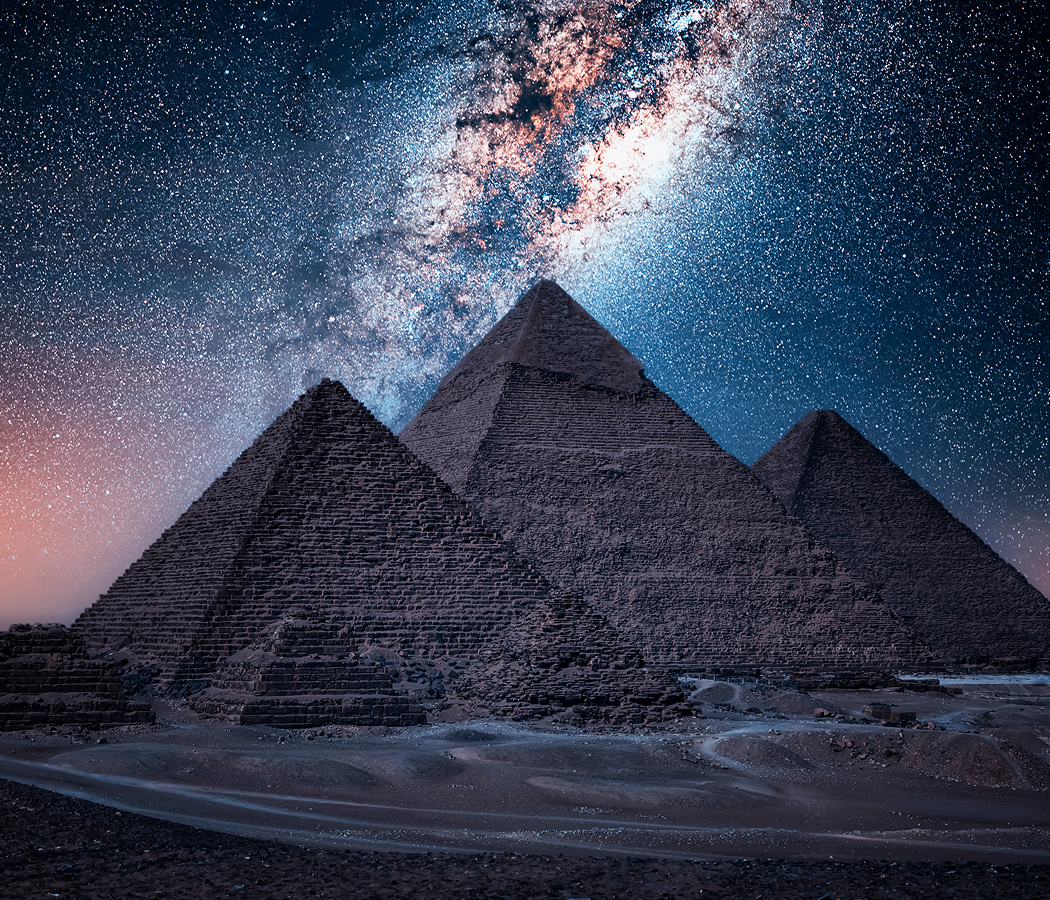
Positioned directly along the perimeter of the Giza Plateau, Great Pyramid Inn occupies one of the most privileged yet understated locations in all of Egypt. This is not a property that attempts to compete with history through design, scale, or luxury theater. It understands something far more important: when the setting is this powerful, the role of accommodation is to step aside. The building itself is modest and embedded within the surrounding neighborhood, offering a grounded, human-scale contrast to the grand geometry rising just beyond its walls. Arrival is immediate and unceremonious, but that simplicity is deceptive, because within moments, the pyramids assert themselves into your visual field with overwhelming clarity. Interiors are functional, clean, and intentionally restrained. Rooms are compact but thoughtfully maintained, prioritizing comfort, cleanliness, and orientation over embellishment. When pyramid-facing rooms are secured, the experience becomes almost surreal, waking to the Great Pyramid framed by your window, watching light slide across its ancient stones as though time itself has slowed. Beds are comfortable and practical, furnishings minimal, and color palettes neutral, ensuring nothing distracts from the view that defines the stay. Bathrooms are straightforward and efficient, designed for routine and refreshment. The resonant center of Great Pyramid Inn is its rooftop, a space that transforms the property from simple lodging into something profoundly experiential. From this vantage point, the pyramids dominate the skyline with an intimacy that few travelers ever experience. Sunrise here is revelatory: pale light emerging behind the plateau, shadows stretching and receding, the enormity of the structures slowly revealing itself in silence. Midday strips away romance and leaves behind raw scale and precision, massive forms that feel almost impossible in their permanence. At night, the pyramids become silhouettes, dark and immovable against the sky, lending the space a quiet gravity that invites reflection. Dining is informal and communal, often enjoyed on the rooftop or in shared areas where travelers naturally gather. Meals are secondary to the atmosphere, shared moments, exchanged stories, long pauses spent simply looking outward. Service is personal, warm, and deeply rooted in local hospitality. Hosts operate less like hoteliers and more like stewards of proximity, offering guidance on optimal visiting times, access routes, and rhythms of the plateau that only long familiarity can provide. The surrounding area is active, textured, and unapologetically real, offering a lived-in context that contrasts sharply with the timeless stillness of the pyramids themselves. Great Pyramid Inn is ideal for travelers who prioritize immediacy over insulation, authenticity over refinement, and resonant resonance over curated luxury. It offers something rare in modern travel: the chance to live directly alongside history.
What you should know about Great Pyramid Inn.
Great Pyramid Inn is part of a locally driven hospitality evolution that reshaped how travelers engage with the Giza Plateau, shifting the experience from scheduled performance to lived proximity.
For decades, access to panoramic pyramid views was tightly controlled, limited to large hotels, formal viewpoints, or tour itineraries governed by timing and crowds. Local residents living at the plateau's edge understood something visitors increasingly sought: uninterrupted presence. As independent travel expanded and expectations shifted, family-run inns began to appear, offering travelers something radically different, not luxury, but continuity. Great Pyramid Inn emerged from this movement, shaped by community knowledge. Properties like this are often operated by families with generational ties to the area, individuals who have lived alongside the pyramids long enough to understand their rhythms, their light, and their quiet moments. Rooftops became informal observatories long before they were marketed as features, places where residents watched seasons change, ceremonies unfold, and history continue its silent vigil. Over time, these vantage points drew archaeologists, historians, photographers, filmmakers, and repeat visitors seeking a deeper relationship with the site. Great Pyramid Inn has quietly hosted individuals connected to excavations, research projects, and cultural documentation, drawn by the ability to observe the plateau outside regulated hours and tourist density. Culturally, inns like this play an essential role in sustaining the local economy, keeping tourism revenue within the neighborhood and fostering direct, human exchange between guests and residents. Conversations unfold naturally, over tea, over meals, over shared awe, creating an experience rooted in presence. Architecturally, the inn's restraint is deliberate. By avoiding decorative excess or design distraction, it preserves what matters most: sightlines, accessibility, and affordability. Nothing competes with the pyramids, nothing interrupts the view, and nothing dilutes the experience with unnecessary theater. In a global travel landscape increasingly defined by curated luxury and controlled narratives, Great Pyramid Inn stands as a counterpoint, proof that proximity, context, and authenticity can create an experience far more enduring than polish ever could.
How to fold Great Pyramid Inn into your trip.
Great Pyramid Inn is best approached as an immersion chapter, either the opening act that grounds your journey or the closing reflection that seals it.
Arrive with the intention to slow your pace and sharpen your attention. Wake before sunrise and step onto the rooftop while the world is still muted, watching the first light trace the edges of the Great Pyramid as the plateau gradually reveals itself. Use this early access to walk directly to the Giza Plateau, entering before heat and crowds reframe the experience. Move deliberately, allowing silence and scale to dictate your rhythm. Return to the inn in the early afternoon to rest, hydrate, and let the resonant weight of the site settle. As evening approaches, return once more to the rooftop, not as a viewing platform, but as a place of contemplation. Watch the light fade, the neighborhood quiet, and the pyramids transform again into silhouettes against the sky. Pair your stay with a visit to the Grand Egyptian Museum to contextualize what you've witnessed, then consider transitioning to a resort or city hotel to rebalance after such intensity. Great Pyramid Inn is not designed to buffer Egypt, it is designed to place you directly inside it.
Where your story begins.
Foresyte Travel reveals places that feel extraordinary long before you arrive.
Experience premium editorial crafted for luxury travelers.