Why you should experience Great Sphinx of Giza in Giza, Egypt.
Great Sphinx of Giza in Egypt is a riddle carved in stone, a guardian of eternity whose gaze has watched over the Nile for more than 4,500 years.
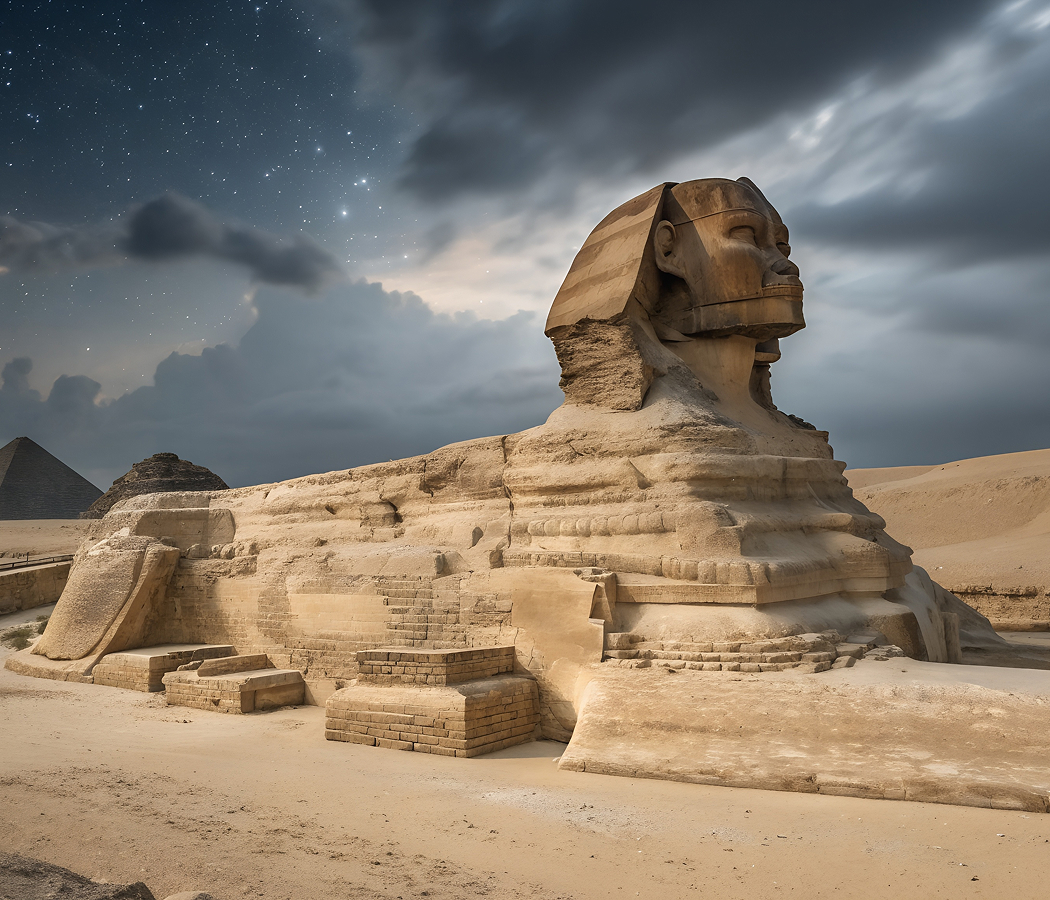
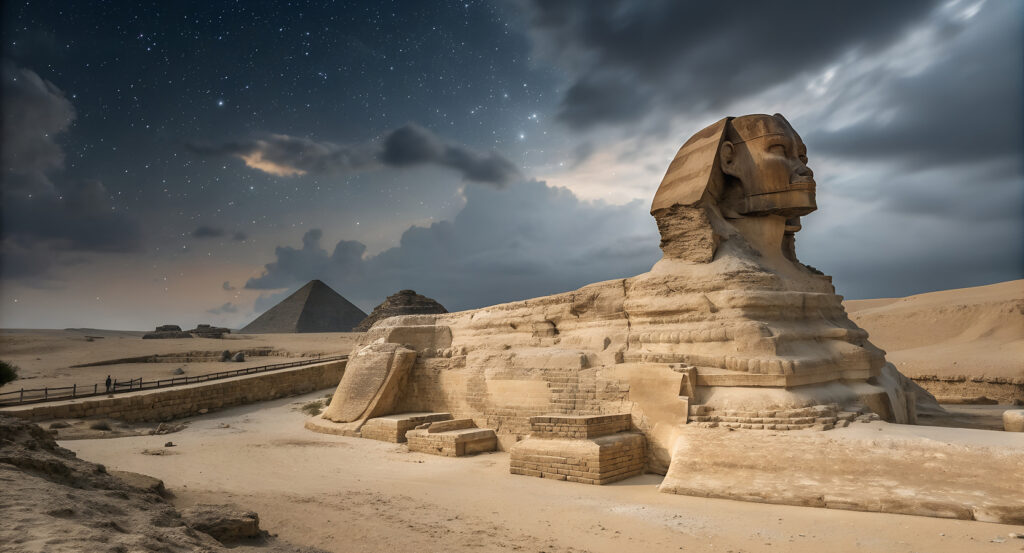
Half lion, half human, the Sphinx sits on the eastern edge of the Giza Plateau, facing the rising sun, a sentinel between earth and sky. Measuring over 240 feet long and 66 feet high, it is the largest monolithic statue on Earth, hewn directly from a single limestone outcrop that once formed part of the plateau itself. To stand before it is to feel the immense scale of human imagination, how something so ancient can still command such silent reverence. Believed to have been built during the reign of Pharaoh Khafre, whose pyramid stands directly behind it, the Sphinx was more than sculpture; it was symbol, myth, and mystery intertwined. Its leonine body represents strength, while the human face, thought to bear Khafre's likeness, embodies wisdom and divine authority. In the early light, the Sphinx seems to awaken with the desert, its expression caught between serenity and power, as if guarding secrets only time itself could decipher. No matter how many times it's photographed, nothing prepares you for the stillness, that sense of standing in the presence of something older than memory itself.
What you didn’t know about Great Sphinx of Giza.
Beneath its timeless profile lies a story as complex as Egypt's own mythology, a tale of erosion, restoration, and endless speculation.
Scholars still debate exactly when the Sphinx was carved, but most agree it dates to around 2500 BCE, during the Fourth Dynasty. Its alignment with the rising sun reflects Egypt's devotion to Ra, the solar deity, and its placement before Khafre's pyramid suggests it served as a symbolic guardian of the royal necropolis. Over millennia, it has suffered both the mercy and cruelty of the desert, buried up to its neck in sand for centuries, rediscovered, buried again, and finally excavated in the early 20th century. Archaeologists have since uncovered temples at its paws, where ancient priests once made offerings to “Horemakhet,” the “Horus of the Horizon,” as the Sphinx was known. Yet for all that's known, even more remains unknown. Theories abound, that its weathering patterns suggest it predates the pyramids, that it conceals hidden chambers beneath its paws, or that it served as a celestial marker aligned with the stars of Leo. Modern scans have indeed revealed cavities and tunnels under the monument, though their purpose is still a mystery. The Sphinx's missing nose and ceremonial beard, long thought to be casualties of time, are also part of its legend, fragments of the beard now rest in the British Museum and Cairo's Egyptian Museum, testaments to both loss and survival. Restoration efforts have continued for decades, reinforcing its fragile limestone frame against wind and sand. And yet, despite its scars, the Sphinx endures, still regal, still unknowable, still the embodiment of a civilization that spoke through symbols, not words.
How to fold Great Sphinx of Giza into your trip.
Experiencing Great Sphinx of Giza is like meeting the soul of Egypt, enigmatic, eternal, and impossibly alive.
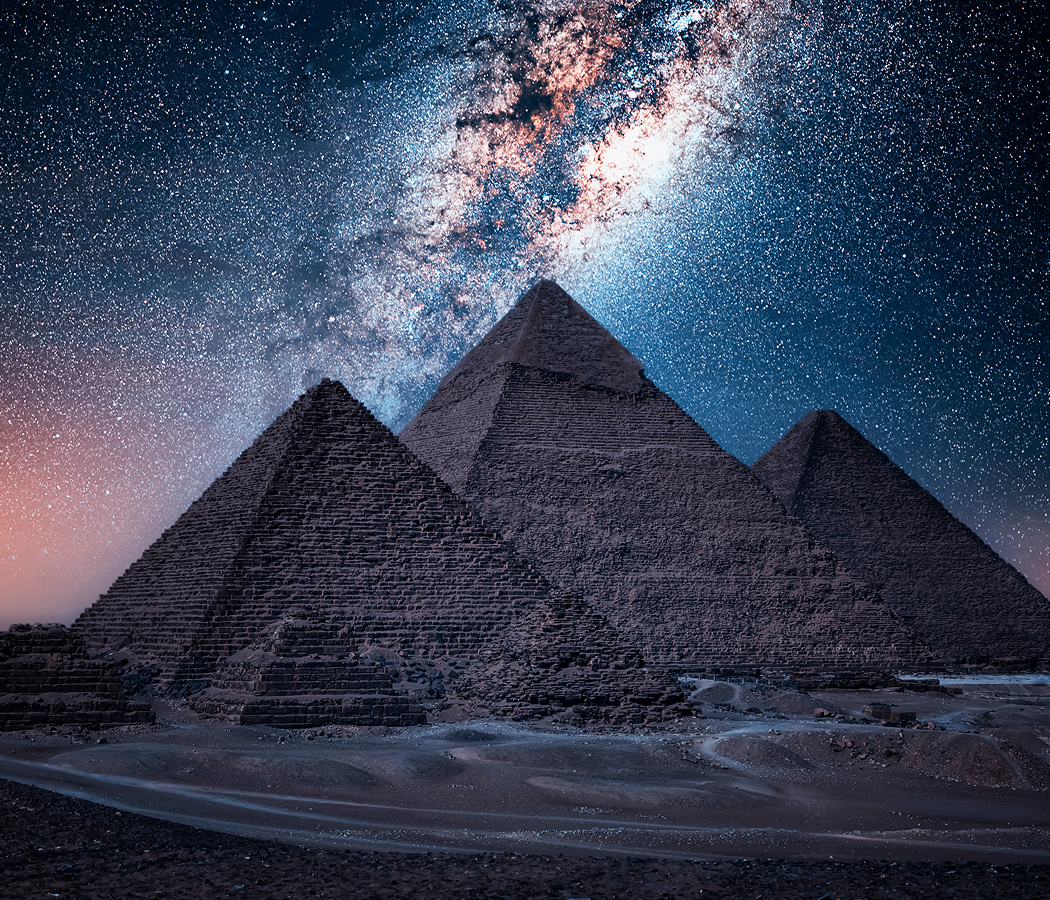
Begin your visit early in the morning, when the air is cool and the light is golden. Enter through the Giza Plateau and make your way down from the pyramids, letting the Sphinx slowly emerge from the sand below, its vast form revealing itself inch by inch. Stand before the viewing platform at the Sphinx enclosure, where the scale becomes overwhelming; the head alone rises higher than a two-story building. If possible, visit with a guide who can weave the mythology and history together, stories of how the Sphinx has inspired pharaohs, explorers, and poets alike. Pause at the Sphinx Temple, located just before its paws, where massive stone blocks align perfectly with the monument, proof of the same genius that built the pyramids. Take time to study the weathered details: the gentle curve of its jawline, the faint traces of red and blue pigment that once painted its face, the deep fissures left by wind and sand that tell their own story of survival. As the day unfolds, walk the surrounding ridge for panoramic views, the pyramids rising behind, the modern city stretching before you, and the Sphinx eternal between them. At sunset, the monument transforms again, bathed in fiery light as if it were still greeting the gods. Stay for the Sound and Light Show if you can, where the Sphinx “speaks”, narrating the saga of ancient Egypt under the stars. For a quieter perspective, watch from one of the nearby terraces where the pyramids and Sphinx form a single, majestic silhouette against the twilight. Great Sphinx of Giza is not a relic of the past, it is a reminder of humankind's oldest conversation with the infinite. To stand before it is to realize how fleeting we are, and how eternal wonder can be.
Hear it from the Foresyte community.
Just enough life around you not to be overwhelming. Right pace.
Where your story begins.
Start your planning journey with Foresyte Travel.
Experience immersive stories crafted for luxury travelers.