Why Hofburg matters.
Hofburg, or Imperial Palace, in Vienna is a living chronicle of European power, refinement, and resilience that shaped centuries of history.
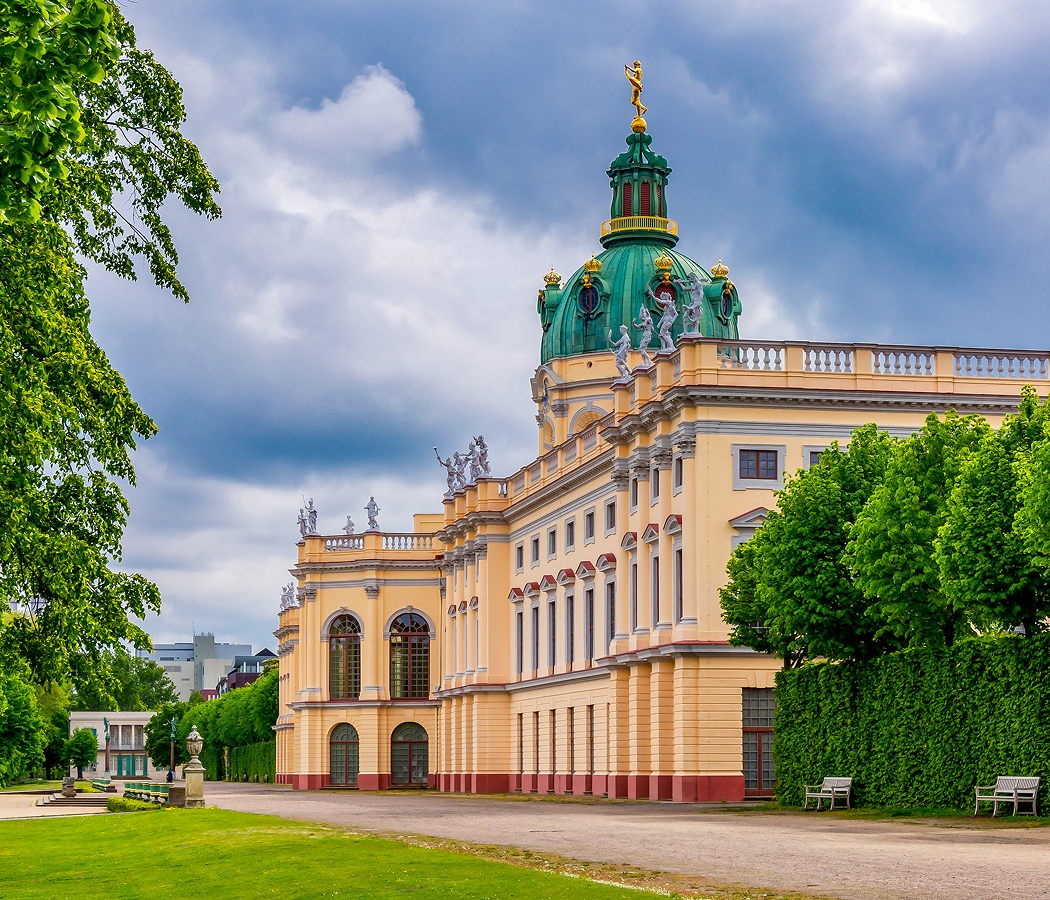
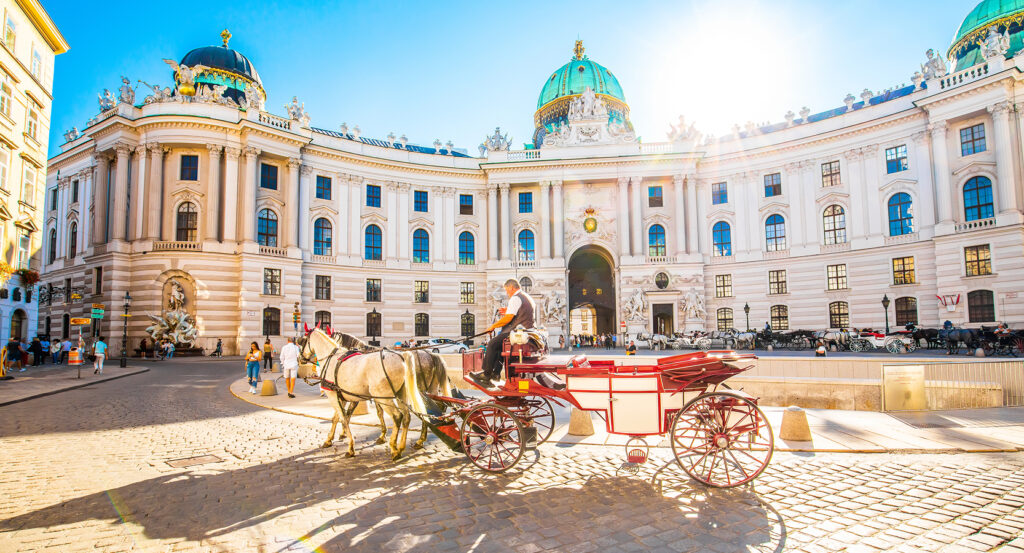
Sprawling across the city's historic center, this expansive complex was the beating heart of the Habsburg Empire for more than 600 years, a dynasty that defined the political, artistic, and cultural pulse of Europe. Step into its grand courtyards and time unfurls in layers: Gothic, Baroque, Rococo, and Neoclassical styles intertwine like the empire's own vast lineage. The palace's white façades gleam under the Viennese sun, while green copper domes rise against the skyline, symbols of imperial grandeur that still whisper of orchestras, diplomacy, and destiny. Within these walls, emperors were crowned, alliances were forged, and waltzes filled the air. Yet despite its power, Hofburg possesses an intimacy rare for such scale; the courtyards seem to breathe, the sound of horses from the Spanish Riding School echoing softly against stone. Inside, the Imperial Apartments remain preserved as though the Habsburgs have merely stepped out for an evening concert. Velvet draperies, crystal chandeliers, and gold-gilded mirrors shimmer under the soft glow of candlelight, a living stage for Vienna's imperial past. Walk through these rooms, and you feel the presence of Emperor Franz Joseph and Empress Elisabeth - Sisi, whose grace and melancholy still haunt the halls. Hofburg isn't merely a palace; it's a universe unto itself, a constellation of history, music, and legacy radiating from the center of Vienna.
What defines Hofburg.
Hofburg is a city within a city, a labyrinth that reveals the soul of the Habsburg Empire in every archway and corridor.
Originally built in the 13th century as a medieval fortress, it expanded over centuries into one of the most complex and expansive palace compounds in Europe. Each wing tells a different story: the Swiss Wing holds echoes of its earliest Gothic foundations; the Imperial Chancellery marks the empire's bureaucratic brilliance; and the Michaelertrakt, with its sweeping façade and domed grandeur, symbolizes the apotheosis of Viennese Baroque design. But beyond the architecture lies the empire's human story. Here, Empress Maria Theresa ruled with fierce intellect, reforming education, governance, and the arts. Emperor Franz Joseph began each day at dawn in his study, his punctuality renowned, while Sisi wandered the corridors in restless solitude, longing for freedom beyond the gilded cage. Hofburg also houses treasures that span continents: the Imperial Treasury glows with crowns, orbs, and relics, including the Holy Roman Empire's Imperial Regalia and the Austrian Crown Jewels, symbols of divine right and earthly power. Nearby, the Augustinian Church has witnessed centuries of imperial weddings, funerals, and sacred ceremonies. Few realize that beneath the palace lies a network of hidden tunnels once used to connect stables, kitchens, and guard posts, arteries that kept the imperial machine beating discreetly beneath the pomp above. Today, Hofburg is home to Austria's presidency, a rare continuity between monarchy and modernity that makes the site not just a relic, but a living tribute to Vienna's evolving identity. Its walls, burnished by centuries of footsteps, hum with the rhythm of empires past, not frozen in time, but echoing still.
How Hofburg fits.
Exploring Hofburg is an immersion into Vienna's soul, one that rewards slow discovery and quiet awe.
Begin at the Michaelerplatz entrance, where the palace's curved façade sweeps like a royal gesture toward the city. Pause beneath the domed gateway to take in the sculptures by Lorenzo Mattielli, mythic heroes locked in eternal motion, guardians of imperial memory. From here, step into the Imperial Apartments to see the world as Franz Joseph and Sisi knew it: ornate salons, delicate porcelain, and portraits that glow beneath their gilded frames. The Sisi Museum nearby reveals the empress's private world, her poetry, beauty rituals, and the tragic melancholy that shadowed her fame. Continue to the Imperial Treasury to stand before the glittering crown of the Holy Roman Emperor, a thousand-year-old artifact that once symbolized dominion over half of Europe. Then, descend into the heart of the Spanish Riding School, where the white Lipizzaner stallions rehearse centuries-old equestrian ballet, a performance of grace and discipline that feels almost sacred. If you visit in the morning, you can watch their training sessions bathed in golden light through the arched windows. Afterward, stroll into the Burggarten, where Mozart's statue gleams among manicured lawns, or cross into Heldenplatz to stand where history itself has shifted, from imperial proclamations to modern democracy. Time your visit for late afternoon, when the palace glows honey-gold and the city hums softly beyond its gates. Hofburg in Vienna is not merely a museum of empire, it is a living discussion between power and art, ambition and legacy, past and present. To walk its halls is to feel history breathe.
Where your story begins.
Foresyte Travel reveals places that feel extraordinary long before you arrive.
Enjoy editorial crafted for luxury travelers.
Foresyte may earn a commission when you book.