Why Mandarin Oriental matters.
Mandarin Oriental is a KLCC hotel where the Petronas skyline meets Malaysian hospitality, Cantonese cuisine and the gardens of Kuala Lumpur City Centre Park.
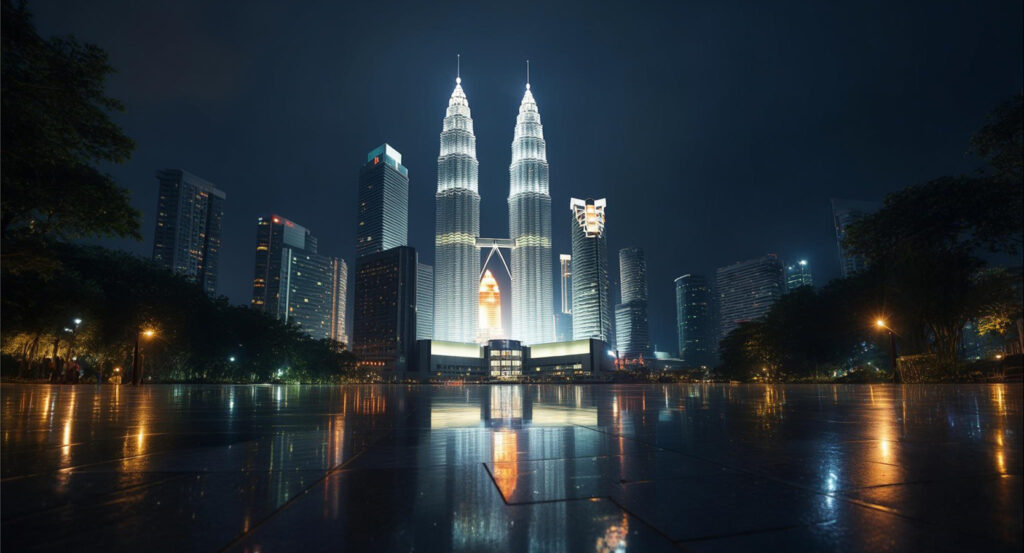
Set along Jalan Pinang near Jalan Ampang and just steps from the Petronas Twin Towers, the hotel occupies the centre of Kuala Lumpur City Centre between KLCC Park, Suria KLCC, the Kuala Lumpur Convention Centre and the commercial streets leading toward Bukit Bintang. The building rises beside flowering gardens and the twin towers, placing the hotel within Kuala Lumpur's most concentrated composition of offices, retail, public landscape and civic performance. The infinity-edge pool opens toward the park and skyline, turning the city's vertical architecture into a constant backdrop for swimming and rest. Lai Po Heen, Mandarin Grill and MO Bar give the property distinct culinary rooms within the same city-centre setting. The result is a hotel that joins Kuala Lumpur's newest skyline with the planted landscape and formal hospitality of KLCC.
What defines Mandarin Oriental.
Mandarin Oriental is best known for establishing a Mandarin Oriental presence beside the Petronas Twin Towers after opening in 1998. The hotel formed part of the Kuala Lumpur City Centre development, a large urban project organized around the towers, park, convention centre and Suria KLCC shopping complex. The Petronas Twin Towers rose to 451.9 metres and became the central visual reference for the district's transformation from former racecourse land into a new commercial centre. Mandarin Oriental Hotel Group developed the hotel through a joint venture with KLCC Property Holdings and retained a management role within the project. The building's position between the towers and the park gives its public rooms a direct relationship with both the city's engineered skyline and its planted civic landscape. The hotel's architecture uses broad glazing, pale stone and formal interior volumes to keep the park visible across arrival areas, restaurants and guest floors. A swimming pool, spa and fitness spaces extend the building's resort character into the heart of Kuala Lumpur's business district. The hotel's significance comes from its placement within the Petronas development and from the way its rooms frame the district's most consequential public spaces. Kuala Lumpur's commercial rise remains visible through the towers, the park and the convention centre surrounding the property. Mandarin Oriental belongs to the architectural chapter that gave the Malaysian capital a new vertical centre at the end of the twentieth century.
Lai Po Heen gives the hotel a Cantonese dining room shaped by the ancestral homes of Malaysia's Chinese merchant families. Antique furnishings from Malacca and dark timber details create an interior linked to the country's Chinese architectural history. The menu moves through dim sum, roasted meats, seafood and banquet dishes prepared with the precision of a formal Cantonese kitchen. Mandarin Grill turns toward European cooking through prime cuts, seafood, seasonal produce and a dining room organized around open flame and polished service. MO Bar places cocktails, spirits and evening conversation beside the hotel's principal restaurants. Mosaic presents a more expansive all-day setting through international dishes, breakfast service and open views toward KLCC Park. AQUA Restaurant & Bar adds poolside dining, refreshments and a separate relationship with the gardens beyond the hotel. Each venue occupies a different position within the property's culinary structure. Lai Po Heen carries Malaysian Chinese history into a contemporary hotel room, while Mandarin Grill places European technique within Kuala Lumpur's new commercial centre. MO Bar and the poolside venues extend the building's social life from formal dining toward evening drinks and outdoor leisure. The sequence gives Mandarin Oriental a culinary character built from Malaysian Chinese heritage, international hotel tradition and the city's tropical setting.
How Mandarin Oriental fits.
Mandarin Oriental works as a starting point for tracing Malaysia from national history to Islamic art and the architecture of the country's principal mosque.
Begin at National Museum, whose Malay palace-inspired building presents Malaysia's history through galleries devoted to early kingdoms, colonial rule, natural history, culture and the formation of the modern nation. The museum opened in 1963 after the earlier Selangor Museum was destroyed during the Second World War. Its façade combines Malay roof forms, patterned decoration and expansive scale, placing national history inside a purpose-built cultural building. Continue to Islamic Arts Museum Malaysia, whose galleries hold ceramics, textiles, manuscripts, jewellery, metalwork and architectural models from across the Islamic world. The museum opened in 1998 beside the National Mosque and the Perdana Botanical Gardens, giving Kuala Lumpur a major institution devoted to Islamic visual culture. Its galleries connect Southeast Asian traditions with artistic centres in Persia, India, China, the Ottoman world and the Arab lands. Conclude at National Mosque of Malaysia, completed in 1965 as a symbol of the country's independence and Muslim identity. The building's folded concrete roof, minaret and open prayer hall create a modern interpretation of mosque architecture suited to Kuala Lumpur's tropical climate. Its blue-and-white geometry and broad courtyards place religious architecture within the civic landscape surrounding the old railway station. The progression moves from Malaysia's national history through the artistic networks of Islam and culminates in a mosque built to express the country's post-independence character.
Where your story begins.
Foresyte Travel reveals places that feel extraordinary long before you arrive.
Enjoy editorial crafted for luxury travelers.
Foresyte may earn a commission when you book.